Prayers for peace

9th August 2025

Turn from evil and do good; seek peace and pursue it.

You Lord, are the source of all good things: 

We praise you.

You bless us with a world that is good 

and look to us to be peace makers and peace keepers:

May we strive to do your will.

You have made us as brothers and sisters: 

May we live together in peace.

Reading Micah 4: 2- 5

  And many nations shall come and say:
‘Come, let us go up to the mountain of the Lord,
    to the house of the God of Jacob;
that he may teach us his ways
    and that we may walk in his paths.’
For out of Zion shall go forth instruction,
    and the word of the Lord from his dwelling place.

He shall judge between many peoples,
    and shall arbitrate between strong nations far away;
they shall beat their swords into ploughshares,
    and their spears into pruning-hooks;
nation shall not lift up sword against nation,
    neither shall they learn war any more;

but they shall all sit under their own vines and under their own fig trees,
    and no one shall make them afraid;
    for the mouth of the Lord of hosts has spoken.

For all the peoples walk,
    each in the name of its god,
but we will walk in the name of the Lord our God
    for ever and ever.

We cannot read words today and not weep with distress and anger at what we have seen and heard this week in Gaza and Israel.*

Lord  of mercy and healing, 

be a source of comfort to all who are suffering, 

all who are in pain, all who terrified and fearful, 

all who feel lost and without hope.

Lord in your loving mercy, restore peace on earth.

How can humans allow relationships to sink to this level of violence, hate  and revenge?

Open our hearts and minds to perceive all that eats away at peace.

Pause our snap judgments that cannot see the bigger picture.

Remove our blinkers of prejudice and hate.

Lord in your loving mercy, restore peace on earth.

How can humans created in the image of God, cause such pain and suffering on those equally created in the image of God?

Open our hearts and minds to empathise with those who suffer

Pause our urge to look away and forget

Remove our hardness of heart.

Lord in your loving mercy, restore peace on earth.

How can communities and tribes believe that they can create a better future through warfare and violence?

Open our hearts and minds – and our purses – to rebuild peace: 

To build a world where all have food and homes, 

Where all can work and all can rest,

Where all are loved and all are valued.

Lord in your loving mercy, restore peace on earth.

Devastated by our ignorance and impotence, we realise that we are not the wise and clever people we though we were. 

Transform our urge to disparage and find fault,

Transform our urge to put focus on our interests,

Transform our lack of will.

Lord in your loving mercy, restore peace on earth.

Peace is not just the absence the war. 

Peace provides clean water and sanitation.

Peace provides an ample sufficiency of healthy food.

Peace provides a loving home.

Peace provides protection from the elements.

Peace provides security from danger and freedom from fear.

Peace provides energy and resources to sustain daily occupations.

Peace provides health care.

Peace provides education.

Peace provides the freedom to worship.

Peace provides the means to listen to others and to tell your own story.

Peace encourages respect.

Peace provides the means to discuss and plan shared futures.

Peace enables fresh food to be grown and harvested.

Peace shares resources equitably.

Peace provides space to rest and time to enjoy friendship.

Peace it is a way of living that provides for the wellbeing of everyone.

Amen.

  • first written in October 2023

Proper 7, 1st Sunday after Trinity

22nd June 2025

Reflection with readings below

Today’s readings from the First Testament encourage us to turn to God, to seek God’s help in times of strife – and goodness are we not in a world best by strife? Turning to to God in prayer is a sound response. 

Why? Because you will find strength and comfort through articulating and sharing your concerns with God. Because prayer helps us understand and to increase our awareness of the issue and of ways in which we might be part of the solution. 

Paul’s letter to the Galatians is a timely reminder that we are all equally created by God. God does not divide people into groups that are honoured or despised, more important or less important, more loved or less loved. Any divisions we see are human-made. The passage should also remind us that God, having made all created things, saw that they were all good. Not just humans but creatures too. Not just humans, but plants too. Not just humans, but ecosystems too. When we elevate ourselves above the rest of creation, seeing ourselves as more honoured, more important and more beloved by God, then we become careless and destructive, greedy and thoughtless – we become the cause of harm and violence, damaging and destroying the world in which we live. As baptised Christians, we all called to treat all with equality and consideration and love.

Today’s gospel is a wonderful story of compassion and healing, of freedom and new beginnings. It is also a story about community and togetherness. 

What is the difference between the words ‘ill’ and ‘well’? The former is begins with ‘I’ and the letter with ‘we’. Isolated, focused only on ourself and our own needs: we are ill. Together we can support and nurture one another; we consider the needs of our group and we gain from what the group offers; we are well.

In this story we Jesus as the transformative agent who releases Legion from all that ensares him, then he restores him not just to his right mind but to his community. Can we follow this example? Can we help  release people from fears and systems that trap them? Can we restore communities, ensuring everyone is included and made welcome? Can we restore relations not just with people but with creatures and plants? Can we restore damaged ecosystems re-establishing sustainable relationships between all component parts? 

Isaiah 65:1-9

I was ready to be sought out by those who did not ask,
to be found by those who did not seek me. 

I said, “Here I am, here I am,”
to a nation that did not call on my name. 

I held out my hands all day long to a rebellious people,

who walk in a way that is not good,
following their own devices; 

a people who provoke me
to my face continually, 

sacrificing in gardens
and offering incense on bricks; 

who sit inside tombs,
and spend the night in secret places; 

who eat swine’s flesh,
with broth of abominable things in their vessels; 

who say, “Keep to yourself,
do not come near me, for I am too holy for you.” 

These are a smoke in my nostrils,
a fire that burns all day long. 

See, it is written before me:
I will not keep silent, but I will repay; 

I will indeed repay into their laps
their iniquities and their ancestors’ iniquities together,

says the Lord; 

because they offered incense on the mountains
and reviled me on the hills, 

I will measure into their laps
full payment for their actions. 

Thus says the Lord:

As the wine is found in the cluster,
and they say, “Do not destroy it,
for there is a blessing in it,” 

so I will do for my servants’ sake,
and not destroy them all. 

I will bring forth descendants from Jacob,
and from Judah inheritors of my mountains; 

my chosen shall inherit it,
and my servants shall settle there.

Psalm 22:18-27

18 Be not far away, O Lord; *
you are my strength; hasten to help me.

19 Save me from the sword, *
my life from the power of the dog.

20 Save me from the lion’s mouth, *
my wretched body from the horns of wild bulls.

21 I will declare your Name to my brethren; *
in the midst of the congregation I will praise you.

22 Praise the Lord, you that fear him; *
stand in awe of him, O offspring of Israel;
all you of Jacob’s line, give glory.

23 For he does not despise nor abhor the poor in their poverty;
neither does he hide his face from them; *
but when they cry to him he hears them.

24 My praise is of him in the great assembly; *
I will perform my vows in the presence of those who worship him.

25 The poor shall eat and be satisfied,
and those who seek the Lord shall praise him: *
“May your heart live for ever!”

26 All the ends of the earth shall remember and turn to the Lord, *
and all the families of the nations shall bow before him.

27 For kingship belongs to the Lord; *
he rules over the nations.

Galatians 3:23-29

Now before faith came, we were imprisoned and guarded under the law until faith would be revealed. Therefore the law was our disciplinarian until Christ came, so that we might be justified by faith. But now that faith has come, we are no longer subject to a disciplinarian, for in Christ Jesus you are all children of God through faith. As many of you as were baptised into Christ have clothed yourselves with Christ. There is no longer Jew or Greek, there is no longer slave or free, there is no longer male and female; for all of you are one in Christ Jesus. And if you belong to Christ, then you are Abraham’s offspring, heirs according to the promise.

Luke 8:26-39

Jesus and his disciples arrived at the country of the Gerasenes, which is opposite Galilee. As he stepped out on land, a man of the city who had demons met him. For a long time he had worn no clothes, and he did not live in a house but in the tombs. When he saw Jesus, he fell down before him and shouted at the top of his voice, “What have you to do with me, Jesus, Son of the Most High God? I beg you, do not torment me” — for Jesus had commanded the unclean spirit to come out of the man. (For many times it had seized him; he was kept under guard and bound with chains and shackles, but he would break the bonds and be driven by the demon into the wilds.) Jesus then asked him, “What is your name?” He said, “Legion”; for many demons had entered him. They begged him not to order them to go back into the abyss.

Now there on the hillside a large herd of swine was feeding; and the demons begged Jesus to let them enter these. So he gave them permission. Then the demons came out of the man and entered the swine, and the herd rushed down the steep bank into the lake and was drowned.

When the swineherds saw what had happened, they ran off and told it in the city and in the country. Then people came out to see what had happened, and when they came to Jesus, they found the man from whom the demons had gone sitting at the feet of Jesus, clothed and in his right mind. And they were afraid. Those who had seen it told them how the one who had been possessed by demons had been healed. Then all the people of the surrounding country of the Gerasenes asked Jesus to leave them; for they were seized with great fear. So he got into the boat and returned. The man from whom the demons had gone begged that he might be with him; but Jesus sent him away, saying, “Return to your home, and declare how much God has done for you.” So he went away, proclaiming throughout the city how much Jesus had done for him.

Third Sunday of Advent

11th December 2022

Reflection (readings follow on afterwards)

“…prepare and make ready your way …. that at your second coming to judge the world we may be found an acceptable people…” What would John the Baptist be saying to us this Advent? Would he see  in us a people likely to be found acceptable when Christ Jesus passes judgement on the world?

Isaiah envisaged how the world would look when renewed by the glory of God – or as we would now understand it, when transformed by the good news manifesto of Jesus. In today’s passage from Isaiah, Isaiah describes the wonder and the beauty of the age to come, a time of abundance and joy, an era when needs would be met and people would no longer be fearful. 

When we look around our world today, we are faced with multiple needs and  and great fear. In our own country we hear of people who lack the wherewithal to feed themselves and their families, who lack the wherewithal to heat their homes. We hear of people who lack homes, who lack jobs and opportunities. People who lack freedom to make choices about their lives. And we sense their fears for the future. 

Jesus in his conversation with John’s messengers, echoes the words of Isaiah that in God’s kingdom the blind will see, the deaf hear and the incapacitated walk. But what of those who do not see the people starving to death in East Africa? What of those who do not see the destruction of the rain forests and the escalating loss of biodiversity? What of those who do not hear the pleas of the people of Pakistan for aid to rebuild their country after this year’s floods? What of those who do not hear the pleas of climate activists for a safe future for their children and grandchildren? What of those who will not step out of their SUVs and walk, or walk outside their gated communities to see how others live?

The words of Isaiah tells us what we should be doing to be called ‘an acceptable people’. The words of Mary tell us what we should be doing if we wish to follow the example of Jesus. Advent is the time to examine our selves and our lifestyles, to measure ourselves against the words of Isaiah and the words of the Magnificat. Do we need to recommit ourselves to the task of bringing down the mighty and lifting up the marginalised? Do we need to recommit ourselves to feeding the hungry and safeguarding the future of generations to come?

As we look forward to the coming of Christmas, let us also look forward with renewed commitment to the coming of the kingdom of God and the establishment of God’s reign on earth. Let us echo the cry of the angels that there should be peace in earth and goodwill – wellbeing – for all. With God as our strength and Jesus as our guide we can do this.

Collect

O Lord Jesus Christ, who at your first coming sent your messenger to prepare your way before you: grant that the ministers and stewards of your mysteries may likewise so prepare and make ready your way by turning the hearts of the disobedient to the wisdom of the just, that at your second coming to judge the world we may be found an acceptable people in your sight; for you are alive and reign with the Father and the Holy Spirit, one God, world without end. Amen.

Isaiah 35:1-10

The wilderness and the dry land shall be glad,
the desert shall rejoice and blossom;

like the crocus it shall blossom abundantly,
and rejoice with joy and singing.

The glory of Lebanon shall be given to it,
the majesty of Carmel and Sharon.

They shall see the glory of the Lord,
the majesty of our God.

Strengthen the weak hands,
and make firm the feeble knees.

Say to those who are of a fearful heart,
“Be strong, do not fear!

Here is your God.
He will come with vengeance,

with terrible recompense.
He will come and save you.”

Then the eyes of the blind shall be opened,
and the ears of the deaf unstopped;

then the lame shall leap like a deer,
and the tongue of the speechless sing for joy.

For waters shall break forth in the wilderness,
and streams in the desert;

the burning sand shall become a pool,
and the thirsty ground springs of water;

the haunt of jackals shall become a swamp,
the grass shall become reeds and rushes.

A highway shall be there,
and it shall be called the Holy Way;

the unclean shall not travel on it,
but it shall be for God’s people; no traveler, not even fools, shall go astray.

No lion shall be there,
nor shall any ravenous beast come up on it;

they shall not be found there,
but the redeemed shall walk there.

And the ransomed of the Lord shall return,
and come to Zion with singing;

everlasting joy shall be upon their heads;
they shall obtain joy and gladness,
and sorrow and sighing shall flee away.

The Song of Mary Magnificat

Luke 1:46-55

My soul proclaims the greatness of the Lord,

my spirit rejoices in God my Saviour; *
for he has looked with favour on his lowly servant.

From this day all generations will call me blessed: *
the Almighty has done great things for me, and holy is his Name.

He has mercy on those who fear him *
in every generation.

He has shown the strength of his arm, *
he has scattered the proud in their conceit.

He has cast down the mighty from their thrones, *
and has lifted up the lowly.

He has filled the hungry with good things, *
and the rich he has sent away empty.

He has come to the help of his servant Israel, *
for he has remembered his promise of mercy,

The promise he made to our fathers, *
to Abraham and his children for ever.

Glory to the Father, and to the Son, and to the Holy Spirit: *
as it was in the beginning, is now, and will be for ever. Amen.

James 5:7-10

Be patient, therefore, beloved, until the coming of the Lord. The farmer waits for the precious crop from the earth, being patient with it until it receives the early and the late rains. You also must be patient. Strengthen your hearts, for the coming of the Lord is near. Beloved, do not grumble against one another, so that you may not be judged. See, the Judge is standing at the doors! As an example of suffering and patience, beloved, take the prophets who spoke in the name of the Lord.

Matthew 11:2-11

When John heard in prison what the Messiah was doing, he sent word by his disciples and said to him, “Are you the one who is to come, or are we to wait for another?” Jesus answered them, “Go and tell John what you hear and see: the blind receive their sight, the lame walk, the lepers are cleansed, the deaf hear, the dead are raised, and the poor have good news brought to them. And blessed is anyone who takes no offence at me.”

As they went away, Jesus began to speak to the crowds about John: “What did you go out into the wilderness to look at? A reed shaken by the wind? What then did you go out to see? Someone dressed in soft robes? Look, those who wear soft robes are in royal palaces. What then did you go out to see? A prophet? Yes, I tell you, and more than a prophet. This is the one about whom it is written,

‘See, I am sending my messenger ahead of you,
who will prepare your way before you.’

“Truly I tell you, among those born of women no one has arisen greater than John the Baptist; yet the least in the kingdom of heaven is greater than he.”

Proper 16

21st August 2022

(The readings follow on after the reflection)

Reflection 

Both the psalm and the passage from Jeremiah concur: God is our creator, the source of being and of our ongoing existence from the beginning. Throughout life God is present and is our sustainer, our rock and stronghold, our hope – and the one who calls us to act. The writer of Hebrews describes the otherness of God – but this is not an otherness that is fearsome and terrifying. Rather it is an otherness reflected in joyful festivities and community and new beginnings and the saving grace of Jesus. Ours is a God who offers hope and salvation!

The passage from Hebrews presents us with a God who can and will transform the world. And in the gospel, we see Jesus doing just that. He transform the life of the woman with a deformed back (and presumably changes too the life of her family) and he transforms the local people’s understanding of God’s law, showing them a different way of interpreting the law and understanding the nature of the world God has in mind.

From our first reading comes the word of the Lord saying “ pluck up and to pull down, destroy and  overthrow, build and plant”. And that is what Jesus does in the gospel reading. He ‘plucks up and pulls down’ the traditional understanding of the law and ‘builds and plants’ something new and life enhancing in its place. Jeremiah, to whom the Lord had been speaking, was given the  hard task of taking that message to the people of Judah. Jeremiah knew that the people had strayed away from correctly understanding and living according to God’s word. He knew that if they continued this way of living that they would be overrun by one of the competing superpowers that then ruled the world. Jeremiah was nevertheless convinced that whatever evil befell God’s people, there would be a time of renewal and restoration – of ‘building and planting’ according to God’s will. 

Sadly Jeremiah did not see this renewal in his own life time,  but he believed that it would happen. Later in the book, it tells how Jeremiah bought some land in Jerusalem – even though the city was about to be overrun by the invading force of the Assyrian army – to show his confidence that there would be a future for God’s people in that city. Jeremiah showed the kind of faith we heard of a few weeks ago in the Letter to the Hebrews – ‘faith [that] is the assurance of things hoped for, the conviction of things not seen’.

 Our hope is that the world will withstand the worst ravages of the climate crisis, and be restored –  be re-built and planted – as intended by God. To demonstrate our faith in this is to actively live as if that future were happening now. We are called to,show how the world could, and can, be transformed. The way we live should be an example of sustainable living. The way we live should demonstrate care for creation, care for wildlife and live stock (including the welfare of donkeys and oxen), and care for our fellow humans especially those whose lives are stunted by the complaints – the ills – of our current age. Those affected by drought and wildfires, by floods and the denuding of the soil. Those affected by disease and war. Those affected by poverty and discrimination. Those affected by rising sea levels and receding rivers.

That is what groups such as Christian Climate Action and Christian Aid are campaigning for. It is what groups like Toilet Twinning and Practical Action are working for on the ground. It is what A Rocha does in enabling Christians to be environmentally aware.
This is what we as Christian communities – churches – can be embracing and supporting. We need to show the confidence that Jesus showed in healing the woman – doing what is right, regardless of what others may be saying, regardless of convention says, because doing what is right is what God wants. We need to show confidence in demonstrating how the world God gave us can be healed.

Jeremiah 1:4-10

The word of the Lord came to me saying,

“Before I formed you in the womb I knew you,
and before you were born I consecrated you;
I appointed you a prophet to the nations.”

Then I said, “Ah, Lord God! Truly I do not know how to speak, for I am only a boy.” But the Lord said to me,

“Do not say, ‘I am only a boy’;
for you shall go to all to whom I send you,
and you shall speak whatever I command you,
Do not be afraid of them,
for I am with you to deliver you,

says the Lord.”

Then the Lord put out his hand and touched my mouth; and the Lord said to me,

“Now I have put my words in your mouth.
See, today I appoint you over nations and over kingdoms,
to pluck up and to pull down,
to destroy and to overthrow,
to build and to plant.”

Psalm 71:1-6

1 In you, O Lord, have I taken refuge; *
let me never be ashamed.

2 In your righteousness, deliver me and set me free; *
incline your ear to me and save me.

3 Be my strong rock, a castle to keep me safe; *
you are my crag and my stronghold.

4 Deliver me, my God, from the hand of the wicked, *
from the clutches of the evildoer and the oppressor.

5 For you are my hope, O Lord God, *
my confidence since I was young.

6 I have been sustained by you ever since I was born;
from my mother’s womb you have been my strength; *
my praise shall be always of you.

Hebrews 12:18-29

You have not come to something that can be touched, a blazing fire, and darkness, and gloom, and a tempest, and the sound of a trumpet, and a voice whose words made the hearers beg that not another word be spoken to them. (For they could not endure the order that was given, “If even an animal touches the mountain, it shall be stoned to death.” Indeed, so terrifying was the sight that Moses said, “I tremble with fear.”) But you have come to Mount Zion and to the city of the living God, the heavenly Jerusalem, and to innumerable angels in festal gathering, and to the assembly of the firstborn who are enrolled in heaven, and to God the judge of all, and to the spirits of the righteous made perfect, and to Jesus, the mediator of a new covenant, and to the sprinkled blood that speaks a better word than the blood of Abel.

See that you do not refuse the one who is speaking; for if they did not escape when they refused the one who warned them on earth, how much less will we escape if we reject the one who warns from heaven! At that time his voice shook the earth; but now he has promised, “Yet once more I will shake not only the earth but also the heaven.” This phrase, “Yet once more,” indicates the removal of what is shaken– that is, created things– so that what cannot be shaken may remain. Therefore, since we are receiving a kingdom that cannot be shaken, let us give thanks, by which we offer to God an acceptable worship with reverence and awe; for indeed our God is a consuming fire.

Luke 13:10-17

Now Jesus was teaching in one of the synagogues on the sabbath. And just then there appeared a woman with a spirit that had crippled her for eighteen years. She was bent over and was quite unable to stand up straight. When Jesus saw her, he called her over and said, “Woman, you are set free from your ailment.” When he laid his hands on her, immediately she stood up straight and began praising God. But the leader of the synagogue, indignant because Jesus had cured on the sabbath, kept saying to the crowd, “There are six days on which work ought to be done; come on those days and be cured, and not on the sabbath day.” But the Lord answered him and said, “You hypocrites! Does not each of you on the sabbath untie his ox or his donkey from the manger, and lead it away to give it water? And ought not this woman, a daughter of Abraham whom Satan bound for eighteen long years, be set free from this bondage on the sabbath day?” When he said this, all his opponents were put to shame; and the entire crowd was rejoicing at all the wonderful things that he was doing.

Lent Reflection

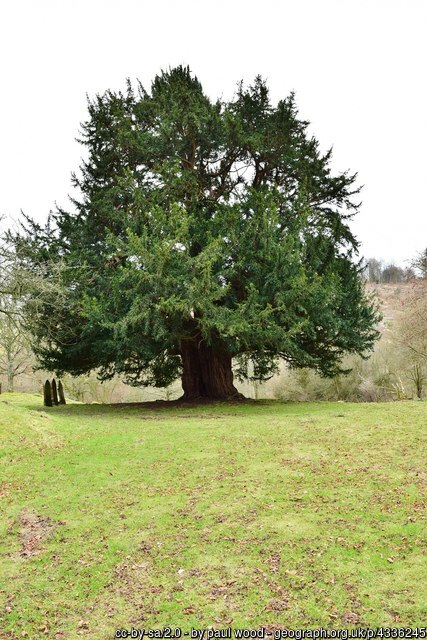
The yew tree – taxis baccata – is native to Britain. The yew is the most long-lived of all European trees and many are more than 1000 years old. Its evergreen leaves and seeds are highly poisonous- although not the red flesh surrounding the seed. The latter is popular with birds and squirrels. Its longevity and toxicity have made it symbolic of both immortality and doom. Its strong wood has favoured its use for making long bows. More recently yew leaves have been found to contain compounds that can be used to treat cancers. 

“The yew tree is the most important of all healing trees, it said. It lives for thousands of years. Its berries, its bark, its leaves, its sap, its pulp, its wood, they all thrum and burn and twist with life. It can cure almost any ailment man suffers from, mixed and treated by the right apothecary.” Patrick Ness, A Monster Calls

My flesh and my heart fail, but God is the strength of my heart and my portion for ever. Psalm 73:26

Lent Reflection

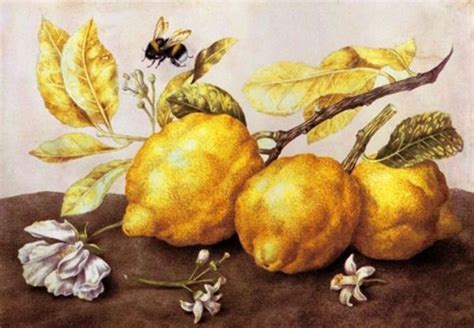
Still life with lemons and a bee, Giovanna Garzoni, 1600-1670

The lemon tree – citrus limon – is an evergreen native to Asia. Its fruit is widely used in cooking and has cleansing and healing properties. An ‘etrog’ or citron (the fruit of the wild lemon) is one of the four fruits used in the Jewish New Year celebration of Succoth – the fruit of one of ‘the goodly trees’ (Leviticus 23:40)

Roses and violets from summer gardens, sun-drenched Sicilian lemons squeezed of their juice and mingled with juniper from the frozen north. Saffron threads and gold leaf from the Indies waited to be turned into something magical. And contained deep within all this was a smile that flooded him with warmth … Laura MadeLevine, The Confectioner’s Take

A cheerful hearts is a good medicine, but a downcast spirit dries up the bones. Proverbs 17:22