Counting on … day 40 

24th December 2021 

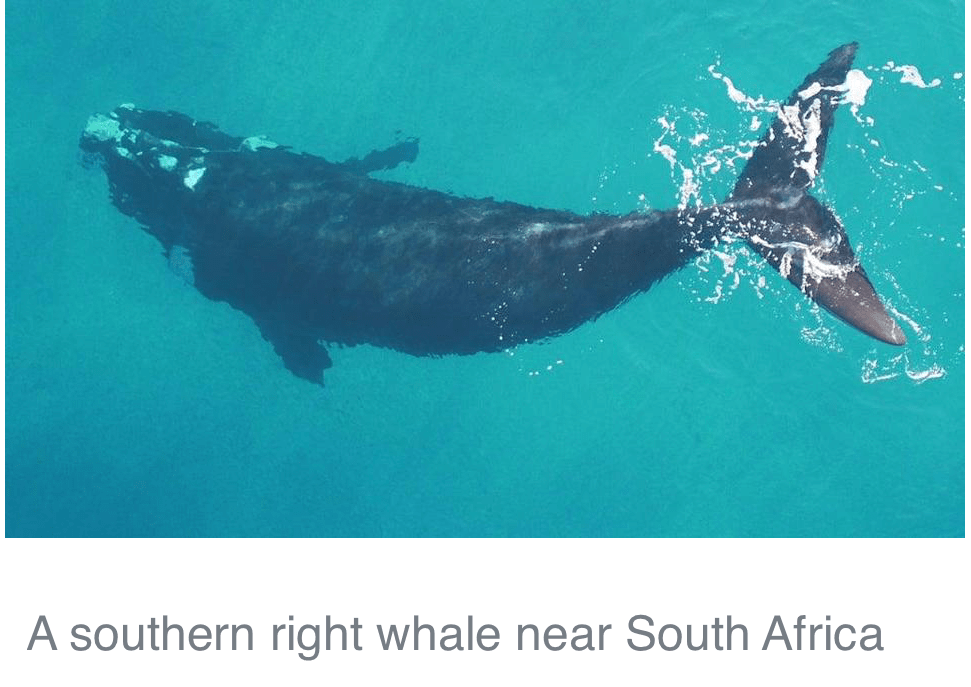
A word for whales. Whales are important as tiller of the oceans. They circulate nutrients that are essential parts of the food chain and in particular nutrients needed by phytoplankton. These serve the same function as leaves, absorbing carbon dioxide and sunlight to create oxygen. As we count on whales doing their bit to maintain the global ecosystem, so they should be able to count on us not to harm them. 

However as has been widely reported, various groups are launching a last-chance bid to stop Shell using shockwaves in the Wild Coast of South Africa – a fragile ecosystem that is a vital whale breeding ground. The applicants, which included Greenpeace Africa and fishing groups, had been seeking to stop the survey on the basis it could cause “irreparable harm” to the marine environment, especially to migrating humpback whales in the area. (Yahoo News)

Do check out this Green Peace petition:  https://pages.greenpeaceafrica.org/shell-wild-coast?_ga=2.165965239.820789156.1640103673-781902025.1640103673

Green Tau: issue 28 

22nd December 2021

Sugar sweet?

Sugar cane is the source of about 80% of the sugar consumed across the world. It is a plantation crop that goes back centuries and has a history linked with exploitation and slavery. As a plantation crop it has been responsible for the deforestation of tropical landscapes and as demand for sugar continues to increase this is still on going – especially in Brazil where sugar cane is also grown to produce the fuel ethanol: ‘The Atlantic Forest, or Mata Atlântica in Portuguese, is found on the Atlantic coast of Brazil. It should be full of life, supporting thousands of species of plants and animals, many of which are found nowhere else. It’s different from the Amazon rainforest but equally important. Around 500 years ago it would have covered an area of more than 1.5 million square kilometres. Now, more than 90% of it is gone, cleared mostly for timber, pasture and sugar.’ (https://www.nhm.ac.uk/discover/sugar-a-killer-crop.html)

 Sugar cane occupies approximately 2.4 million hectare world wide. 70% of production is for domestic use (which for example would include the production of ethanol in Brazil) but for some countries the production of sugar for export constitutes a significant part of their national income eg Cuba and Belize. Volatile global prices makes for great uncertainty for local growers/ plantation workers who can do little to control their incomes. Whilst the premium paid through the Fair Trade scheme undoubtedly helps, the production of fair trade sugar – 528,000 tonnes – is a fraction of the 200 million tonnes of sugar  produced globally (2019). 

Sugar cane as a crop, aside from the issue of deforestation, has unwanted adverse affects on people and the environment.

  • it requires large amounts of water, often taking the water away from other crops and  natural vegetation 
  • It requires large amounts of pesticides and fertilisers which flow into the water system damaging other ecosystems 
  • Before harvesting, old leaves are burnt off to assist the harvesting process. This kills wildlife, important natural organisms and pollutes the air. As nutrients in the leaves are burnt rather than being returned to the soil, the fertility of the soil is reduced requiring additional fertilisers to be used
  • It is an annual crop requiring the land to be cleared each year and the exposed soil is then susceptible to loss during the rainy season and with not roots to absorb moister, flooding too increases.
  • It is a labour intensive crop where child labour still happens.

Alternative sugar crops are grown, of which the main one is sugar beet – accounting for about 20% of world production – which is grown mainly in Europe. It too can be reliant on pesticides and fertilisers: organic sugar beet is grown in Europe but not as yet in Britain. Other sugar crops include coconut palms and oil palms where the sap is harvested. 

There is a further downside to all sugars: sugar damages our health, causing major problems such as heart disease, type 2 diabetes and tooth decay. The WHO urges that sugar consumer should be reduced to between 5 and 10% of a person’s daily calorie intake. The NHS advises sugar consumption be limited to less than 30g per day: https://www.nhs.uk/live-well/eat-well/how-does-sugar-in-our-diet-affect-our-health/ Yet sugar consumption globally is still rising. The USA tops the charts with an average consumption of 126.4g per person per day. Britain comes in at number 7 with 93.2g per day (2019).

As well as being concerned about the damage sugar growing causes to the environment and it’s work force, should we be acting to reduce the demand for this commodity?

“Too often, divisions in civil society can be exploited by powerful commercial interests. ‘Don’t go too hard on health, as it will threaten jobs’ or ‘Don’t raise pollution standards, as they’ll be undercut by another country somewhere’ or ‘Don’t mention labour pay rates, or we’ll drop the preferred status.’ Or ‘Don’t stop sugar beet as it’ll affect tourism brought by geese feeding on sugar beet tops in winter’. Such horse-trading happens in realpolitik, of course, but we think now is the time to take the sugar debate back to ecological public health basics: land, labour, capital, health and culture…We see this future food world as one where less not more sugar is produced and consumed, and land use and labour are liberated from the folly of sugar production. This is hardly a vital product. It has been injected into culinary culture on a scale it does not deserve. Nor should a sugar reduction strategy be compensated for by a growth in use of artificial sweeteners which industry constantly seeks. Artificials, whether relatively ‘old’ such as aspartame or ‘new’ such as stevia, merely normalise the sweetening of diet as well as maintain the processing industries’ option to sweeten a product to sell it.”  https://foodresearch.org.uk/wp-content/uploads/sites/8/2015/06/Does-Sugar-Pass-the-Environmental-and-Social-Test-23-june.pdf

Counting on … day 36

20th December 2021

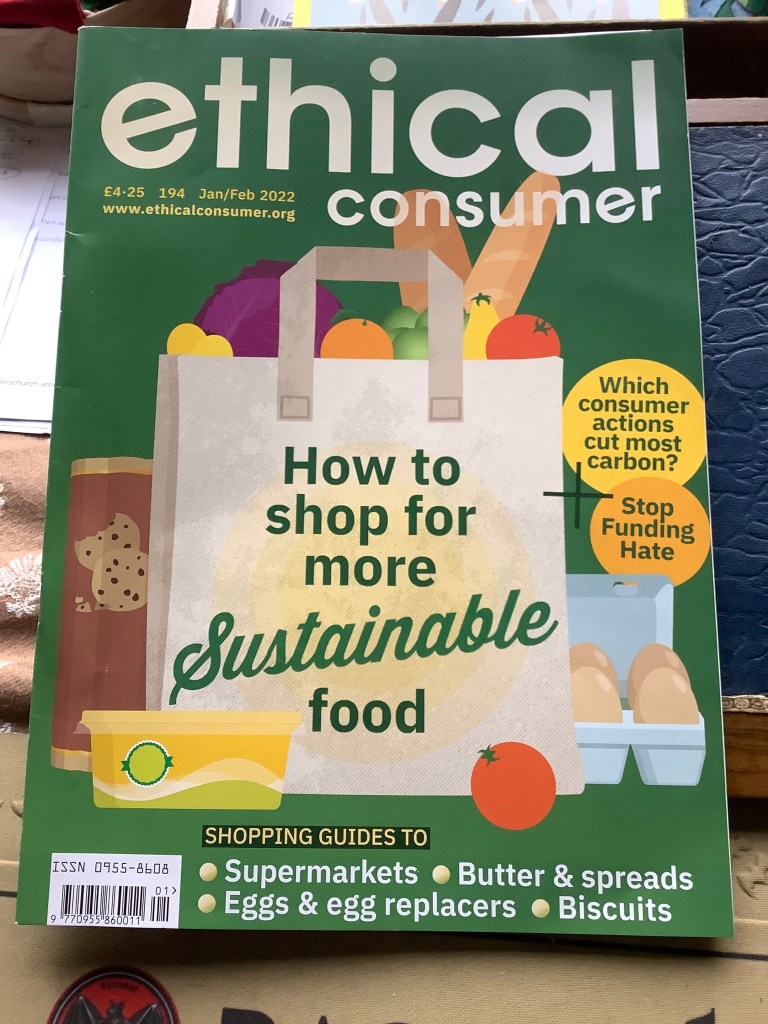
 ‘“Supermarket chains play the role of gatekeeper, deciding how food is produced, the (low) prices paid to farmers and what fills the shelves,” as authors of the People’s Food Policy put it. Based on convenience and the suggestion of low prices, supermarkets maximise profit margins often at the expense of people and the environment.’ This short quote comes from a review of supermarkets by Ethical Consumer + https://www.ethicalconsumer.org/retailers/shopping-guide/supermarkets

If we cannot count on supermarkets to act sustainably, we should we be using our purchasing power to show what kind of world we want to live in. You might choose to subscribe to the Ethical Consumer magazine to keep up to date with the ethical performance of retailers and their products.  

Fourth Sunday of Advent

19th December 2021

Micah 5:2-5a

You, O Bethlehem of Ephrathah,
who are one of the little clans of Judah,

from you shall come forth for me
one who is to rule in Israel,

whose origin is from of old,
from ancient days.

Therefore he shall give them up until the time
when she who is in labor has brought forth;

then the rest of his kindred shall return
to the people of Israel.

And he shall stand and feed his flock in the strength of the Lord,
in the majesty of the name of the Lord his God.

And they shall live secure, for now he shall be great
to the ends of the earth;

and he shall be the one of peace.

Canticle: The Magnificat, Luke 1:46-55

My soul proclaims the greatness of the Lord,

my spirit rejoices in God my Savior; *
for he has looked with favour on his lowly servant.

From this day all generations will call me blessed: *
the Almighty has done great things for me, and holy is his Name.

He has mercy on those who fear him *
in every generation.

He has shown the strength of his arm, *
he has scattered the proud in their conceit.

He has cast down the mighty from their thrones, *
and has lifted up the lowly.

He has filled the hungry with good things, *
and the rich he has sent away empty.

He has come to the help of his servant Israel, *
for he has remembered his promise of mercy,

The promise he made to our fathers, *
to Abraham and his children for ever.

Hebrews 10:5-10

When Christ came into the world, he said,

“Sacrifices and offerings you have not desired,
but a body you have prepared for me;

in burnt offerings and sin offerings
you have taken no pleasure.

Then I said, ‘See, God, I have come to do your will, O God’
(in the scroll of the book it is written of me).”

When he said above, “You have neither desired nor taken pleasure in sacrifices and offerings and burnt offerings and sin offerings” (these are offered according to the law), then he added, “See, I have come to do your will.” He abolishes the first in order to establish the second. And it is by God’s will that we have been sanctified through the offering of the body of Jesus Christ once for all.

Luke 1:39-45

In those days Mary set out and went with haste to a Judean town in the hill country, where she entered the house of Zechariah and greeted Elizabeth.

When Elizabeth heard Mary’s greeting, the child leaped in her womb. And Elizabeth was filled with the Holy Spirit and exclaimed with a loud cry, “Blessed are you among women, and blessed is the fruit of your womb. And why has this happened to me, that the mother of my Lord comes to me? For as soon as I heard the sound of your greeting, the child in my womb leaped for joy. And blessed is she who believed that there would be a fulfilment of what was spoken to her by the Lord.”

Reflection 

The prophet Micah describes the Bethlehem as one of the smallest of the clans of Judah – as if each town in the lands belonging  to Judah was a subset – or in terms of the Scottish clan system, a ‘sept’ – of the tribe of Judah. This would for example make Joseph, who was a of the tribe of Judah, a member of the  sept of Bethlehem being his home town. 

God’s chosen one, says Micah, will come from this little clan – we might thus describe him as  one of the little people. But despite this, he will establish his rule and will bring together all his fellows – all the other little people – and, shepherd-like, feed them. And for feed, we might understand this to be not just with food but with the all that will sustain them. And  who are these  little people? Those whose work is often overlooked, who do not wield power  or influence, those who are not valued, who are seen as dispensable – labourers and factory workers, carers and shop staff, those with mental or physical disabilities,  those who are homeless, jobless, stateless , and children especially those from poor backgrounds. And there are others who are also ‘little people’. Those who are humble, self deprecating, those who are child-like and transparent, those who do not boss others around, who do not think they have an inherent superiority or importance, those who willingly relinquish power and wealth. These are the little people that Christ comes for, these are the ones he calls to be his people, his sheep. 

And it seems to me, that anyone can become a little person. For we can all become child-like, become humble and open, we can all let go of power and wealth, of our sense of status and self importance. 

And when everyone becomes a little person, then will we have peace! 

The Magnificat reminds us that Mary was one of the little people. A woman – not even with the status of being a wife, a young person with no special status, a resident of Nazareth (a not very important place).. Someone who could describe themselves as a lowly  servant, but equally sufficiently honest to see that in God eyes they were important. In this paean, Mary understands that God plans for the ‘big’ people – those who are self important, proud, privileged, powerful, the rich, those indifferent to others – to be transformed – reformed – as little people. And this is how the hungry will be fed. This is how God’s will from the beginning of time is to be fulfilled. 

We have only to look around the world and see that if all the ‘big’ people became little people, then there would be food and resources for everyone. Will this happen this Christmas? 

The writer of Hebrews tells us that Christ was not to be the recipient of sacrifices and burnt offerings, but to be the recipient of a body. The human body is a gift we have all been given, from Adam onwards. It is a gift to be treasured and to be used aright: ‘See, God, I have come to do your will, O God’ says Christ. This response echoes that of Mary – ‘let it be to me according to your word.’- and contrary to Adam’s ignoring of God’s will. We too are invited to respond like Mary, like Christ,  and to offer ourselves – in our bodies – to be incarnate doers of God’s will. The writer of Hebrews further reminds us, that as Christ has shared our humanity, so our bodies too have been made holy. 

And in the passage from Luke’s gospel, we hear how Christ in the process of becoming full  incarnate –  a growing embryo in Mary’s womb. – is already transforming the world. The unborn John leaps in Elizabeth’s womb – just as I am sure, Elizabeth too leapt, if not physically, then metaphorically, recognising intuitively the astounding fact of God’s presence with them in human form. Will we leap with joy this Christmas as once again we re-member that God is present with us in our human body?

Counting on … day 32

16th December 2021

Tackling the causes of global warming requires all of us to undertake changes in the way we live. In particular we need to make changes in the way we consume and in how much we consume. We are encouraged to be conscientious about how we shop: shopping locally, avoiding excess packaging, buying fairly traded products, supporting businesses that pay the Living Wage etc. In Sheen we have both a refill shop, a Saturday market, and an Amazon supermarket! It is up to us to make the right choices to shape the high street we want – and we have to count on each other doing the right thing too!

Green Tau: issue 27

15th December 2021

“Palm oil piece”

Palm oil comes from the palm oil tree which grows in tropical regions of the world. Its fruit – both flesh and kernel – are processed to extract the oil. The oil is attractive for many reasons. 

It contains no trans fats making it healthier than other oils.  It is a good (and affordable) source of vitamins A and E and antioxidants. It is resistant to oxidisation giving it, and things made with it, a long shelf life. It is a highly productive crop: where sunflowers produce 0.7 tonnes of oil per hectare, palm oil produces 4 or more tonnes. It can be used to make a wide range of products from soap to biscuits, toothpaste to icecream, lipsticks to pizzas, pet foods to chocolate. Some is also used as a bio fuel.

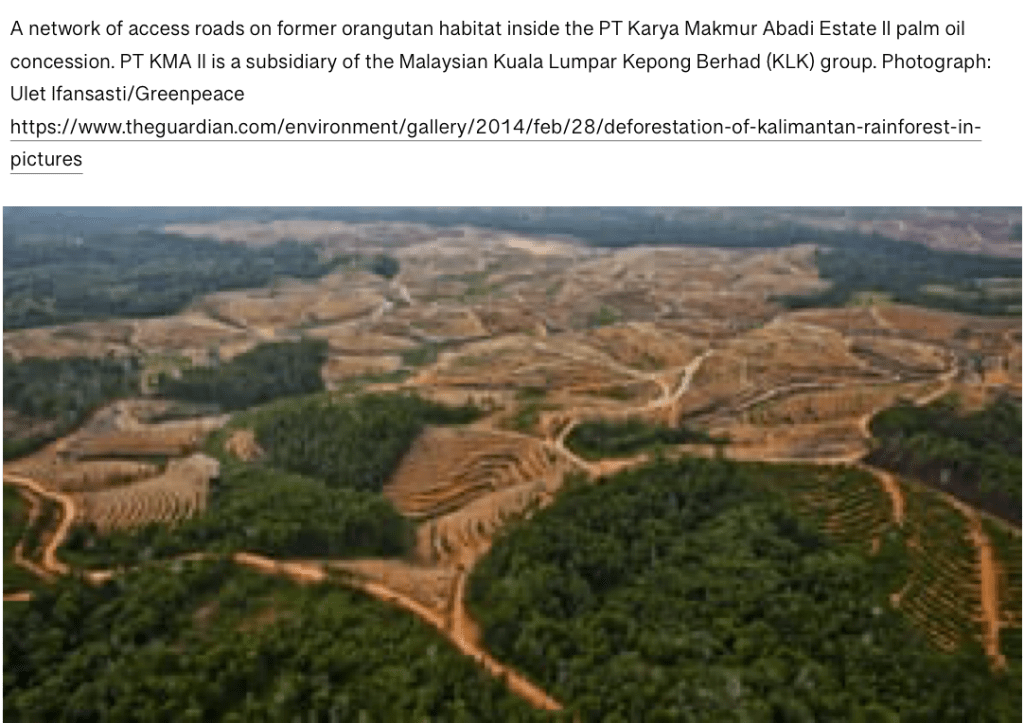
Not surprisingly it is in high demand. Global production has increased from about 2 million tonnes in 1960 to 70 + tonnes in 2018 (https://ourworldindata.org/palm-oil). Production on this scale has led to vast areas of land being repurposed for palm oil plantations – with individual plantations covering 10,000 hectares (approximately 10,000 international rugby pitches or a little smaller than Jersey).  

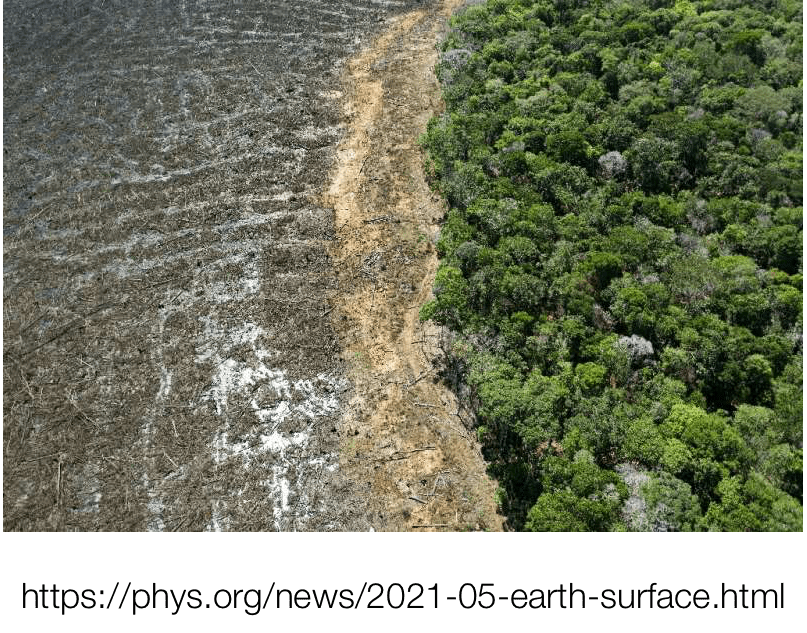
Monoculture on this scale comes with many environmental issues, that lead to droughts, wild fires and flooding – and require widespread use of fertilisers and pesticides which pollute both water supplies and the air.  These detrimental effects are further compounded when the land cultivated involves the destruction of native forests. An estimates 5% of tropical deforestation is attributable directly to oil palm plantations  although on a positive note, the annual loss is decreasing as countries and companies respond to public criticism (https://palmoilalliance.eu/palm-oil-deforestation/).

In places such as Borne and Sumatra much of the land is covered with virgin forest which is home to many plant and animal species and notable home to large mammals such as orangutans, tigers, rhinos and elephants. Expansion of human enterprises removed the equivalent large mammals many centuries ago. One hopes that we will not allow the same to happen again.

On the other hand palm oil production is an important cash crop for many developing economies. As with the cultivation of cocoa beans (https://greentau.org/2021/12/11/green-tau-issue-26/) the profitability of this crop often does not benefit the workers on the ground. In response to both this and the threat to biodiversity – especially orangutans – some consumers and manufacturers actively avoid palm oil. The following logos are used  by

https://www.palmoilfreecertification.org/

Iceland Foods and the https://orangutanalliance.org/

Ethical Consumer has produced a list of manufacturers who avoid the use of palm oil – or use  sustainably sourced palm oil: https://www.ethicalconsumer.org/palm-oil/palm-oil-free-list

The main industry certification scheme for sustainable palm oil is provided by

The Roundtable on Sustainable Palm Oil. However its scheme is not always transparent, and includes companies who are working towards sustainable production. As with cocoa beans, companies can use the certification if they pay the premium that pays for sustainable production somewhere within the supply chain. For more information see https://www.ethicalconsumer.org/food-drink/what-rspo

Traidcraft for one, did not feel that RSPO assured a fair trade product. They have established their own small scale certification platform, Fair Palm through their work with Serendipalm in Ghana. Here oil palm growers use regenerative farming techniques growing a mix of trees and shrubs that provides a range of sustainable – organically grown – crops. In addition the processing of the palm oil fruits is kept small scale so as to employ people rather than automated machines. This video clip shows the process of change from monoculture to agroforestry:  https://youtu.be/moRmOu634rk

If consumer power has already seen a reduction in the rate of deforestation , continuing consumer power should be able to demand truly sustainable and fairly traded palm oil. Careful research will be needed  as the presence of palm oil products may not always be obvious. Palm oil may be hidden under the general title of ‘vegetable oil’ or may be given a chemical name such as aluminium stearate, ammonium Lauretta sulphate, capric glyceride, or ascobyl palmitate. Ethical Comsumer’s palm oil list will help you evaluate which products you wish to buy and which you might prefer to avoid. 

Counting On … day 30

13th December 2021

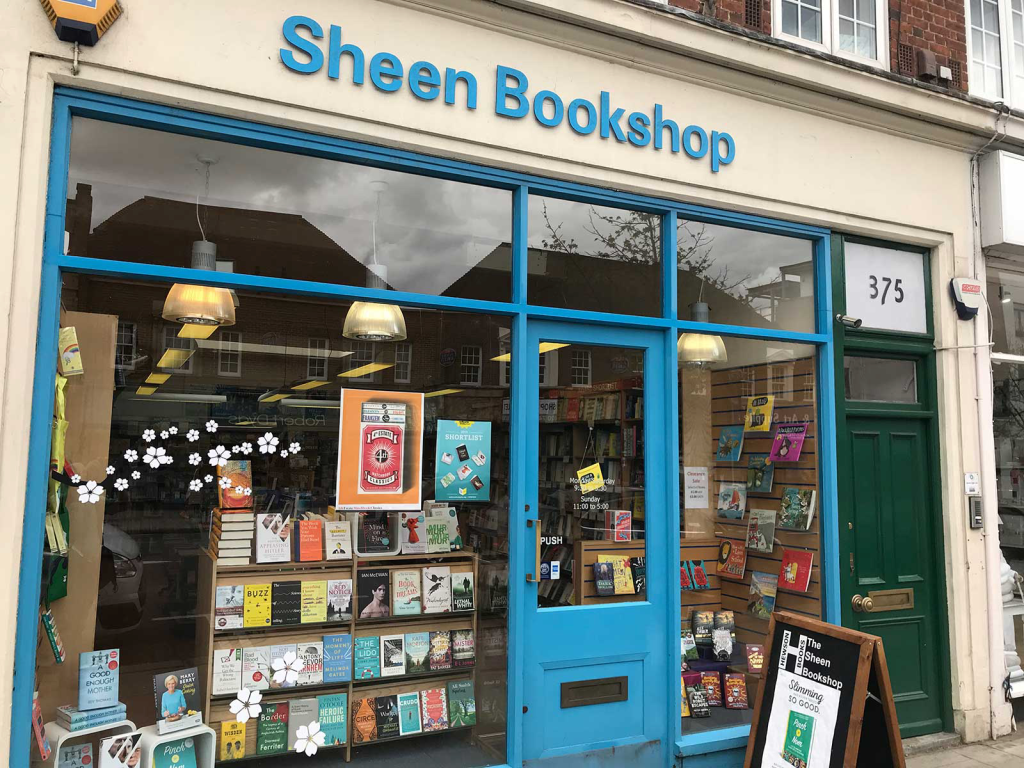
Shop small, shop locally. Supporting small and local businesses is good for the local community and for the environment. Local book shops, for example, are more likely to treat staff suppliers and customers with respect, to pay their taxes – and their shop window also to certainly brightens up the high street! These are the shops and local businesses we count on to make life good. Much more rewarding than buying books from Amazon. 

Ethical Consumer recommends using local food suppliers in their recent report on eating at Christmas.  

https://www.ethicalconsumer.org/ethical-christmas/eat-ethically-christmas

Green Tau: issue 26 

11th December 2021

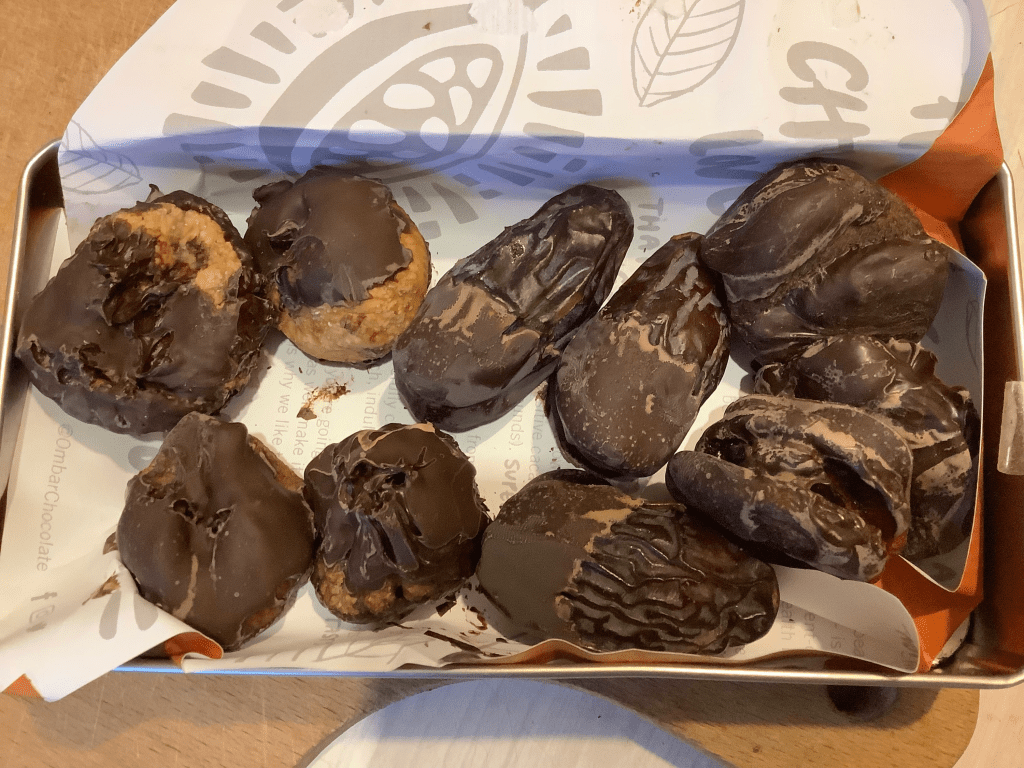
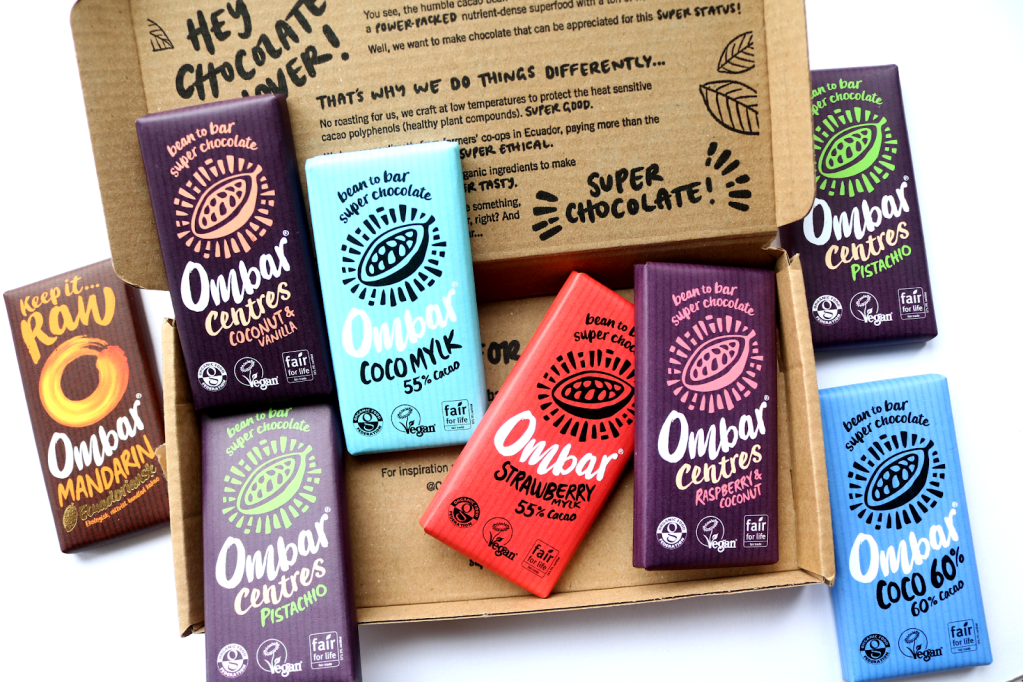
The ethics of chocolate 

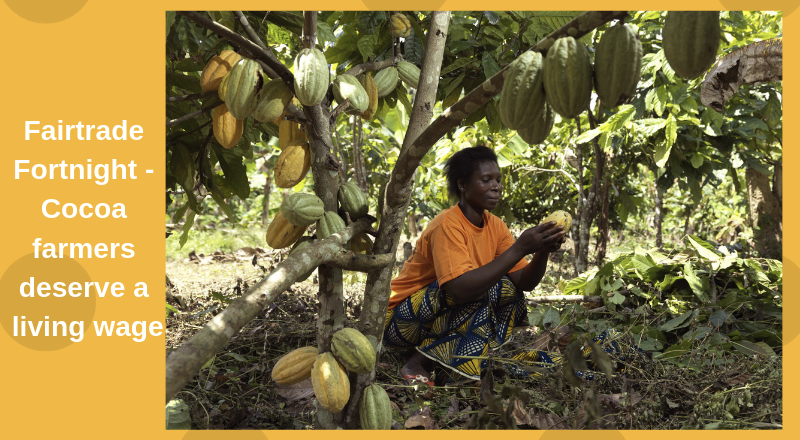
One of the many treats we associate with Christmas is chocolate. In the UK we spend about £325 a year, supporting an industry worth around £4 billion. However at the other end of the story cocoa farmers in Ghana and the Côte d’Ivoire (the largest producers of cocoa beans) may earn as little as 75p a day – or about half what is needed to cover the essentials of food, housing, health car and education – and some cocoa plantations are known to use child slave labour.  This hardly seems fair! Why is it so?

  • Large cocoa companies buy through a global commodity supply system – a sort of global wholesale market. This system is designed to ensure a stable cocoa supply at the lowest possible price. It is not designed to have regard for the sustainability and well being of individual cocoa growers.
  • Whilst cocoa companies can opt to buy certified eco or sustainable beans. This certification process does not mean that the beans they actually buy is eco/ sustainable but that somewhere an equivalent amount of beans has been so produced. This process lacks transparency.
  • Few large cocoa companies have direct links with the bean growers so there are no shared or common interests. 
  • Global cocoa prices do, despite the global commodity supply system, fluctuate as intermediate  traders buy and sell cocoa options. Such traders operate on a short term basis whilst bean growers must operate on a minimum five year basis: it takes five years before a cocoa tree produces its fruit.
  • Poorly paid bean growers do not have money to invest in fertilisers or to learn new farming techniques so as to improve their productivity. Often they themselves are poorly educated because they too grew up in times of poverty when free education etc was not widely available.
  • The impact of climate change – hotter and wetter weather – damages productivity. The changes in weather allows new pests and diseases to develop which damage the crop. 
  • Large cocoa plantations are focused on the  profit made from their sole crop. Such plantations do not diversify into other cash crops that can be grown along side cocoa trees nor into crops that produce food for the workers. Both of these options could help workers survive poor harvests and down turns in commodity prices. Instead workers from large plantations are  readily sacked when these things happen.
  • Small scale growers do not have the money to invest in new  cocoa  varieties that are more productive and/ or more adapted to the changing climate.
  • Much of the profit derives from the sale of chocolate comes from the value added during the manufacture of the chocolate rather than from the production of the beans. However the economies of many cocoa growing countries is still shaped by the patterns of the colonial era which sees these countries as exporters of raw commodities to the west. 
  • Chocolate manufacturing involves a high level of investment in factories, machinery and transport, including refrigeration. Chocolate manufacture also relies on accessing supplies of sugar and milk which may need to be imported with the possibility of additional tariffs. 
  • Climate change is causing bean growers to move to land at higher altitudes. Here existing forest cover is destroyed to plant cocoa trees.
  • When cocoa tree age and productivity declines, many growers simply plant clear existing forest cover and plant new trees which thrive initially on the fresh soil. Long term however the loss of this forest exacerbates both  the climate crisis and the loss of biodiversity which adversely impacts the health and wellbeing of the local population. 

In a recent report, the Ethical Consumer magazine recommends that consumers should check up on the chocolate they buy: 

Does it come from a company where the manufacturer of the chocolate is closely linked to the grower of the cocoa beans?

Is it made from organically grown cocoa and sugar?

Is the production of the beans linked to deforestation and/ or slave labour?

Are the producers of the cocoa beans paid a fair income?

Is the chocolate manufactured in the country where the beans are grown?

The Rain Forest Alliance and Fair Trade are both organisations  set up to ensure the welfare of those who grow the beans and to ensure the environmental sustainability of the farming methods used. They can provide a direct link between supplier and producer. They also provide a certification system which helps the consumer to buy sustainable chocolate products. 

Sustainably  and fairly produced chocolate will cost more than the cheaper alternatives, but this is just  one way in which we can make our money work to improve and protect life on the earth.

For more information watch this informative YouTube programme: https://youtu.be/-XbP4cn8xhU

Further reading: https://newrepublic.com/article/156569/challenge-sustainable-chocolate

https://www.bbc.co.uk/news/world-africa-56687427

https://www.ethicalconsumer.org/food-drink/shopping-guide/ethical-chocolate

Counting on … day 25

8th December 2021

Following on from yesterday’s thoughts, what happens to people who do stand up and protest? And why do they take the risk of ending up in prison? 

The following piece comes from one of XR’s newsletters:

Emma Smart, 44, from Weymouth, Dorset, has been on hunger strike since 16th November. On Friday 26th November Emma was moved out of her cell onto the hospital wing at HMP Bronzefield.

Speaking from the prison, Emma said:

“The window of my cell in the hospital wing is blocked up and there is little natural light, in my previous cell I could see the birds and trees that line the prison fence. I have less time to go outside in the prison yard for exercise now. All of this is testing my resolve to continue, but I feel that not eating is the only thing I can do from prison to draw attention to those who will have to make the choice between heating and eating this winter.

“Not standing by while our government commits treason against the people of this country feels like the most important thing I will do in my life.”