First Sunday of Advent

30th November 2025

Reflection with readings below

The passage from Isaiah sounds like system change – a radical transition from an economy of warfare to one of agriculture. Looking back over recent history, we and previous generations have experienced the transition from canal to rail transport, from horse to car, from coal power stations  to gas power stations, from UK based cotton mills to imported cotton, from UK built engines to imported ones, from the UK beach holidays to Mediterranean package deals. Each transition from one dominant industry or medium to another has come with feelings of fear and feelings of optimism, of job losses and job gains, of resistance and of advancement. 

Would similar feelings be experienced by those who were traditionally makers of swords and spears who see their skills being devalued? And what of those in ancillary trades – the makers of shields and helmets for example? What about the bankers who financed the wars and took their cut of the spoils? What of the young men who has been taught that manliness was exemplified by bring a warrior? Conversely would there be feelings of optimism and excitement amongst those who make ploughing shares and pruning hooks, or ploughs and grape presses? Amongst those skilled in cultivating the land, in turning wheat into bread and grapes into wine? And amongst the wives and mothers? 

On Thursday I attended the National Emergency Briefing where we heard from ten speakers with scientific and similarly qualified backgrounds, talking about the current and future situation vis a vis the impact on us of climate change and biodiversity loss. The morning was both sobering as we heard of the enormity of the risks we face, but equally encouraging when we also heard about the transition that could be made to a healthier, safer (but not cooler – the current increase in temperature and its impacts is already built in) future. But to get to that future will need radical transformation of the way we live, a radical change in the way the government legislates mandatory restrictions on the use and exit from fossil fuels,  a radical change in the way resources are distributed – and a radical change in the way the public are informed about the  risks and opportunities that lie ahead.

Change and transition can be feel scary and daunting. Has our Christian faith any insights and support to offer? Have we stories to tell that will enable people to hear and understand the truth of our current situation and the potential ways forwards?

The message that runs through all the Bible is one of hope, that destruction will not be the end of all things, that evil snd hatred will not win, that God will be there for us, that the gift of love will never be powerless. From the story of the Garden of Eden to the story of Noah’s Ark, from the Exodus from Egypt to the Exile into Babylon, despite whatever sins have been committed and mistakes made,  each story reminds us that God always remains faithful.  From a homeless birth to a life on the road, from the mocking of religious leaders to the misuse of power by those in authority, Jesus lived through the now all to common experiences of many of the vulnerable in our world, yet remained true to his calling. And in the strength that came from the power of his resurrection, which he shared through the Holy Spirit, we too have the strength and power to remain true to our calling to be at one with all of creation. 

I think our faith tells us of the importance of loving our neighbour – whoever or whatever or where ever they are. It tells us of the importance of listening to others, hearing their pain and anger, understanding how they have experienced life thus far. It tells us of the importance of discerning the truth. It tells us of the need to be humble and generous and sacrificial. And it rejoices in all that is good. It rejoices in the joy of fellowship and friendship. It rejoices in the beauty of creation. It rejoices in the peace that comes from God. 

Can we bring these gifts to the conversations about climate change, about biodiversity loss, about social injustice? Can we bring these gifts to conversations about changing our lifestyles – eating less meat and dairy, opting for active travel, insulating our homes, buying what is needful rather than wasteful? Can we bring these gifts to conversations about making a just transition from fossil to renewable energy? Can we bring these gifts about a just transition that enables everyone’s Ila needs to be met? And about how our banking and investments can shape that future? Can we bring these gifts to conversations about how we can prepare for the emergencies that lie ahead – the potential of flash floods, of heatwaves, of power outages – and how we can support each other as resilient communities? Can we bring these gifts to conversations about creating and maintaining green and blue spaces from which we can all benefit?

Yes I think we can and we should – both as individuals and as churches.

NB Franciscans  International and the Lutheran World Federation produced a report this autumn about making a Just Transition. 

“Just Transition is a transition towards a sustainable economic system where the wellbeing of people and the planet is central. It requires reimagining the dominant capitalist mode., which drives  relentless extraction and exploitation. This system must give way to an economy rooted in ecological sustainability, social equity and collective care. Climate action must be embedded within a framework that values human dignity, community resilience and the rights of nature, rather than its commodification.

“Just Transition isa transformation and a shift that calls for systemic change…

“Just Transition is a transition towards climate actions that must be rooted in a robust ethical framework that prioritises justice, fairness and equity for all …”

Isaiah 2:1-5

The word that Isaiah son of Amoz saw concerning Judah and Jerusalem.

In days to come
the mountain of the Lord’s house

shall be established as the highest of the mountains,
and shall be raised above the hills;

all the nations shall stream to it.
Many peoples shall come and say,

‘Come, let us go up to the mountain of the Lord,
to the house of the God of Jacob;

that he may teach us his ways
and that we may walk in his paths.’

For out of Zion shall go forth instruction,
and the word of the Lord from Jerusalem.

He shall judge between the nations,
and shall arbitrate for many peoples;

they shall beat their swords into ploughshares,
and their spears into pruning-hooks;

nation shall not lift up sword against nation,
neither shall they learn war any more.

O house of Jacob,
come, let us walk
in the light of the Lord! 

Psalm 122

1 I was glad when they said to me, *
“Let us go to the house of the Lord.”

2 Now our feet are standing *
within your gates, O Jerusalem.

3 Jerusalem is built as a city *
that is at unity with itself;

4 To which the tribes go up,
the tribes of the Lord, *
the assembly of Israel,
to praise the Name of the Lord.

5 For there are the thrones of judgment, *
the thrones of the house of David.

6 Pray for the peace of Jerusalem: *
“May they prosper who love you.

7 Peace be within your walls *
and quietness within your towers.

8 For my brethren and companions’ sake, *
I pray for your prosperity.

9 Because of the house of the Lord our God, *
I will seek to do you good.”

Romans 13:11-14

You know what time it is, how it is now the moment for you to wake from sleep. For salvation is nearer to us now than when we became believers; the night is far gone, the day is near. Let us then lay aside the works of darkness and put on the armour of light; let us live honourably as in the day, not in revelling and drunkenness, not in debauchery and licentiousness, not in quarrelling and jealousy. Instead, put on the Lord Jesus Christ, and make no provision for the flesh, to gratify its desires.

Matthew 24:36-44

Jesus said to the disciples, “But about that day and hour no one knows, neither the angels of heaven, nor the Son, but only the Father. For as the days of Noah were, so will be the coming of the Son of Man. For as in those days before the flood they were eating and drinking, marrying and giving in marriage, until the day Noah entered the ark, and they knew nothing until the flood came and swept them all away, so too will be the coming of the Son of Man. Then two will be in the field; one will be taken and one will be left. Two women will be grinding meal together; one will be taken and one will be left. Keep awake therefore, for you do not know on what day your Lord is coming. But understand this: if the owner of the house had known in what part of the night the thief was coming, he would have stayed awake and would not have let his house be broken into. Therefore you also must be ready, for the Son of Man is coming at an unexpected hour.”

Green Tau: issue 117

16th October 2025

What are the problems with plastic? 

Is plastic simply a litter problem?

“Plastic is a useful everyday item but has grown to become a global problem. Every year the world produces over 460 million tonnes of plastic, 90% of  which pollutes almost all areas of our planet, it can be found at the bottom of the ocean, and on our tallest mountains. This pollution can cause harm to habitats and wildlife, impact livelihoods of people around the globe, and carries growing risks to human health. At the current rate, global plastic pollution could triple by 2040 unless we act now” – a quote from WWF. (1)

Could the answer be ‘more recycling’? 

Yet last week an article in the Guardian reported that “in the past two years 21 plastic recycling and processing factories across the UK have shut down due to the scale of exports, the cheap price of virgin plastic and an influx of cheap plastic from Asia, according to data gathered by industry insiders.” (2) The UK now exports 600,000 tonnes of used plastic – making it the third largest in the world. Rather than being recycled within the UK, this plastic ends up in countries with neither the infrastructure nor the legal safety constraints to ensure that it is recycled without injuring either the environment or the local populace. The plastic is typically  either burnt or allowed to build up in huge waste heaps where it invariably finds its way into rivers and oceans. Much of the UK’s plastic waste is exported to Turkey where, the Guardian reported two people are crushed, ripped, or burned to death in this work every month. 

A combination of legislation to end the export plastics waste and taxes to discourage the use of virgin instead of recycled plastic is clearly needed. Rather than letting them close, recycling facilities should be seems as essential parts of the UK’s infrastructure: “If we were to stop exporting plastic waste, and we were to meet our increased recycling target of a 65% recycling rate for municipal waste by 2035, we would need to build 40 new factories across the UK – 20 of them would be sorting facilities and 20 would be processing facilities turning the material back into products,” said an industry source.

Or could the answer be ‘make less plastic’?

Earlier this year, an international gathering sought to agree a global plastics treaty. Work on this treaty began back in 2022 when growing scientific evidence highlighted the risks posed to humans (and other living organisms) by the toxic chemicals that can leach out of plastic as it breaks down. The ambition was not merely to ensure higher levels of recycling, but to to curb in absolute terms the amount of plastic produced globally each year. Plastic production had risen from 2 million tonnes in 1950 to 475 tonnes in 2022. However the treaty was successfully opposed by the large oil-producing nations and members of trade associations representing plastic producers. (3) 

What if plastic pollution is a health problem too?

This week there was another newspaper article this time reporting on the spread of plastic into our bodies. “Microplastics have been found almost everywhere: in blood, placentas, lungs – even the human brain. One study estimated our cerebral organs alone may contain 5g of the stuff, or roughly a teaspoon.” (4)  

What are micro plastics and where do they come from?

Microplastics are fragments of plastic that is between 1 nanometer and 5 millimetres wide. They come from two main sources:-

  • plastics specifically manufactured as microbeads which are added to face ashes, shower bells and other personal care products – they make the liquid both smooth and  sufficiently thick that it does run off like water. Think of the difference say between an antiseptic hand spray and an antiseptic hand-gel. These are known as primary microplastics.
  • Plastic particles that derive from the disintegration of larger plastic items – eg plastic film and wrapping, takeaway containers, synthetic clothes , care tyres, paints and plastic turf etc.. These plastic particles may be shed as drinking from plastic bottles and take away cups (more plastic is shed when heat is present such as with hot drinks or microwaved food), from wearing and washing clothes, from friction between roads and tyres etc.  These are known as secondary microplastics. (5)

Both types of microplastic can pass into water systems, can be present in the air we breathe, and can pass into the food chain and so into the food we eat. Microplastics are to be found all over the world – from the hops of mountains to the depths of the oceans and everywhere in between. 

Nanoplastics are even smaller – less than 1,000 nanometers in diameter, or 100 times smaller than the diameter of a human hair. They are small enough to slip through the walls of the cells in our bodies and can be found in our blood, lungs, brains, bones, the placenta and breast milk. (6) 

Do these pieces of plastic harmful?

We don’t yet know whether having such buts of plastic in our bodies is good for us (unlikely), neutral or harmful. Nor do we know whether there is a limit below which they are not harmful but above which they might be. It is possible that they may aggravate complaints such as asthma, dementia, cardiovascular disease, cancers etc. (7) The issue is further complicated as plastics contain toxins such as bisphenols (BPA), alkyphenols, and phthalates and dioxins etc, which are also thus passing into our bodies. 

It is not just human bodies that maybe adversely affected. Micro and nanoplastics are already known to be adversely impacting the health wild life – eg damaging the gut biomes of seabirds, increasing the number of pathogens present and reducing antibiotic resistance.  (8) 

Should we panic? 

No. We don’t yet know enough to know how dangerous, or not, micro and nanoplastics are. We don’t know whether or not our bodies have a way of eliminating such particles from our bodies. And realistically there is no way we can avoid ingesting these particles given their presence in very part of the environment. 

In many instances using plastics can be lifesaving with benefits outweighing the – as yet unclear – disadvantages. For example the use of plastic syringes to give vaccines, plastic pipes to provide clean drinking water, plastic bags for collecting blood donations, waterproofing coats that keep us warm and dry.

But we could cut back on our use of plastic

 We can reduce our exposure to plastic particles by reducing the amount of unnecessary plastic we have around us and by adjusting how we use those plastics. For example we might use a reusable water bottle and a reusable cup when out and about (and often cafes give discounts when you bring your own take away cup). You might use glass or metal dishes for storing food and wax wraps or foil instead of cling film. You might use wooden spoons and chopping boards rather than plastic one; metal colanders and metal washing up bowls etc. Equally you might avoid body care products with microbeads and use solid or liquid alternatives. You could try a milk delivery service and get milk in glass bottles rather than plastic cartons. And following that line of thought, you may have a local refill store that allows you to buy various food ingredients and household items without the need for lots of plastic packaging. 

There are plenty of guides on line about switching to a plastic free life. eg https://friendsoftheearth.uk/plastics/living-without-plastic and some of my earlier blogs have explored this topic – https://greentau.org/tag/plastic-free/ and https://greentau.org/2022/01/27/eco-tips-zero-waste/

However we should remember that not everyone can afford the plastic alternatives – a metal drinks bottle can  cost more that a plastic one. A sliced loaf in a plastic bag will be cheaper than it paper wrapped alternative. 

What about changing the system?

If we are going to be fair for everyone and everything – wildlife, ecosystems, future generations, then the whole system needs to be changed. 

Nations need to agree on a workable plastics treaty that will cut the amount of plastic produced. The plastics industry needs to develop alternative safe and sustainable substitutes. Governments need to implement a combination of legislation, taxation and investment to ensure that the changes needed do actually happen.

We can advocate for change by supporting groups like Friends of the Earth and Greenpeace, and we can raise awareness about the issue by talking with others – particularly if they are intrigued about the efforts we are making to reduce our use of plastic! 

  1. https://www.wwf.org.uk/learn/environment/plastic-pollution
  2. https://www.theguardian.com/environment/2025/oct/09/britain-2bn-recycling-industry-export-plastic-waste
  3. https://www.bbc.co.uk/news/articles/cvgpddpldleo
  4.  https://www.theguardian.com/environment/2025/oct/12/plastic-inside-us-microplastics-reshaping-bodies-minds?CMP=Share_iOSApp_Other
  5.  https://www.unep.org/news-and-stories/story/everything-you-should-know-about-microplastics
  6.  https://ukhsa.blog.gov.uk/2025/03/12/nanoplastics-are-everywhere-what-is-the-health-impact-of-these-tiny-particles/
  7.  https://www.bbc.co.uk/future/article/20250723-how-do-the-microplastics-in-our-bodies-affect-our-health
  8.  https://www.nature.com/articles/s41559-023-02013-z

Counting on … Day 56

6th May 2025

System change is vital if we are to contain and constrain the climate crisis. Individuals can help bring about system change. We can use our votes to elect a government that understands and will pursue system change. We can write to our MPs and press them to bring about the changes we need to see. We can sign petitions – targeting either MPs or business corporations- again pressing for change. 

(We can also write follow up messages saying thank you when change does happen).

As regards wiring to your MP, personalised letters are more effective but you may want to start with a ready-made template  such as this one from Hubbub –

Or this from WWF –

http://assets.wwf.org.uk/downloads/how_to_write_to_your_mp.pdf

The more you read and the more groups you interact with, the greater the number of petitions that will land in your in-tray- but do they work? 

The following observations comes from the Welsh Government:

“Petitioning is one of the most direct ways to suggest how something could change. Petitions can:

  • Raise awareness of an issue;
  • Bring about a change in Welsh Government policy or a different way of delivering services;
  • Propose or influence a new law;
  • Prompt a Senedd Committee to hold an inquiry;
  • Lead to, or influence, a debate in the Senedd;
  • Prompt a Committee or individual Members of the Senedd to take further action themselves, for instance by asking questions”. https://petitions.senedd.wales/help

Friends of the Earth offer a good selection of petitions as a starting point –

Counting on … Day 55

5th May 2025

With the best will in the world, individual life style changes are not going to single handedly, curb carbon emissions and limit global temperature rises to a safe limit. As individuals our actions are constrained by the systems within which we live – be that tax policies; whether subsidies are made available for public transport or for fossil fuels; whether those who emit carbon dioxide have to also pay for the damage caused ( a polluters pay policy); whether manufacturing (and any associated carbon dioxide emissions) is relocated to a third country; whether beneficial lifestyle changes are promoted by the government etc. Therefore an important factor in halting the climate crisis is whether or not governments and business implement systemic change. 

Last January the World Economic Forum produced a report, The Bold Measures to Close the Climate Action Gap: A Call for Systemic Change by Governments and Corporations, which calls for ‘systemic actions and …… outlines the urgency and necessity of drastic action from both governments and corporations to combat climate change effectively and deliver on commitments. It emphasises the need for governments to level the playing field for green solutions and proposes practical ways for companies to achieve outsized impact in their ecosystems.’

Counting on … day 13

17th January 2025

It is not just businesses that need to change, government also needs to use its power to change the system. “We need the Government to stop tinkering with measures that create tiny insignificant changes and tackle single use waste in the way they finally tackled smoking, helping to make our public spaces litter free as well as smoke free.  That requires putting in place systems which significantly disincentivise single-use and makes reuse a convenient and viable option for both businesses and consumers.” (1)

  1. https://www.refill.org.uk/about/what-is-reuse/

Counting on … day 145

9th August 2024

Flight Free emphasises the roles of instigating social change and system change. The two are interconnected. As individuals we can be part of both: in the ways we choose to behave – what we buy, how we live, what we prioritise and what we talk about in words or via social media – and in writing to business and government leaders and signing petitions.

You might begin by asking your MP to sign the pledge calling for a three year moratorium on the expansion of UK airports. 

Further reading on why expanding airports is not good for the economy, the environment as well as for social justice –

https://flightfree.co.uk/post/whats-wrong-with-airport-expansion/

The Green Tau: issue 46

System Change?

4th August 2022

Steam Punk is based on the scenario of an alternative history in which steam power, steam engines and hand cranked machines reigned supreme, preventing the development of electrical power and the petrol engine. Might there be scope for Cycle Punk, an alternative history in which peddle power dominates with pedal powered kettles and mobile phones as well as the straightforward two wheel mode of transport?

The way economies and societies work -a product of convenience, economies of scale and inertia – is such that a preferred system will prevail whether that is the energy system, transport system, voting system, or  communications system. The systems or products that are not adopted are not necessarily a worse choice, just different as was the case between VHS and Betamax for video recorders. But once a system is established it is hard to change, because everything is geared to it, business and society have bought into it, lifestyles are built around it, and investment perpetuates it as the safe bet.

In the UK we have favoured a transport system based on private cars over one based on public cars, buses and trains. Our infrastructure favours the former. Our lifestyles have been shaped by the former. Our businesses are geared to the former. Our investment is predicated on its continuation. To change the system would need radical change in all these areas. 

Our energy system is based on the use of cheap fossil fuels. Our agricultural system is based on the production of cheap food, especially cheap animal products. Our manufacturing system is based in the use of cheap labour – as is our hospitality sector. Our investment system on the other hand is based on maximising profits for the few. 

The size and scale of such systems prevent us from seeing or experiencing anything different. Their market share precludes new entrants with alternative ideas. The systems prevent the use of better, more appropriate technologies.

In the UK fuel bills are rising out of all proportion to the cost of production, yet swopping to an alternative system seems nigh impossible. For people struggling financially, there is no spare cash to replace a gas boiler with a heat pump. There is no spare cash to install double glazing and reduce dependency on central heating. There is no comprehensive public transport network to remove reliance on the private car. There is insufficient investment in alternative energy and the odds are increasingly stacked against such investments as the return on fossil fuel investment sky rockets as fuel prices – but not costs – continue to rise.

The Democratic Republic of the Congo drawing on the power of the River Congo has the capacity to generate 100,00MW of hydro electric power compared with its existing capacity of 2792MW (https://www.usaid.gov/powerafrica/democratic-republic-congo). Yet this requires investment. The DRC is a nation struggling to meet the needs of its people, and the government is currently auctioning fossil fuel rights to explore and extract oil from under its rainforests, a move that will generate money now rather than longer term pay back of hydro power.

Africa as a whole has great potential for the generation of solar power, and which if provided via small scale projects can provide electricity to areas far removed from the grid. Yet whilst solar power has still to be developed in countries such as Algeria, Angola, Egypt, Ethiopia, Ghana, Morocco, Namibia, Nigeria and Tanzania (https://commodityinside.com/reports/solar-energy-market-in-africa/) the big oil companies are developing new oil and gas fields in Angola, South Africa, Ghana, Gabon, Egypt, Namibia and Kenya. 

Understanding that we are to a greater or lesser extent trapped in a system lets us be realistic about our situation, our predicament. It also helps us understand what will be needed to bring about change. 

Changes in government policy to favour the new system and tax changes and rules  to discourage the old.

Changes in global policies as advocated by the World Bank, the UN etc.

Changes in investment strategies and business plans.

Developments in new technology.

Changes in public opinion that will support all these. 

This is where we come in. We can, even in small ways, be the trigger or the irritant that initiates and propels change. We can make a difference – by talking with friends and neighbours, by loving as if we were already part of the new system, by campaigning, by pressing businesses and politicians, by voting with our money, by investing and by pestering those institutions investing on our behalf, by supporting charities, by standing up. As Christians we are well suited to this. We have that calling to be different, to be countercultural, to be willing to go the extra mile, to act for the wellbeing of the other.

The global system of slavery did come to an end when public opinion had changed. They did it then. We can do it now. 

Counting on ….day 261

30th July 2022

Yesterday I added an extra Count Down entry marking 100 days until COP27, and in these next 99 days I will be repeating some of the actions I noted last year. We are relying on governments and big businesses to effect the system change need to address climate change, but such organisations are ultimately responsive to social trends. In the hustings for the new Conservative party leader, we are seeing the two candidates trying to match what they have to offer with what they sense their voters (Conservative party members) want. If we want governments and businesses to take positive action vis a vis the climate crisis, then that needs to be the desire of society at large. As much as we petition and push governments and businesses to change, we must enthuse society in the same direction. Last year’s “action 2” was talking about the climate crisis with friends – raise awareness and interest, make the topic interesting and pertinent, make the need for action desirable. 

Counting on …day 160 

22nd April 2022

We are enmeshed in a economy fuelled by fossil fuel industries that are

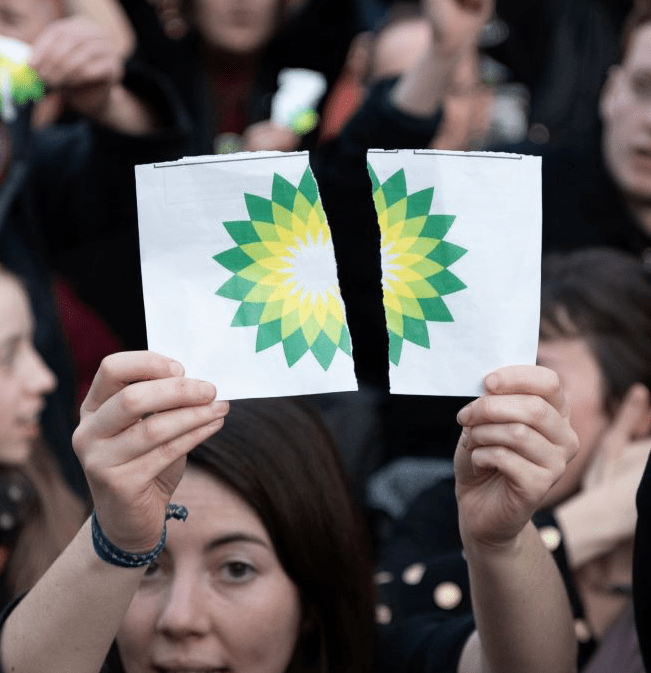
reluctant – indeed highly resistant- to change. If change does not happen, we and the world will suffer increasingly the effects of the climate crisis. BP,  one such fossil fuel company, has been a sponsor of the British Museum for many years. Despite on going public opposition  and despite the move of most of other institutions away from fossil fuel sponsorship, the British Museum is currently negotiating with BP for a further five year deal. This weekend ‘BP or not BP’ will be continuing its campaign to dissuade the British Museum.   Find out more from their web site https://bp-or-not-bp.org/news/ 

or sign their petition https://you.38degrees.org.uk/petitions/the-british-museum-must-not-to-renew-its-sponsorship-deal-with-bp

Here is a piece from their Facebook page: 

“Why is BP sponsorship such a big deal? 

BP doesn’t sponsor cultural institutions out of the goodness of its heart. Its philanthropic image is a carefully curated marketing scheme, designed to distract from its appalling environmental and human rights record, its decades of funding brutal autocrats (including Vladamir Putin) and its huge contribution to climate change.

From covering up oil spills which harm oceans and animals, to dodgy deals with dictators and warmongers, BP has done it all. The company’s history is inseparable from colonial oppression and its endless quest for fossil fuels has wreaked international havoc for more than 80 years.

This sponsorship deal at the British Museum doesn’t just give BP a false veneer of respectability. It allows the company to use this publicly funded space to throw fancy events, schmooze with UK government officials, and cosy up to representatives of fossil-fuelled regimes from Egypt to Azerbaijan to – yes – Russia.”

The Green Tau: issue 40  

5th April 2022 

‘Just Stop Oil’?

A limited amount of press coverage has been given to the Just Stop Oil movement which is currently blockading various oil refineries and terminals around the UK.  Just Stop Oil are using the tactics of civil disobedience rather than civil resistance to push the government to stop permitting any new oil production. Explaining what this shift would look like, one supporter told the Guardian last month that it would mean “stopping pointing out what the government should or shouldn’t be doing [and instead] actively stopping government doing what they shouldn’t be”. The campaign, which has involved protesters being glued to roads, suspended on bamboo tripods, and locked on to oil drums and each other, is taking place in defiance of a temporary high court injunction banning protests outside oil terminals. Just Stop Oil has vowed to continue “civil resistance” protests until the government agrees a moratorium on all new fossil fuel projects and claims it has more than 1,000 supporters willing to be arrested for taking part. “We need the government to stop funding new oil projects and we need it now! Our only means of highlighting this issue is mass civil resistance,” they said in a post on Instagram. https://www.theguardian.com/environment/2022/apr/04/protesters-block-oil-depot-near-heathrow-as-action-enters-fourth-day , https://www.theguardian.com/environment/2022/apr/01/environmental-protesters-block-oil-terminals-across-england

Why is Just Stop Oil so committed to and adamant about, their demand? 

In August last year, the first part of the IPCC’s latest assessment (each assessment is the product of five to seven years by three different working groups) was published. This part of the assessment focused on the physical science aspects of climate change, and concluded that the world had on,h a narrow chance of limiting global heating to 1.5C (We are already at 1.1C). This limited window of opportunity needs everyone – governments, businesses, industries, farming etc – to stick to what their agreed 2030 targets.

The second part of the assessment focused on the effects of climate change, such as extreme weather, droughts, floods and temperature rises, and how humanity can adapt to these. This was published in February when it was sadly overshadowed by the invasion of Ukraine. It reported that  3.5 billion people are highly vulnerable to climate impacts and half the world’s population will suffer severe water shortages at some point each year. One in three people are exposed to deadly heat stress, and this is projected to increase to 50% to 75% by the end of the century. Half a million more people are at risk of serious flooding every year, and a billion living on coasts will be exposed by 2050. Rising temperatures and rainfall are increasing the spread of diseases in people, such as dengue fever, and in crops, livestock and wildlife. If global heating continues and little adaptation is put in place, 183 million more people are projected to go hungry by 2050.

Nikki Reisch, the director of the energy and climate programme at the Center for International Environmental Law, said governments should be clear: “There is no room for more oil and gas full stop. [Some businesses] want to perpetuate the myth that we can carry on using fossil fuels. But we need a just transition away from fossil fuels, not techno-fixes.” https://www.theguardian.com/environment/2022/apr/03/scientists-urge-end-to-fossil-fuel-use-as-landmark-ippc-report-readied

The climate crisis is an imminent and highly dangerous. The task of averting this catastrophe relies on us all achieving net zero carbon emissions by 2050 and at least halving them by 2030. Just Stop Oil is not demanding that the government stop all consumption of oil overnight. They are demanding that the government stops our increasing use of oil,  and takes action to cut back our use of oil so that we meet our 2030 and our 2050 net zero targets. 

The war in Ukraine has highlighted our unhappy dependency on fossil fuels, especially those we import from other parts of the world whose regimes are corrupt and un-humanitarian. The solution to this short term problem should be increasing renewable energy capacity – through investment in wind, tidal and solar energy – combined with a comprehensive programme to insulate homes and other properties. Yet there is a risk that the government will opt to escape this problem by allowing more oil exploration in the North Sea. To do so would make meeting our 2030 net zero targets an impossibility, consigning us to trauma of accelerating climate change. 

For Just Stop Oil what is needed is system change. A change from the current oil based system where the government (through taxation and policies) and businesses ( through investment and  practices) perpetuate the use of oil as the main source of energy and the mainstay of production. Consumers find themselves trapped in the system. Gas heating is cheaper than any other form of heating, flying is cheaper than travelling by train, driving is cheaper than public transport, imported food is cheaper than domestically grown, virgin plastic is cheaper than recycled etc etc. It is a system stacked against the environmentally concerned individual. 

Is it surprising then that for many environmentally concerned individuals the only option is civil disobedience? And where does that leave the more fainted hearted environmentalist?

Governments are seldom willing to make system changes unless they feel that is the direction in which the voters have already moved – in recent history one might include the over turning of the poll tax, reining back on nuclear weapons development, and gay weddings. Outside times of severe crisis such as war, system change also needs social change – and that means a change of heart at the individual, ie the average person on the street. Is the average person on the street ready to accept the changes in lifestyle that reducing our dependency on oil and achieving the halfway 2030 net zero targets demands? 

To be continued in issue 41