
Eco Tips: Swopping to a plant based diet 

27th December 2025

  • Plant based milks: some have added vitamins, typically A, D, B2, and B12, as well as various minerals like calcium and iron; protein levels are much less than in dairy milk but few western diets are deficient in this; choose milks that are produced from plants grown in Europe as this minimises their carbon footprint; if the milk splits when added to hot drinks, you might want to choose a barista grade milk; you can buy oat milk in glass bottles and reduce packaging – eg from Milk and More.  1 litre of oat milk has a carbon footprint of 0.9kg as opposed to 3kg for dairy milk. Oat milk also uses less water and less land than dairy milk.
  • Plant based substitutes for yogurt, Greek style yogurt, crème fraîche, double and single creams, are also available and can be used for cooking too. 
  • As well as margarine, you can also buy vegan butter. This has a similar taste and texture to butter and is good for baking where the recipe calls for dairy butter.
  • Vegan mascarpone can be made by blending a 300g block of silken tofu with a carton of Oatly whippable custard.
  • Plant based cheeses are varied. Violife feta style cheese has a pleasant taste as does their mature cheddar. The latter can be grilled but tends to shrink as it is bubbles. Nut based cheeses can better mimic the texture of cheese and have a better nutritional value than many vegan cheeses.
  • Coconut milk adds a pleasant taste to soups and curries and gives a silky creamy texture. Coconut milk also makes for a good rice pudding.
  • Aqua faba – the water in which dried beans have been cooked – has a gelatinous texture and can be used as an egg substitute. It works well for making mayonnaise and meringues. You may sometimes need to add a little xanthan gum for extra stiffness. 
  • To replace eggs in baking, use commercially made egg replacement powder (eg from Super Cook), aqua faba or chia seeds mixed with water (1:3 per egg). The chia seeds swell and become glutinous. That said there are various cake recipes that don’t need eggs or egg substitutes – scones, flapjack, muffins, fruitcakes etc.
  • Silken tofu can make an acceptable substitute for scrambled eggs but needs suitable flavourings such as pepper, fine herbs etc. For a frittata mix bean flourBean with a water/ oat milk and spices (eg turmeric/ black pepper/ paprika etc) and a little baking powder and cook as per an egg based frittata.
  • Replace meat protein with a variety of beans, peas, pulses and nuts. You will spoilt for choice: in our cupboard at present we have whole and split yellow peas, ditto green peas, blue peas, Carlin peas, black badger peas, split faba beans, green and orange lentils, cashew nuts, walnuts, almonds, Brazil nuts and pistachios. The beans, peas and pulses are UK grown sourced and sold by Hodmedod’s.  Lentils have a carbon footprint of 0.9 per kg compared with 6.9kg for chicken and 27kg for beef – and needs less land and water.
  • Lentils make a good substitute for mince. Puréed peas or beans make a good sauce to mix with pasta or vegetables. 
  • Combine beans and pulses with grains – eg wheat, rice, corn –  or with grain-based foods such as pasta and bread. The different amino acids from each will combine to give a better overall quality protein intake.
  • Replace meat or fish with tofu (made from soya beans) or seitan (made from wheat protein). These products offer a variety of different textures to meals.
  • Include yeast extract and yeast flakes in your cooking to ensure a good intake of vitamin B. Opt for ones that include B12 which is hard to obtain from plant sources. For iron eat beans and legumes, dark green leafy vegetables, dried fruits, nuts and seeds, and wholegrain cereals and breads. For calcium eat nuts (especially almonds) and seeds (esp. chia), figs, leafy greens, beans and pulses.
  • For vitamin D you may wish to consider a supplement. Sunshine is a good source of vitamin D but even so many people in the UK – vegan or otherwise – are deficient.
  • Vegetables and fruit are always important for flavour, texture and nutrition. But not all fruit and vegetables are equal. Out of season strawberries, blue berries, and asparagus for example are not sustainable and are often brought in by air.  Avocados and mangoes, amongst others, consume vast amounts of water as they grow, and such crops divert water from other essential uses. 
  • Eat food that is in season and try out unusual items such as salsify, cardoons, quinces etc.
  • Organically produced ingredients is preferable to non organic if only because the the excess nitrates from fertilisers runs off the fields and polluted water ways. And insecticides and herbicides are a real threat to biodiversity – including in our own gardens. 
  • Locally produced food is again preferable, reducing air/lorry miles and reducing the length of the supply chain.
Counting on … 181

6th November 2025

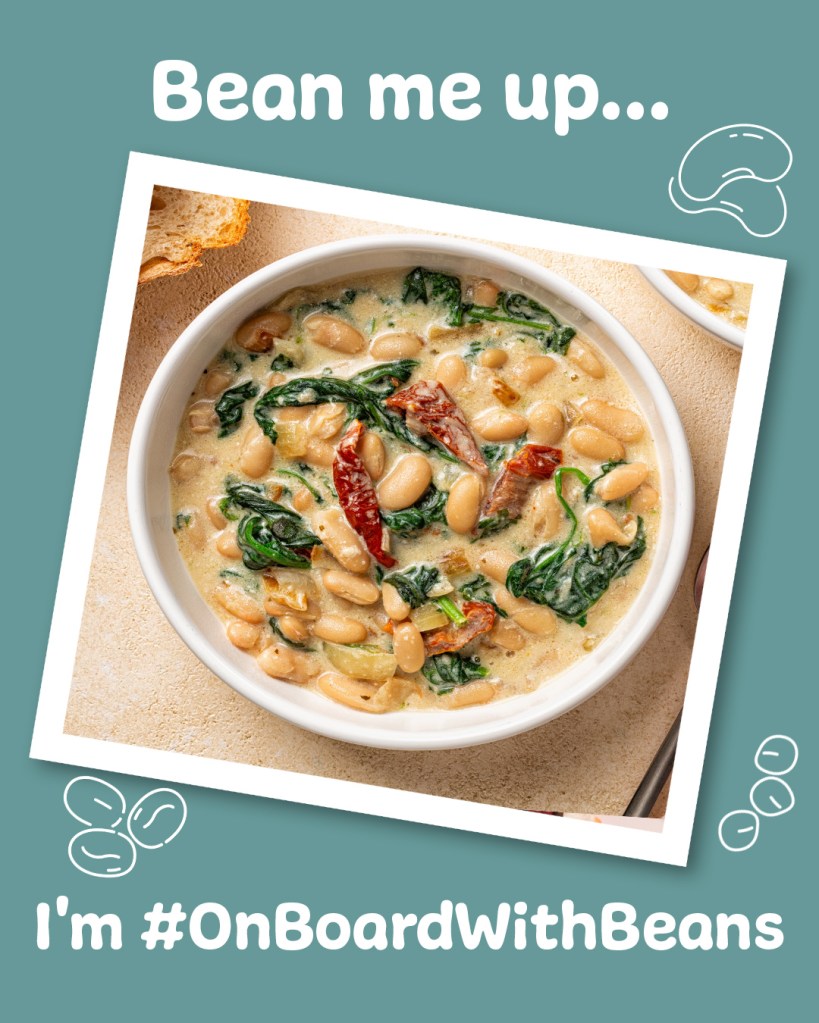
Bang on cue! Yesterday saw the launch of a new campaign – Bang on Some Beans – to encourage us to eat more beans and pulses in the best interests of our own health and for the health of the planet. 

The Guardian offers a selection of appetising recipes (although the quantities look as if they would feed many more than the recipes suggests). 

Another go to site for recipes is Hodmedod’s who are a British grown beans, pulses, grains etc. Their recipes include ones using bean flour – dried beans milled into flour are a great way to increase protein and fibre and reduce carbon hydrates and can be used in making cakes, biscuits, bread, pasta etc.

Green Tau: issue 98

Walking the Talk

24th November 2024

A few weeks ago, whilst I and others were holding our weekly Earth Vigil outside Parliament, a passerby stopped to quiz us. In transpired that he was not interested in the wellbeing of the environment and rather wanted to justify his position by proving that we were hypocrites. 

His line was that we could not be taken seriously in calling for a rescinding of the Rosebank licence whilst possessing shoes, clothes, rucksacks etc made from plastics/ ie oil. He would not listen to our response that we were constrained by what one could buy in a world that is still heavily embedded in using oil. Even as our economies transitions away from oil, it is still going to take a while before sufficient alternatives take over from plastic. As one person interjected, “When Edison was designing the lightbulb he had to rely on candle light!” (Or possibly gas). 

But what really incensed me was that I do try and do everything I can to live ecologically. I wear second hand clothes, darn my socks, patch my rucksack and my trainers, shop at a refill shop, avoid buying anything in a plastic wrapper, don’t fly, eat a vegan diet that includes wonky and unwanted fruit and vegetables, source beans and pulses grown in the UK. And flour for my bread is milled in a proper windmill in Cambridgeshire!

I do do all I can to walk the talk! 

And it’s not easy especially when you feel your are a minority of one. When we are away from our normal locality – and especially so when on holiday in Switzerland (we go by train) – it feels as if everyone else is saying, why are you so awkward?  What difference can it make whether or not you eat a little cheese, eat a cake made with butter, an ice cream made with milk? Will eating a croissant make any difference to the world? 

When I stay with family and they make a special dish just for me, I feel I awkward and think I must seem very pedantic.

Or when others are discussing their past and future holidays, a quick (and let’s agree in the present tax regime, cheap) flight to Italy/ Turkey/Spain, or a leisurely holiday exploring Japan, Korea and Malaysia, or a winter trip to sunny Oz. Am I grouch or a kill joy because I won’t fly? And this is where I do feel guilty: am I being really selfish as I know my husband would love for us to travel the world?

So why is it important to tread this lonely path? 

Firstly because unless someone starts, no one will ever start. I maybe the first not to fly amongst our friends but hopefully I won’t be the last.

Secondly because the more people take these steps the easier it will be for other to follow. If I always ask for a vegan cake when I’m buying a coffee, then hopefully in a few years time, vegan cakes will be the norm on cafes. Plant based milks are pretty much standard nowadays! (But why then current trend of charging extra?)

Thirdly because the more people are seen to be travelling by train not plane, or eating humous not cheese, or carrying a keep cup rather than using a single use throw away cup, the more normal such behaviour becomes.

Fourth as such patterns of behaviour become normalised – even popular – so businesses and governments will change their thinking. 

Fifthly because eventually the world could change for the better! 

Yet I am not hopeful that any of this will happen fast enough to prevent the huge catastrophe that the climate crisis is forming. And that makes it a very hard path to tread. I am making life awkward for myself and my husband and my friends and family with only a very small chance that it will make life better for them.  But equally I know that not trying would be even more hurtful. 

And finally, yes I do it because it makes me feel just a little bit better; that I am at least doing something rather than nothing.

Counting on … day 202

29th October 2024

About 34% of all our greenhouse gas emissions are food related so looking at what we eat and making changes can be – cumulatively – a very effective way of addressing the climate crisis.(1)

80% of agricultural land is used for feeding and grazing livestock, yet produces only 17% of global calories.(2) Reducing the meat and dairy products we eat, not only reduces the emissions linked directly to the livestock, but also frees up land that could be used to grow plant based foods for humans, and frees up land that could be rewilded to boost both biodiversity and natural carbon capture. 

The Ethical Consumer’s report ‘Closing the Gap 2024’ records that this change in diet in the UK has already started, so let’s carry on and boost this trend even more!

Tips for swopping to a plant based diet – https://greentau.org/2021/10/12/eco-tips-11/

  1. https://www.nature.com/articles/s43016-021-00225-9
  2. https://ourworldindata.org/global-land-for-agriculture

Further reading https://www.unep.org/news-and-stories/story/how-tweaking-your-diet-can-help-save-planet

Green Tau: issue 96

Walking the Talk

28th October 2024

A few weeks ago, whilst I and others were holding our weekly Earth Vigil outside Parliament, a passerby stopped to quiz us. In transpired that he was not interested in the wellbeing of the environment and rather wanted to justify his position by proving that we were hypocrites. His line was that we could not be taken seriously in calling for a rescinding of the Rosebank licence whilst possessing shoes, clothes, rucksacks etc made from plastics – ie oil. He would not listen to our response that we were constrained by a world that is still heavily embedded in using oil even as it transitions away from oil, such that there is not always a readily available non plastic alternative.

But what really incensed me was that I do try and do everything I can to live ecologically. I wear second hand clothes, darn my socks, patch my rucksack and my trainers, shop at a refill shop, avoid buying anything in a plastic wrapper, don’t fly, eat a vegan diet that includes wonky and unwanted fruit and vegetables, and beans and pulses grown in the UK. 

I do do all I can to walk the talk! 

And it’s not easy especially when you feel your are a minority of one. When we are away from our normal locality – and especially so when on holiday in Switzerland – it feels as if everyone else is saying, why are you so awkward?  What difference can it make whether or not you eat a little cheese, eat a cake made with butter, an icecream made with milk? Will eating a croissant make any difference to the world? When I stay with family and they make a special dish just for me, I feel I awkward and think I must seem so very pedantic.

Or when others are discussing their past and future holidays, a quick (and let’s agree in the present tax regime, cheap) flight to Italy/ Turkey/Spain, or a leisurely holiday exploring Japan, Korea and Malaysia, or a winter trip to sunny Oz. Am I grouch or a kill joy because I won’t fly? And this is where I do feel guilty: am I being selfish, as I know my husband would love for us to travel the world?

So why is it important to tread this lonely path? 

Firstly because unless someone starts, no one will ever start. I maybe the first not to fly amongst our friends but hopefully I won’t be the last.

Secondly because the more people take these steps the easier it will be for other to follow. If I always ask for a vegan cake when I’m buying a coffee, then hopefully in a few years time, vegan cakes will be the norm on cafes. Plant based milks are pretty much standard nowadays! 

Thirdly because the more people are seen to be travelling by train not plane, or eating humous not cheese, or carrying a keep cup rather than using a single use throw away variety , the more normalised such behaviour becomes.

Fourth as such patterns of behaviour become normalised – even popular – so businesses and governments will change their thinking. 

Fifthly because eventually the world could change for the better! 

However I am not hopeful that any of this will happen fast enough to prevent the huge catastrophe that the climate crisis is brewing. And that makes it a very hard path to tread. I am making life awkward for myself and my husband and my friends and family with only a very small chance that it will make life better for them.  But equally I know that not trying would be even more hurtful. 

Counting on … day 189

10th October 2024

Restoring biodiversity and protecting 30% of the UK is going to need a widespread reworking of farming practices and objectives. This will mean taking some land out of food production – eg to create peat bogs or woodlands – but on the other hand if we view land as the means of supporting not just food production but primarily as the means of supporting life, this makes sense. Should we be paying a life support tax to finance this? 

Restoring biodiversity will also mean reducing the intensity with which the land is farmed for food – widening existing, and planting new, hedges, cultivating the borders of fields as wild flower meadows, creating ponds and rewiggling rivers, reducing stocking levels (and reducing the total number of livestock to a proportionate level given that for every animal more land has to be used to grow feed crops), changing crop planting patterns to reduce the need for fertilisers that then pollute waterways etc. 

All this will mean a change in the way we eat. We need to switch to diets that are largely plant-based and dependent on locally grown crops. Diets that will in fact be both tasty and healthy.

Counting on … day 96

30th April 2024

Even within the option a vegan diet, it is possible to look for the more sustainable options. The bulk of our protein comes from beans and pulses. By buying these from Hodmedod we can opt for beans and pulses – as well as pasta, chia seeds, quinoa and other staples – that are grown in the UK. This supports the UK’s farming industry and especially in these cases, smaller farms and businesses including many innovating with new varieties. It also reduces food miles – the distances over which food is transported from field to plate. 

As well as buying dried beans, we buy bean flours from Hodmedod which adds to the richness of the dishes we eat. We also buy Brazil nuts from them which are wild-harvested nuts that come directly from the Kayapó people of Brazil. This is solidarity trading which ensures the protection of the local forest and an income for the indigenous people.

Further reading –

https://hodmedods.co.uk/pages/the-hodmedod-story

https://hodmedods.co.uk/blogs/news/soy-no-more – this article explores in more depth the issues that arise from intensive livestock farming that relies on imported soy. 

https://hodmedods.co.uk/blogs/news/piy-brazil-nuts-solidarity-trading

Counting on … day 95

29th April 2024

For a change of emphasis, I plan over the next few weeks to look at some of the things we do as a household to live more sustainably. Maybe what we do might prompt some thoughts for you, and maybe you will have some ideas to share as well. 

I follow a vegan diet and as I am the main cook, all home cooking is vegan! 

Vegan diets have a smaller carbon footprint and cause less damage to the climate – research suggests somewhere in the region of 75% less! The food grown for vegan diets uses less water and less land – largely because of the significant amounts of land and water needed to grow feed for farm animals. Needing less land has two benefits – first the ability to grow more food for a growing population, and second the ability to set aside more farm land for rewilding and restoring levels of biodiversity. 

I also chose a vegan diet on the grounds of animal welfare. Even eating a vegetarian diet involves the slaughter of young animals – principally male chicks and male calves – as well as the likelihood that the females will have stressful lives of repeated birthing. 

I can see that for some people raising low intensity livestock can be a key part of a farm’s ecology, and that eating small amounts of meat and dairy would be consistent with that.

Further reading – 

https://www.theguardian.com/environment/2023/jul/20/vegan-diet-cuts-environmental-damage-climate-heating-emissions-study?CMP=Share_iOSApp_Other

https://ourworldindata.org/land-use-diets

https://ourworldindata.org/carbon-opportunity-costs-food

What would happen to the cows is we all went vegan? – https://greentau.org/2022/09/23/the-green-tau-issue-53/comment-page-1/

Tips for switching to a vegan diet – https://greentau.org/2021/10/12/eco-tips-11/

Counting on extra!

This is the month when Seville oranges are in season, making it the month to make marmalade. 

Making marmalade is not difficult; it is a little time consuming, and it does ideally need a sugar thermometer- but is highly rewarding.

The recipe below is based on one that belonged to my great aunt. She specified 7 Seville oranges but I think in those days the fruits were bigger. So now I measure the ingredients by weight  

Seville Marmalade

1.5lbs of fruit including one sweet orange, one lemon and the balance being Seville oranges

3lbs gratulated sugar and mix in 1 packet of pectin powder (this is best done when both are dry ingredients)

Cut fruit into quarters and boil until skin is soft. If you have a slow cooker this is ideal – just put the fruit and 3 pints of water into the slow cooker, cover with its lid and leave gently simmering for 4 to 6 hours as necessary. 

Allow fruit to cool, slice the fruit thinly discarding all the pips as you find them. 

Put sliced fruit, the liquid and sugar into a large pan, bring to the boil whilst stirring (to prevent the sugar from burning). 

Simmer for a couple of hours, stirring frequently, until the mixture reaches 105C – this is where a sugar thermometer is useful. Otherwise you will need to judge the setting point by dripping the mixture onto a cold plate and seeing if it begins to set.

Ladle the marmalade into warmed jars. (You can either wash the jars and dry them in the ovens at 100C to warm and sterilise them or half fill them with water and microwave them till the water boils.)

You will now have about 7 jars of golden, slightly tart, delectable marmalade!

Counting on … Day 1

1st January 2024

Things we can do to address the climate and biodiversity crisis.

Cut out or cut back on meat in our diets and instead eat seasonal plant based meals. And with Veganuary, this is a good time to start – or at least to experiment. 

We are not always aware of the extent to which farm animals dominate the environment. Looking at the weight (mass) of mammals that inhabit the planet, a mere 4% are wild creatures (and that includes whales and elephants), 34% are humans and 62% are farm animals. This ratio is  unsustainable. Raising farm livestock requires large amounts of land for grazing and fodder crops, and water – all of which could be better used feeding the world and restoring biodiverse rich habitats. 

For masses of previous items – https://greentau.org/tag/vegan/

eco tip for swopping to a plant based diet – https://greentau.org/2021/10/12/eco-tips-11

Or sign up for the Veganuary email – https://veganuary.com/

/