Counting on … day 306

11th September 2022

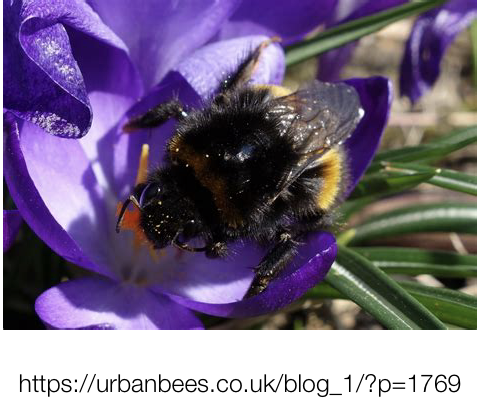
Autumn is the best time to plant spring bulbs. Flowering from January onwards, these flowers are a real boon for insects looking for nectar, especially those that don’t hibernate or have come out of hibernation early. I am always surprised and amazed when I see bumblebees in January. 

 Counting on … day 305

10th September 2022

Refocusing our environmental lifestyle should also include our finances. We can in small ways influence the environmental protection that financial world gives through our choice of bank, mortgage lender, insurance provider and pension fund. All these financial institutions invest money (our money in fact) to gain a return that finances their product. Where they invest their money can impact the environment. For example if they invest in companies that produce fossil fuels, they are financing the continued production of green house gases. If they invest in companies that manufacture plastic packaging, they are financing the continued production of the commonest form of litter. If they invest in companies that produce tobacco, they are financing the continued production of an addictive and carcinogenic commodity. 

For more insight into the environmental issues around banks see this Ethical Consumer report. They also provide ratings for different financial institutions covering current accounts, savings accounts and mortgages etc. To access these you will need to be a subscriber. 

https://www.ethicalconsumer.org/money-finance/how-your-bank-could-be-funding-global-deforestation-climate-disaster

For more information on pensions and pension funds see https://makemymoneymatter.co.uk/ which strongly advocates swopping your pension as the most effective way of tackling climate change. (However if, like me, you don’t have a portable pension this won’t be possible. Nevertheless you can still keep asking your pension provider to adopt an environmentally responsible approach to its investment strategy). 

Good with Money is another useful website  https://good-with-money.com/

Counting on … day 304 

9th September 2022

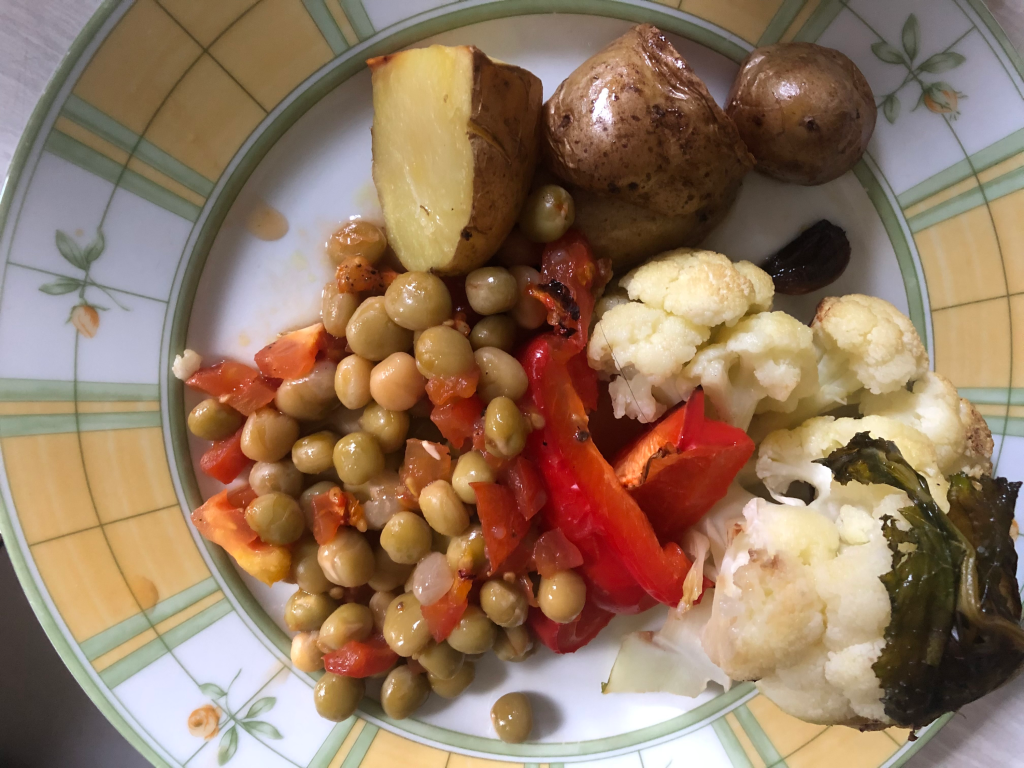
A resolution that is both environmentally kind and healthy, is to reduce the amount of meat and dairy products in your diet, replacing them with plant based foods instead – opt for those that are in season and locally grown. 

See these Eco Tips for switching to a vegan diet https://greentau.org/2021/10/12/eco-tips-11/

Or for a whole range of articles on vegan eating and recipes see https://greentau.org/tag/vegan/

Counting on …. day 303 

8th September 2022

Environmentally kind resolutions include greening our energy use. This could be switching to a green energy supplier; swopping all light bulbs with an LED equivalent; being conscious of how much energy we use and reducing by turning appliances off when not in use, and use them for shorter periods of time. The work of kitchen aids – such as cake mixers and coffee grinders can be done by hand – and the work of vacuum cleaners especially on hard surfaces can be done with a brush; hair can be rubbed dry with a towel; daily showers can be alternated with a good basin wash. 

This month, compared with the same month last year, we have consumed 90% less gas and 50% less electricity.

The Green Tau: issue 51

7th September 2022

What is this about Climate Grief?

Sometimes I feel so emotionally charged up about the present and impending reality of the climate crisis that  I want to shout and scream. I want to run away. I want to lash out and throw things. But against whom would I shout my abuse and fury? Where would I run away to? Against what would I lash out and what would I throw?

I bottle it up inside. It screws my insides into knots and squeezes against my head like a metal vice. My words become trapped inside, choked back and unable to escape. I cannot voice how I feel. I retreat inwards, cutting myself off for anyone or anything that might give joy – for joy has no place here. How can you contemplate being happy when all is doomed? How can you have fun whilst across the world others are suffering? That is what climate grief feels like for me. 

It comes from the loss of biodiversity – the diminishing numbers of birds and butterflies, the lack of insects on car wind screen,  the death of trees. It comes the rampant spread of vast mono-cultured fields, satellite images of rainforest destruction, the inexorable spread of towns across the landscape. It comes from the rising summer temperatures and the devastating winter storms. It comes from the constant stream of airplanes overhead and the repeated jam of cars on the streets. It comes from seeing retreating glaciers and knowing the next generations will not see snowy alpine peaks. It comes from watching the news and seeing wild fires and droughts, heat waves and mud slides, storms and destructive rainfall. It comes from realising that heatwaves are going to be the norm in the UK and yet none of our buildings – our homes or schools or hospitals – are being adapted to reflect this. It comes from hearing of cuts to bus services when policies should be making public transport more widely and readily available. It comes from hearing of the ongoing investment in fossil fuels by companies claiming green credentials. It comes from hearing politicians saying we don’t want solar panels and wind farms marring the landscape. It comes from pictures of industrialised cattle farms and chicken factories, hearing of chickens whose lives are shorter than a school term. It comes from seeing people carrying on their lives, their acquisitive consumption,  their shopping, their travelling and house re-modelling as if nothing is amiss.  

I can’t control my grief and I can’t control what other people do. I feel disempowered and alone. 

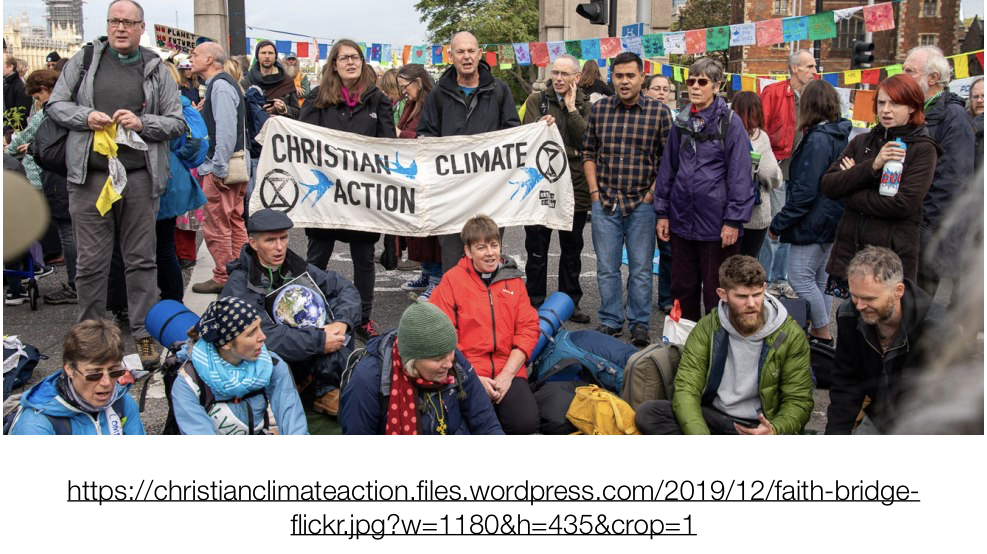
Yet I am sure that other people are grieving too. That other people are feeling lost and helpless. And when I do chance to meet them, when we get to talk and share our concerns, we find comfort that we are ‘singing from the same hymn sheet’. We find reassurance that we are not alone in our thinking , that our thinking isn’t completely ‘off the wall’. We find encouragement that there are others taking action – some even putting their liberty and their careers at stake as they risk arrest and even imprisonment. 

Climate grief is not an issue that is going away. Nor is it a problem waiting to be ‘fixed’. Climate grief is an expression of the love that people have for the world around them. It is a knock on from caring for and being connected with the environment. But does it have to be debilitating and overwhelming?

No. Climate grief needs to be recognised, and those who feel it, validated. We need safe places where this grief can be expressed and we need to develop ways and means – new traditions and liturgies – so that people can more easily articulate and acknowledge their feelings. We need to use different creative mediums to enable a free flow of expression. We need to develop sympathetic listening ears that can absorb someone else’s grief and astute words to help them understand the emotions they are feeling. We need practical therapies so that people can sooth the physical pain caused by grief.

We cannot remove the loss. But we can help build up resilience. We cannot diminish the threat of impending future losses. But we can help develop support mechanisms and networks. We can find ways of adjusting the way we live to accommodate a new normal. We can develop new occasions for celebration to acknowledge what is still good. We need to find ways of expressing joy that do not diminish the reality of suffering. We need to develop activities and actions that are both  worthwhile and which genuinely do protect the God-given environment that we prize so highly. 

Reading list:

https://www.bbc.com/future/article/20200109-is-it-wrong-to-be-hopeful-about-climate-change

https://www.bbc.com/future/article/20200402-climate-grief-mourning-loss-due-to-climate-change

https://www.theguardian.com/books/2016/jul/15/rebecca-solnit-hope-in-the-dark-new-essay-embrace-unknown?CMP=Share_iOSApp_Other

https://www.climateandmind.org/what-is-climate-grief

http://rebeccanestor.co.uk/2020/08/10/what-exactly-is-a-climate-cafe/

Counting on …day 301

6th September 2022

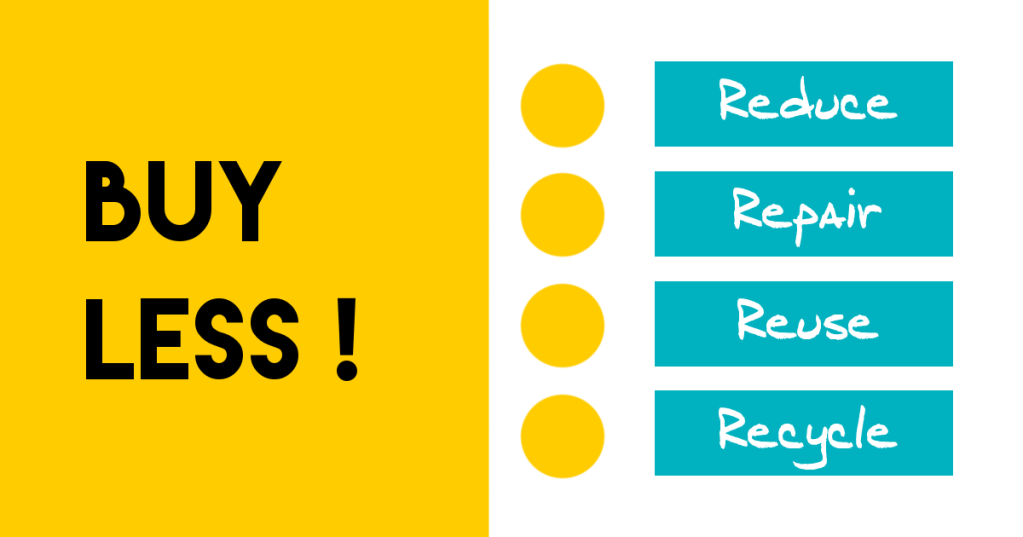
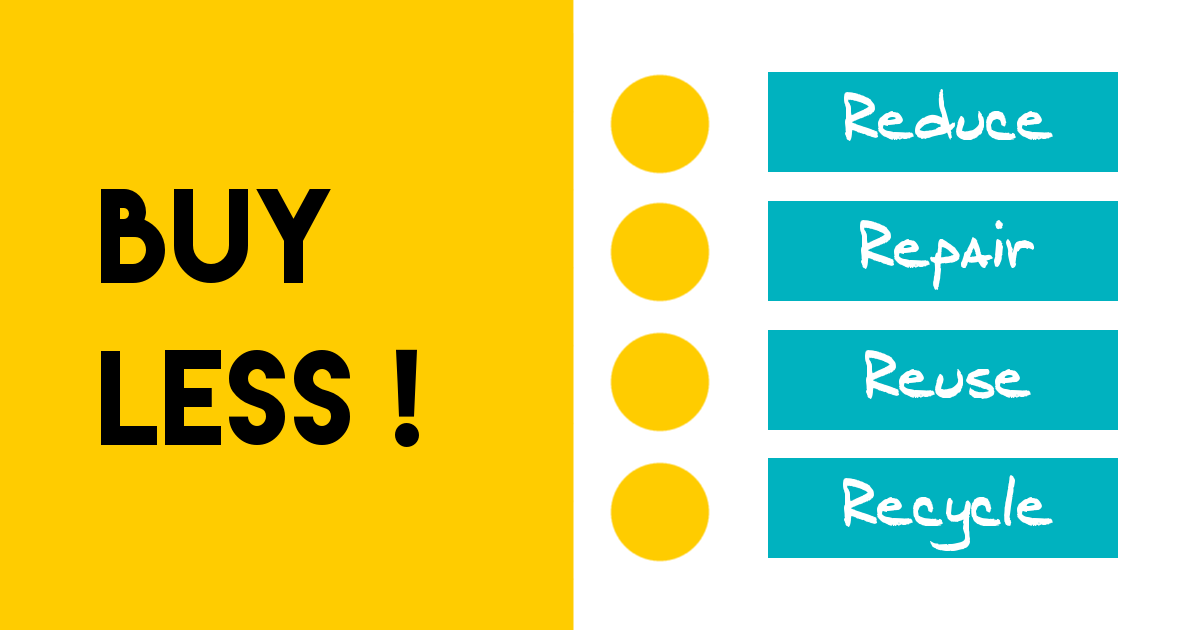
Consuming less can also mean discarding. Do a survey of your dustbin. What are you throwing out? Could any of it be recycled, repaired or reused? Do some of the things that you buy come with too much packaging? Could you shop differently? What would it take to half the amount of rubbish you produce each week? What would it take to reduce it to zero? 

Counting on …day 300

5th September 2022

Consuming less is one clear way of being kind to the environment. Consuming less is not about being parsimonious nor being a kill joy. It can involve buying second hand – pre-loved – items. It is equally about ‘loving’ what we do have. Why not look through your wardrobe or your cupboard and pick out a favourite item that you have had for a long while, and appreciate its personal history. 

Counting on …day 299 

4th September 2022

Environmentally kind resolutions can include our gardens – making space and caring for nature. You might set aside part of your garden for wildlife. Climate  change places extra pressures on wildlife so give them a helping hand by encouraging wild plants (weeds) to colonise part of your garden. Nettles are very good for ladybirds and butterflies, dandelions flowers are good for bees and dandelion seeds are tasty food for goldfinches.

For further thoughts see  https://greentau.org/2022/04/04/the-green-tau-issue-39/ and 

Proper 18

4th September 2022

Reflection (readings below)

Today’s reading from Jeremiah tells us that God is a God who takes an active and ongoing interest in what has been created. There is a similar  feel to the story in Isaiah of the vineyard which God tends and protects, but when it fails to produce the right fruits, God tears downs it protective hoarding and allows wild animals in. Creation is not a watch which the maker has made and wound up, leaving it to tick without deviation ever after (an analogy put forward by William Paley in the 1800s). Rather creation is always in the process of change and adaptation – and that includes humanity too. Sadly at the moment humanity is adding to this process of change at a faster rate than the rest of creation can accommodate, leading to some dire consequences. 

The reading from Jeremiah might be read as an assertion that God arranges for bad things to happen as a way of promoting repentance and a change of heart in humanity.  That bad things do and are happening I agree; that they are a consequence arising from bad actions by humans I also agree – although it is seldom the same group of humans who both suffer and cause the suffering.   What I don’t believe is that God deliberately wills bad things to happen.  In this particular parable from Jeremiah I find hope, it says that God notices when things are going badly with the clay, and by dint of reshaping the situation, produces something good in its place. 

Paul’s letter to Philemon is also about reshaping the situation. Onesimus was the one-time slave of Philemon. For some reason, Onesimus has run away which would entitle Philemon to punish him severely. Paul however has found Onesimus to be an excellent companion and wants to retain him as such. But at the same time Paul wants this reshaping of the situation – this bringing good out of bad  – to come from Philemon – ie that Philemon release Onesimus from slavery and allow him to be Paul rather than Philemon’s helper. Earlier in the letter Paul has written of ‘all the good that we may do for Christ’ and here is something that both Paul and Philemon and Onesimus too, can do in the service of Christ. Let your motivation, says Paul to Philemon, be not duty but love!

The gospel passage from Luke talks of hate in a way which is difficult to understand. Is Jesus really asking us to hate those around us? In the passage Jesus goes onto talk about working out one’s commitment: there is no point starting to build a tower if you can’t afford to finish it, or waging a war if you have no means of seeing it through to the end. By the same token, Jesus is asking can we be his disciples with less than complete commitment? And for commitment read commitment that comes not from duty but from love.  

The period from 1st September to 4th October is recognised as Creation-tide and this year’s strap line   is ‘Listen to the voice  of creation”. If we were to listen to the voice of creation right now what would we hear? Anguish and pain, fear and desperation, from all those parts affected by wild fires and heat waves, by drought, by floods and storms, by starvation and homelessness. This year more than ever before, we are hearing and seeing the devastating affects of climate change. What might once have seemed like a future risk is now very clearly a present and dangerous reality. The need for change, the need to reshape the way we live, the way we farm the land and  the food we eat, the way we travel, the ways in which we heat our homes and generate energy, the ways we work with rather than against nature, the ways in which we support one another, is now so very clear. But do we have the commitment to go all the way? To make all the changes that are needed? Do we have power to act out of love and not just duty? To go that bit further, to give that bit more? To give up all that we possess to do ‘all the good we may for Christ’?

Jeremiah 18:1-11

The word that came to Jeremiah from the Lord: “Come, go down to the potter’s house, and there I will let you hear my words.” So I went down to the potter’s house, and there he was working at his wheel. The vessel he was making of clay was spoiled in the potter’s hand, and he reworked it into another vessel, as seemed good to him.

Then the word of the Lord came to me: Can I not do with you, O house of Israel, just as this potter has done? says the Lord. Just like the clay in the potter’s hand, so are you in my hand, O house of Israel. At one moment I may declare concerning a nation or a kingdom, that I will pluck up and break down and destroy it, but if that nation, concerning which I have spoken, turns from its evil, I will change my mind about the disaster that I intended to bring on it. And at another moment I may declare concerning a nation or a kingdom that I will build and plant it, but if it does evil in my sight, not listening to my voice, then I will change my mind about the good that I had intended to do to it. Now, therefore, say to the people of Judah and the inhabitants of Jerusalem: Thus says the Lord: Look, I am a potter shaping evil against you and devising a plan against you. Turn now, all of you from your evil way, and amend your ways and your doings.

Psalm 139:1-5, 12-17

1 Lord, you have searched me out and known me; *
you know my sitting down and my rising up;
you discern my thoughts from afar.

2 You trace my journeys and my resting-places *
and are acquainted with all my ways.

3 Indeed, there is not a word on my lips, *
but you, O Lord, know it altogether.

4 You press upon me behind and before *
and lay your hand upon me.

5 Such knowledge is too wonderful for me; *
it is so high that I cannot attain to it.

12 For you yourself created my inmost parts; *
you knit me together in my mother’s womb.

13 I will thank you because I am marvellously made; *
your works are wonderful, and I know it well.

14 My body was not hidden from you, *
while I was being made in secret
and woven in the depths of the earth.

15 Your eyes beheld my limbs, yet unfinished in the womb;
all of them were written in your book; *
they were fashioned day by day,
when as yet there was none of them.

16 How deep I find your thoughts, O God! *
how great is the sum of them!

17 If I were to count them, they would be more in number than the sand; *
to count them all, my life span would need to be like yours.

Philemon 1-21

Paul, a prisoner of Christ Jesus, and Timothy our brother,

To Philemon our dear friend and co-worker, to Apphia our sister, to Archippus our fellow soldier, and to the church in your house:

Grace to you and peace from God our Father and the Lord Jesus Christ.

When I remember you in my prayers, I always thank my God because I hear of your love for all the saints and your faith toward the Lord Jesus. I pray that the sharing of your faith may become effective when you perceive all the good that we may do for Christ. I have indeed received much joy and encouragement from your love, because the hearts of the saints have been refreshed through you, my brother.

For this reason, though I am bold enough in Christ to command you to do your duty, yet I would rather appeal to you on the basis of love– and I, Paul, do this as an old man, and now also as a prisoner of Christ Jesus. I am appealing to you for my child, Onesimus, whose father I have become during my imprisonment. Formerly he was useless to you, but now he is indeed useful both to you and to me. I am sending him, that is, my own heart, back to you. I wanted to keep him with me, so that he might be of service to me in your place during my imprisonment for the gospel; but I preferred to do nothing without your consent, in order that your good deed might be voluntary and not something forced. Perhaps this is the reason he was separated from you for a while, so that you might have him back forever, no longer as a slave but more than a slave, a beloved brother– especially to me but how much more to you, both in the flesh and in the Lord.

So if you consider me your partner, welcome him as you would welcome me. If he has wronged you in any way, or owes you anything, charge that to my account. I, Paul, am writing this with my own hand: I will repay it. I say nothing about your owing me even your own self. Yes, brother, let me have this benefit from you in the Lord! Refresh my heart in Christ. Confident of your obedience, I am writing to you, knowing that you will do even more than I say.

Luke 14:25-33

Now large crowds were traveling with Jesus; and he turned and said to them, “Whoever comes to me and does not hate father and mother, wife and children, brothers and sisters, yes, and even life itself, cannot be my disciple. Whoever does not carry the cross and follow me cannot be my disciple. For which of you, intending to build a tower, does not first sit down and estimate the cost, to see whether he has enough to complete it? Otherwise, when he has laid a foundation and is not able to finish, all who see it will begin to ridicule him, saying, `This fellow began to build and was not able to finish.’ Or what king, going out to wage war against another king, will not sit down first and consider whether he is able with ten thousand to oppose the one who comes against him with twenty thousand? If he cannot, then, while the other is still far away, he sends a delegation and asks for the terms of peace. So therefore, none of you can become my disciple if you do not give up all your possessions.”