Living Sustainably; Protecting the Earth; Loving God
Author: Judith Russenberger
Environmentalist and theologian, with husband and three grown up children plus one cat, living in London SW14.
I enjoy running and drinking coffee - ideally with a friend or a book.
“The ocean is the largest ecosystem on Earth, and it is the planet’s life support system” – Marine Conservation Institute. It too is under threat from overuse and misuse by human activity. Current negotiations s at the UN are trying to agree a treaty that would protect 30% of the world’s oceans by 2030 – although it looks as if financial interests in making further profits from the oceans will water down any agreement.
According to UNESCO, plastic waste makes up 80% of all marine pollution and around 8 to 10 million metric tons of plastic end up in the ocean each year – and in the last 10 years we have produced more plastic than in the last century! Cutting back on the plastic we use, and ideally aiming for zero plastic, we can be part of the solution.
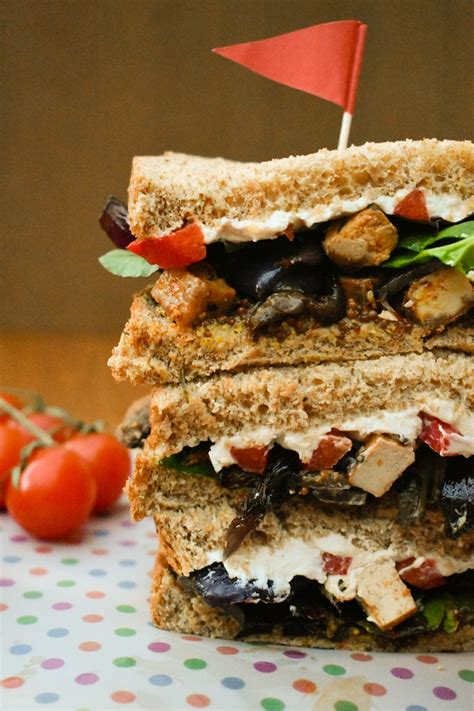
Another recycled Counting Down action : Go out for a vegan picnic. Sandwiches are the basis of a picnic and most bread is vegan. Vegan options for spreads include plant based butter/ pesto/ mayonnaise/ tapenade/mustard. Add fillings such as vegan cheese (nut-based cheeses are good for protein), hummus, mushroom pate. Add slices of vegetable such as red pepper, radishes, grilled aubergine or courgette, nasturtium leaves, cress or rocket or add chutney/relish. Or try a banana hot dog roll? Pack sandwiches in greaseproof paper or fabric wraps. Pack fruit and pieces of vegetables that can be eaten with fingers and again see if you can avoid plastic packaging. Fill flasks with either hot or cold drinks. Pack some vegan cakes – rock buns, muffins etc – or a bar of chocolate to finish.
In Britain we get through 2.5 billion single use coffee cups each year. Each cup – typically made of paper with a thin plastic layer – has a carbon footprint of 60.9g and that is before it leaves the cafe. Only 1 in 400 will be recycled with the remainder ending up in landfill, further adding to their carbon foot print. Each year single use coffee cups produce 152,000 tonnes of carbon dioxide – the equivalent to the output of 33,300 cars.
For times when you are not being offered your coffee in a reusable cup or mug, have a keep-cup to hand. In the same vein have a refillable water bottle – especially useful when we have periods of hot weather.
Visiting a National Trust café, I noted a 5p charge for a disposable takeaway cup and a 25p discount for bringing your own keep cup – all other coffees were served in ceramic cups.
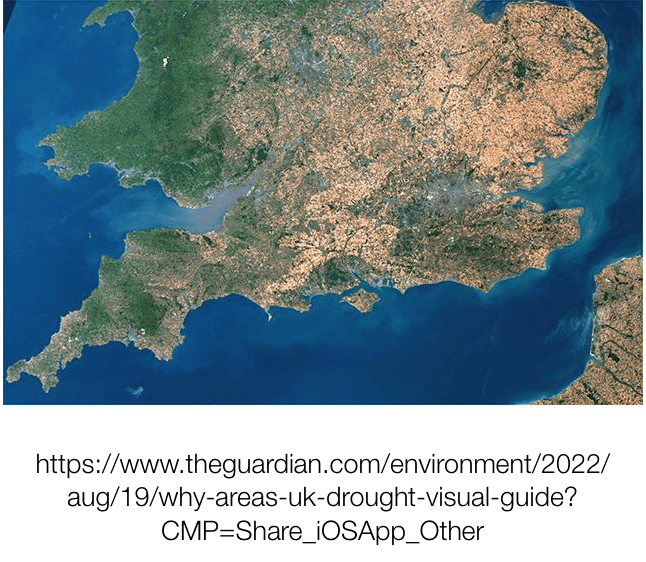
This summer is heat waves, drought and impending fuel crisis have highlighted our country’s unpreparedness for the effects of climate change that we are already experiencing, let alone the ones that are to come. Much of the responsibility lies with our government and its influence over big business. To this end Greenpeace has set up a petition asking for action from the UK government:
“You must do more to prevent climate change and protect us from the damaging impacts of extreme weather: – Deliver a proper plan to make our buildings and infrastructure more resilient to extreme weather – Improve national water storage to prevent future shortages – Force water companies to reduce leaks and increase the efficiency of household and business water usage ”
The biggest source of carbon dioxide that is accelerating the climate crisis are fossil fuels. The International Energy Agency has calculated that if we are to keep the rise in global temperatures within a safe threshold, we cannot open up or expand anymore fossil fuel sites. Instead we need to be replacing fossil fuel energy with renewable energy. It is against this background that so many people are horrified that the UK Government is allowing new gas fields to be developed in the North Sea – specifically the Jackdaw field. This week you can join the concerted campaign to stop this happening.
“…humanity has changed profoundly, and the accumulation of constant novelties exalts a superficiality which pulls us in one direction… Let us refuse to resign ourselves to this, and continue to wonder about the purpose and meaning of everything.” Section 113
Let’s wonder. What is the purpose and meaning of creation?
2. Is creation God’s gift to us to do with it what ever we want?
Has it been given to us so that we can benefit from it, in return for tending it?
Has it been given to us so that we can continue to work with God as co-creators of a still evolving creation?
3. Is creation a stockpile of resources from which we can pick and choose individual bits with no regard for the rest?
If we harvest all the sand eels to make fish oils, do we have a responsibility for puffins and other creatures that rely on sand eels for food?
If we chop down the forest to create grazing land, do we have a responsibility for plants and animals that will die because the land will dry out?
If we replace jungle with palm oil plantations, do we have a responsibility to re-home the orang-utans who lived there?
4. In an ideal world, governments would collaborate and legislate to protect the environment, and to prevent such abuse and misuse of resources. As we do not live in such a world, what can we as individuals and as groups do to protect the environment?
5. Pope Francis reminds us, section 115, that not only has God given us the earth, God has also given us the gift of our fellow human beings. Do we treat them any better than the way we treat rest of creation?
Can you think of examples of humans been treated as commodities, or as a means to an end?
6. If we fail to treat all human beings with respect and care, are we surprised that humans struggle to care for the environment?
7. Conversely can we properly care for the environment, if we do not also care for the humans who inhabit the same space?
Can we protect African elephants unless we also pay attention to the needs of the local farmers and businesses who occupy the same land? Can we protect mangroves from clearance for shrimp fisheries unless we provide alternative employment opportunities? Can we rewild grouse moors unless we provide alternative employment for local people?
8. Pope Francis, in section 124, reminds us that God created the first humans not to do nothing, but to tend and till the earth, ie to work. Their work was to assist what grew in the garden and to benefit each other’s well being – and presumably that of the animals too. To work gainfully is a Godly calling – a vocation – for humanity.
In what ways do you feel that your life fulfils that vocation?
9. “Work should be the setting for this rich personal growth, where many aspects of life enter into play: creativity, planning for the future, developing our talents, living out our values, relating to others, giving glory to God.” Section 127
Do all people have access to such opportunities? Do all people find in their work the means of glorifying God? What prevents people experiencing work in these ways?
Could it equally be that case that some people become so overwhelmed by work, that these benefits are lost?
10. We are learning to understand the concept of sustainable development, and of the sustainable use of resources. Should we also be thinking in terms of sustainable employment?
What might that look like? How might it give a sense of meaning and purpose to life?
11. How might we measure this? In terms of a living wage, of job satisfaction, of the degree of autonomy in making decisions, quality of the working environment, levels of team work and co working?
12. How might we as residents of a comfortable suburb, enable or promote sustainable employment for a greater number of people?
What questions or reassurances might we seek from employers and producers? How might we use our purchasing power to good effect?
Thank you God
for giving us a vocation
to be tillers and carers of the earth.
Remind us that it is a vocation we share with
all that lives on this planet
so that we may be attentive to the needs and gifts of all.
Chapter 3 of Laudate Si is titled “The Human Roots of the Ecological Crisis”. If we focus initially on the climate crisis, this is being caused by an ongoing increase in the amount of carbon dioxide in the atmosphere.
1. Looking at the diagram below, what do you think has been and/or is the cause of this rise on CO2?
Prior to the industrial revolution, the energy to power machinery or equipment came from wind or water, human or animal power – oxen pulled ploughs and carts; wind or water ground flour and other such necessities; horses or ‘shanks’s pony’ moved people and messages; pedal power worked lathes and spindles; hand power cut timber, wove cloth or created portraits. Wood provided fuel for heat and cooking. When wood is burnt, it releases carbon dioxide in proportion to the amount of carbon that has been formed in the tree as it grew. Over a relatively short time scale the absorption of carbon dioxide by the tree and its release through burning, are evened out. This is not the case with the burning of fossil fuels.
Coal, oil and gas are all forms of carbon that were living on earth millions of years ago as plants and animals. When they died and decayed the carbon content of those living beings was compressed in layers below the surface of the soil or the surface of the oceans. There it became deposits of coal, oil and gas: concentrations of carbon locked away. When these fossil fuels are burnt, the carbon dioxide absorbed into the earth over thousands of years, is realised rapidly within a whole different time frame.
2. The Industrial Revolution began with the use of coal to create steam to power machines in factories, in mines and on railway tracks. Continuing improvement and refinement gave rise to a proliferation of products that could be consumed, of labour-saving devises, of large scale farming, improvements in health, faster and cheaper communications …
As well as creating all this, did the industrial Revolution also create new markets? Did the industrialists need to stimulate demand for the products that they could manufacture with increasing speed and in increasing quantity? Who knew that they needed fish knives until they were marketed to the up and coming middle classes?
Can we say with any certainty that the Industrial Revolution was either good or bad? Might we vary our judgement if we were to consider who has benefited and who has lost out?
3. Over time, steam engines became more efficient and were the in their time replaced by petrol and Diesel engines, and electric motors. Continuing improvement in both purpose and efficiency are still ongoing. Telephones that replaced the telegraph, have now been replaced by the mobile phone – initially the size of a large brick, they now slip into a back pocket and yet have the capacity to make and show films, to interrogate the internet, send messages, programme home heating programmes, monitor hearts rates and so on.
Why might it be that despite all these improvements in design and efficiency, our demand for energy is still increasing? And that despite the increase in nuclear and renewable energy, our use of fossil fuels and the consequent production of polluting CO2 does not seem to abate?
5. What causing us to consume more and more? Because it is more efficient, is it better? Because it advances technology, is it better? Because it makes a bigger profit, is it better? Who actually gains?
Have we become trapped in a viscous circle?
Pope Francis begins by quoting from Benedict XVI “… we have “a sort of ‘super-development’ of a wasteful and consumerist kind which forms an unacceptable contrast with the ongoing situations of dehumanising deprivation” and goes in to write “ while we are all too slow in developing We fail to see the deepest roots of our present failures, which have to do with direction, goals, meaning and social implications of technological and economic growth.” (Laudate Si section 119) He then goes on to write (section 111) “Ecological culture cannot be reduced to a series of urgent and partial response to the immediate problems of pollution, environmental decay and the depletion of natural resources. There needs to be a distinctive way of looking at things, a way of thinking, policies, an educational programme, a lifestyle and a spirituality which together generate resistance to the assault of the technocrat paradigm. Otherwise, even the best ecological initiatives can find themselves caught up in the same globalised logic. To seek only a technical remedy to each environmental problem which comes up is to separate what in reality is interconnected and to mask the true and deepest problems of the global system.”
What might this ‘distinctive way’ look like? Here are some suggestions picked out from sections 112 – 122.
i. Be non consumerist, cooperative
ii. Enable people to live with more dignity and less suffering
iii. Recover a sense of meaning and depth to life, encouraging wonder about the purpose and meaning of life
iv. Offer the possibility of a happy future
v. Be a cultural revolution
vi. Recognise the intrinsic dignity and beauty of the world
vii. Understand humanity’s true in the world and have a humble awareness of our limits,
viii. Acknowledge the worth of our fellow humans and not to take advantage of them
ix. Accept our responsibility to care for creation – our particular gifts give us an equally particular responsibility
x. Acknowledge the connection between our relationship with God and our relationship with nature
6. How might these suggestions change the way we look at the world. How might they change the way we do things?
7. Can the Christian faith offer this “distinctive way”?
Who could propose and promote it? And how?
8. Who would listen? Would it ‘reach the ears’ of governments, businesses (their board and shareholders), banks and investors, social commentators? And if not, why not?
Below is a sustainability diagram which may be of interest.
A prayer for our earth
All powerful God,
you are present in the universe
and in the smallest of your creatures.
You embrace with your tenderness all that exists. Pour out upon us the power of your love,
that we may protect life and beauty.
Fill us with your peace, that we may live
as brothers and sisters, harming no one.
O God of the poor,
help us to rescue the abandoned
and forgotten of this earth,
so precious in your eyes.
Bring healing to our lives,
that we may protect the world and not prey on it, that we may sow beauty,
not pollution and destruction.
Touch the hearts
of those who look only for gain
at the expense of the poor and the earth.
Teach us to discover the worth of each thing,
to be filled with awe and contemplation,
to recognise that we are profoundly united
with every creature
as we journey towards your infinite light.
We thank you for being with us each day. Encourage us, we pray, in our struggle,
for justice, love and peace.
Amen.
‘A prayer for our earth’ was published in Pope Francis’ encyclical, Laudato Si’. It is for all who believe in God who is the all-powerful Creator.
“Laudate Si – care of our common home” is an encyclical written by Pope Francis in 2015 in response to the various environmental crises facing the world. This was the same year that produced the Paris Agreement on Climate Change and the UN’s Sustainable Development Goals. The former set goals to keep the rise in global temperature (compared with pre industrial levels) to within at least 2C and ideally less than 1.5C, as being the only way to substantially reduce the effects of climate change. This reduction was to be achieved by cutting green house gas emissions with a target of net zero emissions by 2050. (The Agreement included 5 yearly interim targets for the period to 2030). The latter SDGs set 17 interlinked goals which are intended to produce a good and sustainable future for everyone. With a target date of 2030, these goals include an end to poverty, an end to hunger, gender equality, quality education for all, peace and justice and the institutions to maintain them etc.
Into this focus on reducing the impact of climate change and of creating a sustainable way of living that would benefit the whole world, Pope Francis’s encyclical brings a welcome theological dimension for protecting the earth and its human society. It also brings in the equally theological understanding that humans have a responsibility to act to ensure these changes happen.
Five plus years later, that need for action is still there. This autumn the COP26 climate conference – the successor to the conference that produced the 2015 Paris Agreement – will be taking place in Glasgow. It will need to lay out clear targets and specific plans for their implementation, to ensure the whole world does indeed become net zero carbon by 2050 and that global temperature increases are kept within the 1.5C safety range. Can we once again take the message from Laudate Si and use it to bring about the changes needed?
In 2020 Cafod launched its Reclaim our Common Home campaigns (https://cafod.org.uk/Campaign/Reclaim-our-common-home) which draws heavily on the themes covered by Laudate Si. The campaign calls on individuals, organisations and government to take action to:-
RECLAIM nature so that everyone can breathe clean air and be protected from the threat of climate disasters.
RECLAIM the world’s land and resources so they are more fairly distributed and all our brothers and sisters around the world can live in dignity.
RECLAIM power so that everyone can be involved in decision making and have control over their own lives.
What’s in a name?
Laudate Si, meaning praise be, is the repeated refrain from the Canticle of the Creatures written by St Francis circa 1225 (see page 5 for a copy). Its verses call on the listener (and the cantor) to praise creation, identifying each part of creation as one of humanity’s many siblings, from Bother Sun and Sister Moon to Sister Death. This valuing of creation as co-equals with humanity is picked up repeatedly in St Francis’s approach to life. It is told of in the stories of Francis preaching to the birds and acting as an arbitrator between a man-eating wolf and the villagers of Gubio. It is an interconnectedness that is now recognised by both scientists and environmentalists – and one hopes by economists.
The second part of the encyclical’s title talks of ‘our common home’. The earth, this world in which we live, is our home, but not just our home but that of all manner and number of other living beings, plant and animal. Just as we are all brothers and sisters, so we are all part of one household. Study of our common home gives us the word ecology – the Greek oikos means house or habitation/ habitat and logia means study.
Praise Be! Let all creation praise God in its differing ways and let humanity – both in words and art forms – praise God by praising every part of creation! The psalms include many lines praising God, praises that come from humans as well as praises that come from creation itself – psalm 19 is a good example. In what ways do you most naturally or readily praise God through praising creation?
Do we devote enough time and energy to celebrating the wonder and beauty of creation? Do we share this joy often enough with other people? (This is one way in which we can share the good news). Would a more widespread enjoyment and admiration of the beauty of creation, induce a more widespread and concerted concern for the well being of our environment? Is this one reason why writings such as Laudate Si are so important?
As well as psalms of praise, there are psalms of lament – psalms that cry out to God with words of suffering, pain, anguish and despair (for example psalm 31:9-13). Usually we read such psalms as being the lament of a human being, but should we be ready to hear them also as a lament of an animal or bird, a river or even a landscape? How might that change the focus or feel of our private or corporate worship?
Given that we are brethren or siblings together, living in a common home, why is it that we as humans have a) managed to so disrupt or distort the ecosystem such that life as we know it is threaten, and b) feel that we have a responsibility to God to do all we can to correct these things?
The psalms of lament invariably lead to cries of repentance, of contrition, of seeking God’s mercy and of turning one’s life around. How often do we take time to examine our lives from an ecological viewpoint? How often do we reflect on the degree of suffering our lives may be causing our creaturely brothers and sisters? Might contrition prompt us to both make a fresh start and to make good the damage we have caused?
The creation story in Genesis chapters 2 and 3, describes how the harmonious relationships between humans and God, and between humans and other living beings became broken. St Francis’s experience and practice of being at one with all living things has been seen as a way of caring for, and increasing awareness of, our mutual relationships with nature. Can this practice also improve our relationship with God?
What does it mean to share a common home? I am sure at some point you have had experience of having to share your home with someone else. Maybe a new sibling or your own new born child, maybe a returning adult child or an elderly parent, maybe a cat or dog, maybe a lodger or a carer. Current and incoming inhabitants have to make adjustments, there will be times when either party must bear or forebear, sometimes additional leeway is called for whilst at others a reassessment of house rules may be needed. At the end of the day an accommodation has to be found that is acceptable to all parties. How good are we at sharing our global home, our national home, our local ‘home’ with others? Is it our inability to share that causes most grief?
The covid pandemic has shown us how interconnected our world is, whether through the transfer of viruses between species or the transfer of mutations between countries. It has changed our view of what is important about where and how we live. Has it also shifted our understanding of the role leaders and governments play? Has it challenged our reliance on them? Has it instead increased our reliance on God and neighbour?
Prayer
Loving God,
Open our minds and touch our hearts
so that we may attend to your gift of creation …
Now more than ever may we feel
that we are all connected and interdependent;
enable us to listen and respond
to the cry of the Earth and the cry of the poor.
May the present sufferings be the birth pangs
of a more familial and sustainable world.
We make this prayer through Christ our Lord.
Amen.
Prayer for the Sixth Anniversary of Laudato Si’: Columban Missionaries (Britain)
Active Response
In Laudate Si, Pope Francis says that our friendship with God is often linked to particular places which take on a intensely personal meaning. This might include mountains or vistas, places where we played as children, churches, sea coasts. Revisiting them may enable us to recover something of our true selves (Laudate Si section 84). Later Pope Francis commends paying close attention to the natural world – it being a continuing revelation of the divine – so that we might more clearly see ourselves as part of the sacredness of the living whole (Laudate Si section 85).
Between now and our next meeting, practice with praising creation, with exploring places of personal significance and/ or with contemplating the natural world, and note how it affects your relationship with God and with your creaturely siblings.
This poster is the work of Elizabeth Perry/CCOW (Christian Concern for One World)
Wildlife is also having to adapt to climate change – and will probably not always succeed because the change is happening too rapidly. In our small ways we can help by making sure our gardens are wildlife friendly – providing water for drinking and bathing, providing a variety of plants to ensure a food supply throughout the changing seasons, providing shelter and places to nest.
Both the psalm and the passage from Jeremiah concur: God is our creator, the source of being and of our ongoing existence from the beginning. Throughout life God is present and is our sustainer, our rock and stronghold, our hope – and the one who calls us to act. The writer of Hebrews describes the otherness of God – but this is not an otherness that is fearsome and terrifying. Rather it is an otherness reflected in joyful festivities and community and new beginnings and the saving grace of Jesus. Ours is a God who offers hope and salvation!
The passage from Hebrews presents us with a God who can and will transform the world. And in the gospel, we see Jesus doing just that. He transform the life of the woman with a deformed back (and presumably changes too the life of her family) and he transforms the local people’s understanding of God’s law, showing them a different way of interpreting the law and understanding the nature of the world God has in mind.
From our first reading comes the word of the Lord saying “ pluck up and to pull down, destroy and overthrow, build and plant”. And that is what Jesus does in the gospel reading. He ‘plucks up and pulls down’ the traditional understanding of the law and ‘builds and plants’ something new and life enhancing in its place. Jeremiah, to whom the Lord had been speaking, was given the hard task of taking that message to the people of Judah. Jeremiah knew that the people had strayed away from correctly understanding and living according to God’s word. He knew that if they continued this way of living that they would be overrun by one of the competing superpowers that then ruled the world. Jeremiah was nevertheless convinced that whatever evil befell God’s people, there would be a time of renewal and restoration – of ‘building and planting’ according to God’s will.
Sadly Jeremiah did not see this renewal in his own life time, but he believed that it would happen. Later in the book, it tells how Jeremiah bought some land in Jerusalem – even though the city was about to be overrun by the invading force of the Assyrian army – to show his confidence that there would be a future for God’s people in that city. Jeremiah showed the kind of faith we heard of a few weeks ago in the Letter to the Hebrews – ‘faith [that] is the assurance of things hoped for, the conviction of things not seen’.
Our hope is that the world will withstand the worst ravages of the climate crisis, and be restored – be re-built and planted – as intended by God. To demonstrate our faith in this is to actively live as if that future were happening now. We are called to,show how the world could, and can, be transformed. The way we live should be an example of sustainable living. The way we live should demonstrate care for creation, care for wildlife and live stock (including the welfare of donkeys and oxen), and care for our fellow humans especially those whose lives are stunted by the complaints – the ills – of our current age. Those affected by drought and wildfires, by floods and the denuding of the soil. Those affected by disease and war. Those affected by poverty and discrimination. Those affected by rising sea levels and receding rivers.
That is what groups such as Christian Climate Action and Christian Aid are campaigning for. It is what groups like Toilet Twinning and Practical Action are working for on the ground. It is what A Rocha does in enabling Christians to be environmentally aware. This is what we as Christian communities – churches – can be embracing and supporting. We need to show the confidence that Jesus showed in healing the woman – doing what is right, regardless of what others may be saying, regardless of convention says, because doing what is right is what God wants. We need to show confidence in demonstrating how the world God gave us can be healed.
Jeremiah 1:4-10
The word of the Lord came to me saying,
“Before I formed you in the womb I knew you, and before you were born I consecrated you; I appointed you a prophet to the nations.”
Then I said, “Ah, Lord God! Truly I do not know how to speak, for I am only a boy.” But the Lord said to me,
“Do not say, ‘I am only a boy’; for you shall go to all to whom I send you, and you shall speak whatever I command you, Do not be afraid of them, for I am with you to deliver you,
says the Lord.”
Then the Lord put out his hand and touched my mouth; and the Lord said to me,
“Now I have put my words in your mouth. See, today I appoint you over nations and over kingdoms, to pluck up and to pull down, to destroy and to overthrow, to build and to plant.”
Psalm 71:1-6
1 In you, O Lord, have I taken refuge; * let me never be ashamed.
2 In your righteousness, deliver me and set me free; * incline your ear to me and save me.
3 Be my strong rock, a castle to keep me safe; * you are my crag and my stronghold.
4 Deliver me, my God, from the hand of the wicked, * from the clutches of the evildoer and the oppressor.
5 For you are my hope, O Lord God, * my confidence since I was young.
6 I have been sustained by you ever since I was born; from my mother’s womb you have been my strength; * my praise shall be always of you.
Hebrews 12:18-29
You have not come to something that can be touched, a blazing fire, and darkness, and gloom, and a tempest, and the sound of a trumpet, and a voice whose words made the hearers beg that not another word be spoken to them. (For they could not endure the order that was given, “If even an animal touches the mountain, it shall be stoned to death.” Indeed, so terrifying was the sight that Moses said, “I tremble with fear.”) But you have come to Mount Zion and to the city of the living God, the heavenly Jerusalem, and to innumerable angels in festal gathering, and to the assembly of the firstborn who are enrolled in heaven, and to God the judge of all, and to the spirits of the righteous made perfect, and to Jesus, the mediator of a new covenant, and to the sprinkled blood that speaks a better word than the blood of Abel.
See that you do not refuse the one who is speaking; for if they did not escape when they refused the one who warned them on earth, how much less will we escape if we reject the one who warns from heaven! At that time his voice shook the earth; but now he has promised, “Yet once more I will shake not only the earth but also the heaven.” This phrase, “Yet once more,” indicates the removal of what is shaken– that is, created things– so that what cannot be shaken may remain. Therefore, since we are receiving a kingdom that cannot be shaken, let us give thanks, by which we offer to God an acceptable worship with reverence and awe; for indeed our God is a consuming fire.
Luke 13:10-17
Now Jesus was teaching in one of the synagogues on the sabbath. And just then there appeared a woman with a spirit that had crippled her for eighteen years. She was bent over and was quite unable to stand up straight. When Jesus saw her, he called her over and said, “Woman, you are set free from your ailment.” When he laid his hands on her, immediately she stood up straight and began praising God. But the leader of the synagogue, indignant because Jesus had cured on the sabbath, kept saying to the crowd, “There are six days on which work ought to be done; come on those days and be cured, and not on the sabbath day.” But the Lord answered him and said, “You hypocrites! Does not each of you on the sabbath untie his ox or his donkey from the manger, and lead it away to give it water? And ought not this woman, a daughter of Abraham whom Satan bound for eighteen long years, be set free from this bondage on the sabbath day?” When he said this, all his opponents were put to shame; and the entire crowd was rejoicing at all the wonderful things that he was doing.





 The Green Tau