The Green Tau: issue 43 

“MAKING SUSTAINABLE LIVING THE DEFAULT OPTION”

– strap line for the UN’s Earth Day. 


What is sustainable living? And how do we go about it? Something that is sustainable is something that can keep on going for a lengthy period of time without diminishment. We might look at household budget and apply the Micawber principle: 

“Annual income twenty pounds, annual expenditure nineteen, nineteen and six, result happiness.  Annual income twenty pounds, annual expenditure twenty pounds ought and six, result misery.”

As long as the required input is equal or less than output, the budget is sustainable. When what is consumed exceeds what is coming in, the budget is no longer sustainable. Sustainable living is the same: our lifestyle is sustainable if what we consume is equal to or less than resources we use. 

Let’s us taking heating for our homes as an example. 

If say we were to heat our homes with a wood burning stove, for that to be sustainable, we would need sufficient mature woodland to produce each year the wood we would burn. (This is not taking into account the cost to society of the pollution to the air). 

What if we hear our homes with oil and gas? That is ‘sustainable’ only in the short term as both these fossil fuels are non renewable. Once they are gone, they are gone. They cannot be replaced. Aside from air pollution, the major problem with soil fuels is the amount of carbon dioxide that they release into the atmosphere. It is a rate that far exceeds the rate at which it can be absorbed by the planet. This is why heating our homes with fossil fuels is not sustainable in either the short or long term. 

The most sustainable way of heating our homes is not to use any fuel but rather to build/ refurbish them with insulation levels that make extra heat (over and above our own body heat) unnecessary. Houses equipped to this standard are known as a “passivhaus” – https://www.passivhaustrust.org.uk/

Retrofitting is not without its financial cost which puts it out of reach for many people. (Sadly our government doesn’t understand that the whole nation would all benefit if insulating homes was state funded). Nevertheless any improvement we can make to the insulation of our homes will reduce our carbon footprint and energy bills and therefore makes heating our homes more sustainable: https://energysavingtrust.org.uk/insulating-your-home-back-to-the-basics/

A related area to that of heating, is electricity. What determines the sustainability of electricity?

Electrical production can be divided into two categories, renewable and non-renewable. Non-renewable electricity comes from power stations powered by coal/ gas/ oil. These fossil fuels are finite and cannot be replaced. Because of the scale of their carbon emissions, using them is highly destructive due to the adverse effects they cause of climate change and air pollution. Electricity produced by a fossil fuel driven generator is similarly non-renewable. 

Renewable electricity is produced using wind, solar, tidal or geothermal energy. These sources of energy are not diminished through use; they are available on an ongoing basis. In other words, they are sustainable.

Less easy to define is electricity produced using nuclear energy and that produced using biofuels such as wood chips, sugar cane etc. The amount of nuclear fuel needed in proportion to the energy generated is minuscule which is why nuclear power is often included along side renewables, but there are huge problem surrounding the safety of nuclear power stations and the disposal of nuclear waste that raises questions about its sustainability. 

Wood chips and sugar cane are both renewable resources but using them as an energy source is questionable. In a world where many go hungry and where more and more of the world’s natural or wild landscape is being lost, is it sustainable to use scarce land resources to grow crops for fuel rather than food?  

Questions around the sustainability of energy sources also apply to the sustainability of different forms of transport. The most sustainable means of transport is walking. It’s what we are designed for and uses no more energy than that required to feed us. The same is true of cycling, although according to Mike Berners Lee in his book, How Bad are Bananas, suggests that, depending on whether our diet is made up of beef burgers or bananas, a battery powered bicycle may have a lower carbon footprint! As above any transport reliant on fossil fuels – whether that is a petrol car, a diesel train or a plane – is not sustainable. Electric powered transport where the source of electricity is renewable is more sustainable but there are downsides to consider. Electric vehicles rely on batteries which are made from non renewable minerals such as lithium and cobalt – and cobalt in particularly comes predominantly from mines where employee welfare is minimal.

In sparsely populated areas, transport systems that rely on buses or trains may need to develop on-demand rather than time-tabled services, in order to make their use of limited resources sustainable. 

Plants are a naturally renewable resource but that doesn’t make all food equally sustainable. Factors to take into account include water, fertilisers, transport to markets, food waste, and whether the plants are feeding us directly or indirectly. Some crops such as rice, strawberries, blue berries and almonds,  require large amounts of water. In water sensitive regions irrigating such crops may divert water away from supplies used by local people for growing staple foods, as well as for drinking. It may also divert water away from aquifers and wetlands regions thus damaging local flora and fauna. In such circumstances, these crops cannot be classified as sustainable.

Fertilisers, especially artificial ones, use up limited non-renewable mineral resources, as well as contributing large amounts of carbon dioxide to the atmosphere. In addition the run off from fertilisers damages water courses and kills plants and creatures, compounding existing biodiversity losses. 

Where foods are imported over longer distances – and especially so when the mode of transport includes airfreight -will consume more resources and in particular will increase the food’s carbon footprint. Imported Spanish  strawberries, out of season avocados and air freighted asparagus are a few examples of unsustainable foods. In some instances the sustainability of a product becomes questionable when it takes over land used to grow staple foods for the local population or where it involves the clearance of indigenous wild vegetation such as the clearance of tropical rainforest to grow sugar cane. 

The majority of farm land globally is used not to feed people directly but to grow food for animals intended for human consumption.  It takes 100 x more land to produce 1kg of beef than to produce the equivalent in plant based food. In terms of feeding the global population a diet with high levels of meat consumption is not sustainable.

Plants as a renewable resource are also used for making things – clothes and fabrics, paper and furniture, rubber, paints etc. As with plants brown for food, similar questions about sustainability arise. Cotton for example is a heavy user of water – water abstracted for cotton growing was the major factor causing the disappearance of the Aral Sea. The growth in demand for palm oil used in products as diverse as lipstick and margerine, has led to the clearance of vast areas of natural habitat including mangroves. Demand for paper has seen naturally biodiverse forests replaced with monoculture pine plantations. 

The sustainability of every product we use needs to be measured in terms of renewability, carbon footprint, water footprint, impact on biodiversity, impact on local populations, the working conditions for those who grow, produce or sell, transport footprint, and the ease with which at the end of its life it can be recycled or disposed. Sustainability may begin as a question about individual lifestyle but quickly becomes a question about global sustainability. 

 Counting on ….day 214

15th June 2022

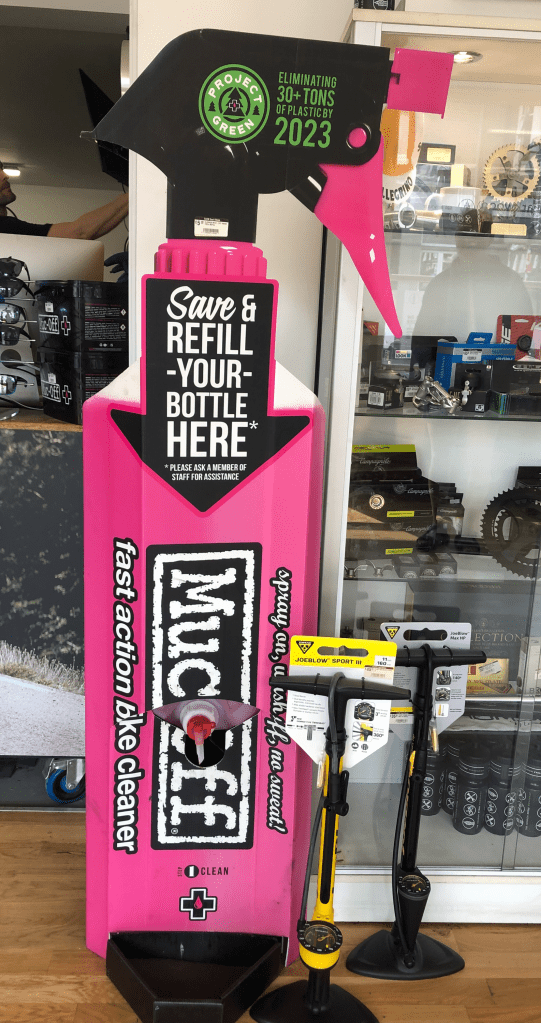
Tomorrow is  World Refill Day. Refills are more sustainable than a constant flow of single use glass or plastic bottles – even if the latter are recycled (as opposed to reused). I noticed in one of our local cycle shops a refill point for bike cleaning liquid. Keeping your bike clean will keep it in working order for longer – ie improves its sustainability – so why not go further and make the process of keeping it clean more sustainable too?

Counting on ….day 213 

14th June 2022

Strawberries and raspberries are in season. Now is the time to preserve their flavour for enjoyment later in the year. I have been making jam and bottling these soft fruits. As strawberries and raspberries are quite delicate fruits, I bottle them with rhubarb. I precook the rhubarb till it is soft, mix in uncooked soft fruits and fill the jars with this combination before sterilising them in hot water. 

For tips on preserving fruits and vegetables, including jam making and bottling,  see https://greentau.org/tag/jam/

 Counting on … day 212

13th June 2022

To ‘put your skin in the game’ is a business term that describes someone’s commitment to a project. Last Saturday cyclists literally bared their skin as part the WNBR London Naked Bike Ride. The campaigns objectives are to: protest against the global dependency on oil, curb car culture! obtain real rights for cyclists, demonstrate the vulnerability of cyclists on city streets, and celebrate body freedom.

NB cycling without protective clothing makes you vulnerable if you have an accident. Helmets protect your head and neck. Clothing protects your skin from the abrasive nature of the road’s surface.

Trinity Sunday 

12th June 2022

Reflection 

Today’s readings have been chosen to reflect different aspects of the Trinity. I wonder what they might also say about our relation with the earth.

The first reading from Proverbs introduces us to God as creator and to Wisdom as the aspect of God that co-exists alongside creation. The reading displays the dynamic partnership that exists between God and creation and which seeks in particular to embrace the human race. Wisdom is there to make sense of creation and to pass that divine understanding on to those who are willing to hear. Those who hear and engage with Wisdom will learn how the world could and should be. 

Psalm 8 presents a similar message where it is made clear that mortals, humanity have a special role in God’s creation. This is a particular calling to seek out and understand the beauty and wonder of creation and to care for it accordingly. This is a wisdom that will act as a ‘bulwark because of your foes, to silence the enemy and the avenger’. The wisdom that God’s people can seek and find in creation is one that will produce solutions to the problems we face, that will enable harmony and peace to be realised here in earth. 

However in the human time frame, such wisdom does not exempt us from strife and suffering. We know that even when Jesus took on our human form, he was not exempt from suffering. As we try and follow his example, we should not expect exemption either, but as Paul writes we have faith and hope to sustain us. And that we have been been filled with God’s love through the outpouring of the Holy Spirit. The world’s suffering should not dishearten us (although it is easy to have moments when we feel totally overcome) but rather should spur is on to seek and act upon God’s wisdom. So it is that, time and again, in John’s Gospel, Jesus reminds  us that the Holy Spirit will inspire and equip us, and guide us into an ever deepening relationship with God the Trinity.

The features of the divine trinity – communication, harmony, dynamism – are reflected in the relationship between God and creation and humanity.

Proverbs 8:1-4, 22-31

Does not wisdom call,
and does not understanding raise her voice?

On the heights, beside the way,
at the crossroads she takes her stand;

beside the gates in front of the town,
at the entrance of the portals she cries out:

“To you, O people, I call,
and my cry is to all that live.

The Lord created me at the beginning of his work,
the first of his acts of long ago.

Ages ago I was set up,
at the first, before the beginning of the earth.

When there were no depths I was brought forth,
when there were no springs abounding with water.

Before the mountains had been shaped,
before the hills, I was brought forth–

when he had not yet made earth and fields,
or the world’s first bits of soil.

When he established the heavens, I was there,
when he drew a circle on the face of the deep,

when he made firm the skies above,
when he established the fountains of the deep,

when he assigned to the sea its limit,
so that the waters might not transgress his command,

when he marked out the foundations of the earth,
then I was beside him, like a master worker;

and I was daily his delight,
rejoicing before him always,

rejoicing in his inhabited world
and delighting in the human race.”

Psalm 8

 O Lord, our Sovereign,
    how majestic is your name in all the earth!

You have set your glory above the heavens.

    Out of the mouths of babes and infants
you have founded a bulwark because of your foes,
    to silence the enemy and the avenger.

When I look at your heavens, the work of your fingers,
    the moon and the stars that you have established;

what are human beings that you are mindful of them,
    mortals that you care for them?

Yet you have made them a little lower than God,
    and crowned them with glory and honour.

You have given them dominion over the works of your hands;
    you have put all things under their feet,

all sheep and oxen,
    and also the beasts of the field,

the birds of the air, and the fish of the sea,
    whatever passes along the paths of the seas.

O Lord, our Sovereign,
    how majestic is your name in all the earth!

Romans 5:1-5

Since we are justified by faith, we have peace with God through our Lord Jesus Christ, through whom we have obtained access to this grace in which we stand; and we boast in our hope of sharing the glory of God. And not only that, but we also boast in our sufferings, knowing that suffering produces endurance, and endurance produces character, and character produces hope, and hope does not disappoint us, because God’s love has been poured into our hearts through the Holy Spirit that has been given to us.

John 16:12-15

Jesus said to the disciples, “I still have many things to say to you, but you cannot bear them now. When the Spirit of truth comes, he will guide you into all the truth; for he will not speak on his own, but will speak whatever he hears, and he will declare to you the things that are to come. He will glorify me, because he will take what is mine and declare it to you. All that the Father has is mine. For this reason I said that he will take what is mine and declare it to you.”

Counting on ….day 211 

12th June 2022

Last Saturday I attempted a nature survey of the church garden which was impeded by wet weather. Once the sun came out, so did the insects and with the gentle back ground buzz that reminds us how the summer should sound. I saw three different types of bee, several hover flies, a shiny emerald rosemary beetle and some tiny mint moths. It is worth spending half an hour just observing a few plants to see what’s there. 

Counting on … day 210 

11th June 2022

This morning to my great delight we were visited by a family of greater spotted woodpeckers – mum, dad and junior. Junior has a red patch on the top of his head, dad has the same patch but at the back of his head and mum has a plain head. They settled on the palm tree from where the two adults flew back and forth to the feeder bringing their offspring a succession of tasty snacks. 

The day before I had spotted a newt in the pond, a resident I had not seen for the last few years.

Both filled me with joy and I realise how much  I count on these moments of encouragement. 

 Counting on …day209

10th June 2022

According to the WWF, ‘Local communities are key to equitable, sustainable food systems’. They see working with local communities is the best way of developing climate resilient farming practices that enable communities to feed themselves. The charity Practical Action takes a similar approach using on the philosophy of Dr E. F. Schumacher that ‘small is beautiful’. The Fair Trade movement also puts communities at the heart of its work. Supporting groups like these and opting for fair trade products are ways of creating a sustainable world.

 Counting on …day 208

9th June 2022

Sustainability is also about maintaining communities. Communities are good because they provide support for those who are vulnerable as we saw when neighbours helped with shopping. Communities are good because they can rally together, sharing skills and resources, whether that is to celebrate jubilees or to cope with disasters such as floods. According to the  World Bank,  ‘Sustainable communities are resilient to social, economic, and natural shocks. They are well prepared for natural disasters, which are increasing in intensity and frequency due to climate change’.
Being good neighbours, being committed to our local communities, means we can count on each other to share the hard times and celebrate the good times.

Counting on …day 207 

8th June 2022

Sustainability takes many forms one of which concerns morality. Is it morally sustainable for the CEO of a business to take a pay rise approaching 300% whilst denying the basic living wage to those who working on the shop floor? This is a subject that has been taken up by Share Action, a charity that works oh share holders and campaigners to bring about beneficial change in listed companies. https://shareaction.org/news/weve-filed-a-living-wage-resolution-at-sainsburys-heres-why

If you  want to express your concern there is also a petition: https://act.38degrees.org.uk/act/sainsburys-living-wage-campaign-6.2022