Counting on day 139

2nd April 2022

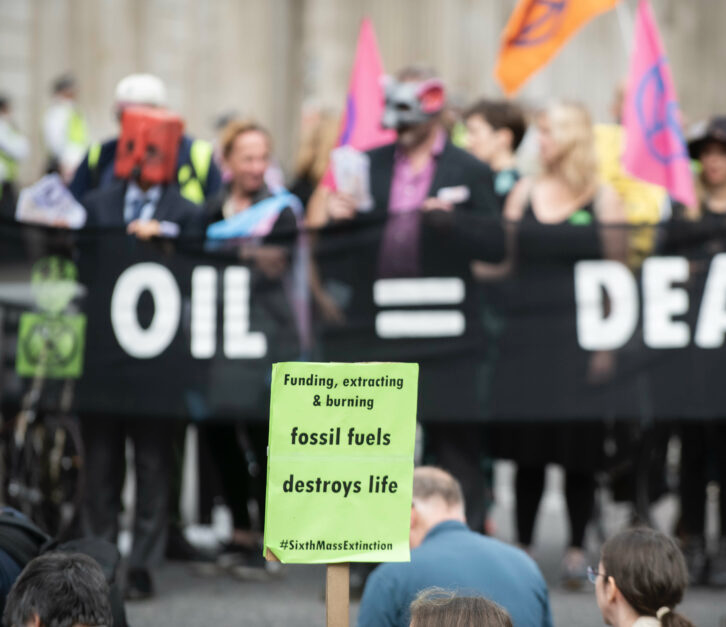
Why not use your window, gate post, car windscreen to host a poster to support the demand for action to  address the climate crisis? It may spark interesting conversations; it may give others like you the feeling of solidarity; it will demonstrate how widespread is the concern. 

XR has various posters – https://extinctionrebellion.uk/act-now/resources/art-group/ – but equally you might want to find other sources on line or create your own. 

Lent Reflection

2nd April 2022

http://treesplanet.blogspot.com/2014/02/prunus-spinosa-blackthorn-sloe.html#.Ykf_Ci_TXmo

The blackthorn – prunus spinoza- is native to Britain, grows to a height of 5-7m and has a life span of about 100 years. It has a dense mass of spiny branches that make it a good hedging plant and provides a safe nesting place for wildlife. Its white flowers come in the early spring before its leaves appear. Hedges white with blossom in a cold spring give rise to the term ‘blackthorn winter.’ These early blooms provide food for bees and other insects. The leaves provide food for numerous moth caterpillars, and both caterpillars and later the blackthorn’s fruit – sloes – provide food for birds and small mammals. Sloes look like a small plum but are hard and have a very sour taste – yet they make a good flavour for gin. The blackthorn wood is hard wearing and strong and traditionally used for walking sticks and tool handles. 

Get rid of all bitterness, rage and anger, brawling and slander, along with every form of malice. Be kind and compassionate to one another, forgiving each other, just as in Christ God forgave you. Ephesians 4: 31-32

Let’s build bridges, not walls. Martin Luther King Jn

Lent Reflection

1st April 2022

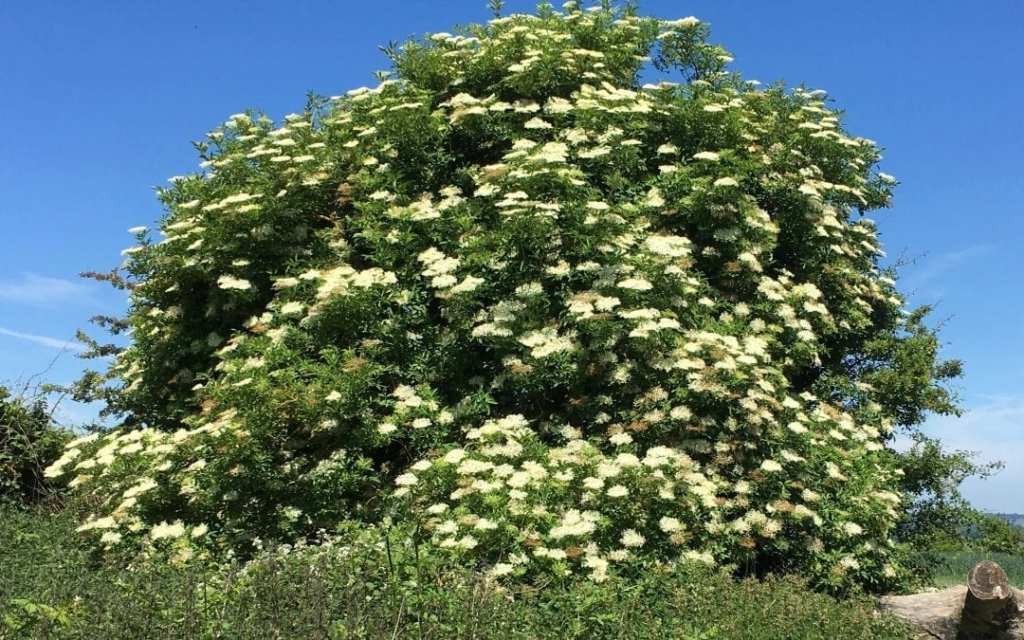
https://www.treeguideuk.co.uk/wp-content/uploads/2019/06/elder-1080×675.jpg

The elder tree – sambucus niger – is often more a bush than a tree. It can grow to a height of 15m and has a life span of some 20 years. Its flowers provide nectar for many insects, its leaves food for caterpillars, and its fruit food for birds and small mammals. The flowers are fragrant and used to flavour cordials, whilst the fruit which is rich in vitamin C can be used for jellies, fruits pies, cordials and wine making. 

The elder’s name may come from the Anglo Saxon “aeld” meaning fire. Its hollow stems were used to blow air into the heart of a fire to kindle it. The soft wood is easy to  whittle. 

They said to one another, ‘We’re not our hearts burning within us while he was talking to us on the road, while he opened the scriptures to us?’ Luke 24:32

Contemplation is nothing else but a secret, peaceful and loving infusion of God, which, if admitted, will set the soul on fire with the Spirit of love.’ John of the Cross

Counting on …day 138 

1st April 2022 

‘Climate change is a threat to human well-being and planetary health. Any further delay in concerted anticipatory global action on adaptation and mitigation will miss a brief and rapidly closing window of opportunity to secure a liveable and sustainable future for all’ –  from February’s IPCC report. 

The time is now and we need to take action. Earlier this month Extinction Rebellion wrote to the Government highlighting the situation: ‘Every day the UK government fails to act makes our common future more bleak, our prospects more terrifying.’ Extinction Rebellion is calling for an end of the fossil fuel economy and is inviting everyone to take part and join in the demonstrations taking place on 9th April.

Lent Reflection

31st March 2022

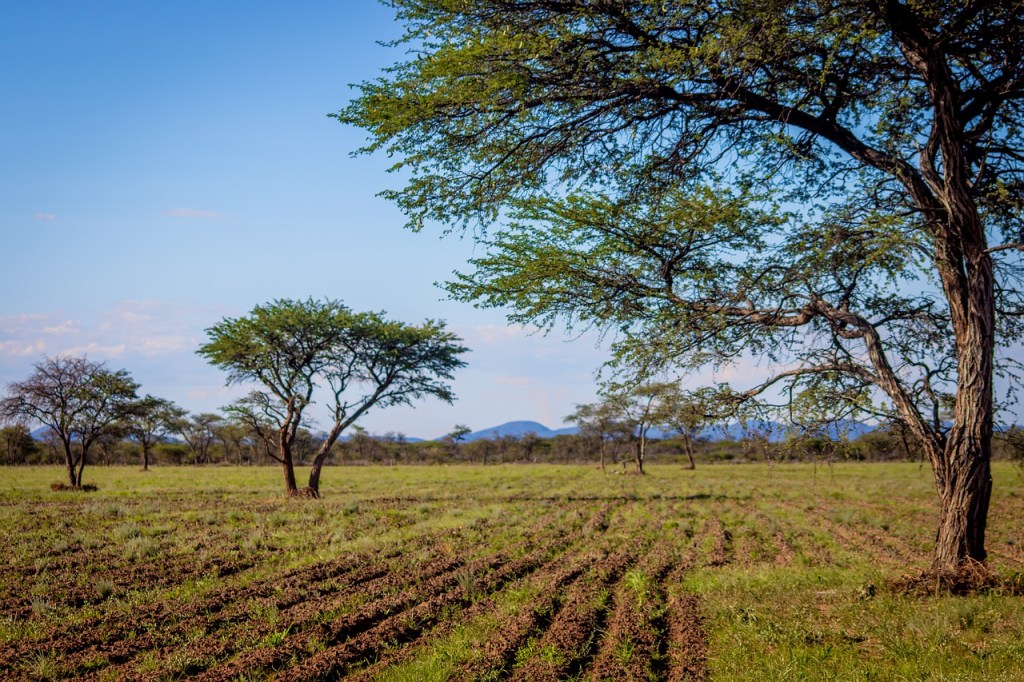
Bark Acacia Trees Leaves Grassland Camelthorn Trees http://www.maxpixel

The acacia tree is a native of tropical and sub-tropical regions but grows in other cooler climes too. In Australia they are known as wattles. The acacia is part of the pea family and its small fragrant flowers produce podded seeds which are high in protein. The wood is often used for furniture and floorboards, whilst tannins from its bark can be used in making inks. Its resin can be used to make glue, including gum arabica. According to the Hebrew Scriptures the Tabernacle and the Ark of the Covenant (which housed the tablets inscribed with the Ten Commandments) were made of acacia wood – the latter covered in gold.

Acacia honey comes from bees that feed on the black locust or false acacia tree. NB the seeds of this latter tree are poisonous. 

Then the cloud covered the Tabernacle, and the glory of the LORD filled the Tabernacle. Exodus 40:34 

The law of the Lord is perfect, refreshing the soul. The statutes of the Lord are trustworthy making wise the simple… More to be desired are they than gold, even much fine gold; sweeter also than honey, and the drippings of the honeycomb. Psalm 19:7,10

 Counting on ….day 137

31st March 2022 

This May, 5th, London’s local councils will be up for re-election. It is important that our local councillors know which things actually matter to us. The London Cycling Campaign has created an email letter to send to candidates asking them to prioritise various cycling matters that will create greener and pleasanter neighbourhoods. Richmond Council is already instigating many of these proposals but there is always scope for more if councillors feel it is something g we really want. 

https://action.lcc.org.uk/climate-safe-streets

 Counting on ….day 136

30th March 2022 

The following Early Day Motion has been put forward by our local MP, Sarah Olney. 

“That this House maintains an unwavering commitment to achieving net zero targets; acknowledges the urgent need to tackle high carbon emissions produced by homes across the UK; recognises the need for a comprehensive Government scheme to incentivise retrofitting to improve energy efficiency of homes and buildings; pledges that any future additional investment in energy production is directed to renewable sources of energy; extends the phasing out of Russian energy supply imports to include natural gas; and commits to making the transition away from Russian oil and gas a green one.”

Thank you Sarah!

Lent Reflection

30th March 2022

The field maple – acer campestre – is a native British tree. It grows to a height of 20m and can have a life span of 350 years. Its leaves are attractive to aphids and the tree therefore is attractive to many aphid loving insects such as ladybirds. Its wood is hard and dense and is traditionally used in wood turning, carving and for making musical instruments, particularly harps. Like all maples, the sap can be collected and used as a sweet syrup.

The field maple is quick growing and is thus good for hedging.

Pleasant words are like honeycomb, sweetness to the soul and health to the body. Proverbs 16:24

In the sweetness of friendship let there be laughter and sharing of pleasures. For in the dew of little things the heart finds its morning and is refreshed.  Kahlil Gibran

Green Tau: issue 38

29th March 2022

Am I Wealthy?

When we think of wealth our first thoughts are probably of piles of money – and if not actual notes and coins, them lots of zeros on one’s bank balance. When we talk about someone’s wealth, we do so in terms of pounds. According to The Times Rich List the wealthiest person in the UK for 2021 was Sir Leonard Blavatnik, with a wealth of £23 billion. The wealth of nations is also typically measured in pounds/ dollars etc. The wealthiest nation in the world is the United States with a gross domestic product of  $18.62 trillion. The UK stands in 5th position with $2.65 trillion. 

Although we talk in terms of pounds and dollars, these examples of wealth are not piles of money (whether as cash or bank balances). Rather they are investments in stocks and shares, investments in property, luxury yachts, art works etc – all of which can be expressed in monetary terms and could in theory be sold/ liquidated to provide cash. 

But are there other forms of wealth? 

Wealth has in the past had the meaning of happiness as well as financial riches, and the word developed from the Middle English ‘wele’ or ‘weal’ meaning well-being. 

As a resident of Richmond in south west London, many things have and do contribute to my well-being. They are a wealth that I have inherited through being a citizen of the UK.

  • I was born into stable middle class family. My childhood was happy with no traumatic events. My parents were supportive and encouraging. I had a happy extended family of grandparents, aunts and uncles. 
  • I spent my childhood in a rural part of the country where I learnt to appreciate the natural world.
  • Growing up I had the benefits of free health care (including dental care) and free education right through to my graduation from university. 
  • I continue to benefit from free healthcare – and can afford to access dental and other therapeutic treatments.
  • I am free to follow my chosen religion.
  • Even though I am a woman I can vote, I am free to work outside the home, and I can expect my husband to assist with domestic tasks and childcare.
  • I live in a country with reliable mains water, electricity and gas; with well maintained roads and a public transport network; with regular refuse collections; with dedicated emergency services and with a welfare and benefits system. I will in due course benefit from a state pension.
  • I live in a country with a respected police service and judicial system. 
  • I live in a country where bribery and corruption is not an every day occurrences.
  • I live in a country with well endowed schools, universities, museums and libraries. 
  • I live in a country with a free press. 
  • I live in a country where green spaces are protected, where there are rigorous standards for food quality and animal welfare. 

I am not saying that all the provision of all these in the UK is perfect and that there isn’t considerable scope for improvement, but compared to what is available for the average member of our global community, they are a significant source of wealth and wellbeing.

This wealth, from which I have and do benefit, arises from investments made by earlier generations and, to a lesser extent, from the current spending of tax revenues by the government and local authorities. It is a wealth that derives from the UK’s early investment in the Industrial Revolution, and from its exploitation of resources from other countries – either those which it colonised or those with which it arranged beneficial trading relationships. It is a wealth that has developed through the widespread use of, initially coal, and subsequently oil and gas, which has contributed significantly to the global climate crisis that we all now face. 

Is this wealth that I have something I can redistribute? I benefit from it but I don’t own it. I can’t realise its cash value and redistribute it. I can’t divide up or share my education or my good health, but I can use them to change the world. I can inform and campaign; I can recognise the injustices and inequalities that exist between people and across the world; I can volunteer and protest; I can influence by example; and I can effect change through my financial spending and donations.