Counting on …. Day 21

21st January 2024

Mail order with care

As is so often the case, making ethical or ecological choices are seldom black and white. For example, does one buy the organic but imported carrots or the UK grown non-organic carrots?

Having given the arguments in favour of shopping locally, there will be times when what is needed is not locally available. Mail order often fills this niche.

I buy flour for bread making by mail order – the flour is organic, chosen for attributes that make it suitable for bread-making, is milled in a wind mill and comes from farms local to the mill!

One mail order company that has expanded rapidly is Amazon. It is a multi national company  which uses less than ethically sound business practices.  Ethical Consumer has written on this at length and has set up a boycott including the option for individuals to pledge a month at a time not to use Amazon.

https://www.ethicalconsumer.org/company-profile/amazoncom-inc

The Guardian also reports frequently on ethical issues relating to Amazon – https://www.theguardian.com/technology/2022/may/10/next-day-delivery-unethical-amazon-workers-pollution?CMP=Share_iOSApp_Other

Counting on … day 20

20th January 2024

Support local businesses

Supporting local businesses, like shopping locally, is good for the local community. It improves the sense of belonging, the integratedness of the community. It – hopefully – employs local people (although this may be a problem if housing coast locally are out of the reach of many people). It keeps more money in the locally economy. All in all, it helps create a more friendly, resilient community where people want to live – and where people are happy. 

Resilient communities will become more and more important as we feel the impacts of climate change.

Further reading – https://www.localgov.co.uk/How-to-support-your-local-businesses-more-effectively-to-safeguard-their-future/56450

This article emphasises the importance of supporting locally owned businesses –  https://www.beemoneysavvy.com/support-local-businesses/

Counting on … day 19

19th January 2024

Shop locally 

Shopping locally has several benefits. Shopping locally is more likely to involve us in walking which is good for our health – as too is carrying shopping bags! (https://www.bbc.co.uk/news/health-41430301)

Shopping locally is likely to lead to more conversations as we meet the same people – fellow customers and shop staff – and build up acquaintances. 

Shopping locally may lead to more but smaller shopping trips, when we are more likely to buy only as much as we need, rather than overbuying just in case.

Shopping locally may mean buying more locally produced items – although less so in urban areas such as London. That said there are some places in London that grow fruit and vegetables, and others where food items are baked, roasted, brewed and otherwise produced. 

All of this reduces the carbon footprint of what we consume.

Counting on …. Day 18

18th January 2024

Repair and maintenance of things as well as clothes extends their useful life and so makes best use of resources. This can include an annual maintenance visit for your boiler (if you still have one), cleaning and or polishing footwear, reheeling/ resoling shoes, cleaning washing machines including the filter, cleaning washing machines, cookers – in fact anything that can be cleaned- descaling kettles, cleaning cycles, changing brake blocks, oiling chains as well as having a regular servicing, re-decorating painted window frames, doors etc, cleaning out gutters (you may need help with this).

Websites such as https://hoa.org.uk/advice/guides-for-homeowners/i-am-managing-2/home-maintenance-checklist/ can be a starting place to check on routine maintenance for your home (although I wouldn’t recommend jet hosing patios etc as that wastes water and energy).

Counting on extra!

This is the month when Seville oranges are in season, making it the month to make marmalade. 

Making marmalade is not difficult; it is a little time consuming, and it does ideally need a sugar thermometer- but is highly rewarding.

The recipe below is based on one that belonged to my great aunt. She specified 7 Seville oranges but I think in those days the fruits were bigger. So now I measure the ingredients by weight  

Seville Marmalade

1.5lbs of fruit including one sweet orange, one lemon and the balance being Seville oranges

3lbs gratulated sugar and mix in 1 packet of pectin powder (this is best done when both are dry ingredients)

Cut fruit into quarters and boil until skin is soft. If you have a slow cooker this is ideal – just put the fruit and 3 pints of water into the slow cooker, cover with its lid and leave gently simmering for 4 to 6 hours as necessary. 

Allow fruit to cool, slice the fruit thinly discarding all the pips as you find them. 

Put sliced fruit, the liquid and sugar into a large pan, bring to the boil whilst stirring (to prevent the sugar from burning). 

Simmer for a couple of hours, stirring frequently, until the mixture reaches 105C – this is where a sugar thermometer is useful. Otherwise you will need to judge the setting point by dripping the mixture onto a cold plate and seeing if it begins to set.

Ladle the marmalade into warmed jars. (You can either wash the jars and dry them in the ovens at 100C to warm and sterilise them or half fill them with water and microwave them till the water boils.)

You will now have about 7 jars of golden, slightly tart, delectable marmalade!

Counting on …. Day 17

17th January 2024

Mending – darning, patching, replacing buttons and zips etc – helps clothes remain wearable longer. Repairs can be done  – almost invisibly- or they can be made decorative and obvious. 

Sewing skills improve with practice so you might want to begin with replacing a button or sewing up a hem, before trying your hand at replacing a zip or turning a  shirt collar (taking off a worn collar, flipping it over and sewing it back, so that the worn side is now inside the fold). 

Here are some previous posts – https://greentau.org/tag/darning/

https://greentau.org/tag/repairs/

And try this for decorative mending – https://blog.seasaltcornwall.com/decorative-darning/

https://www.marthastewart.com/1535789/sashiko-japanese-art-mending-fabric-visible-stitches

And this too may be of  – https://www.theguardian.com/commentisfree/2024/jan/16/what-have-i-gained-by-learning-to-sew-great-clothes-and-a-clear-conscience?CMP=Share_iOSApp_Other

Counting on … day 16

16th January 2024

Reusing rather than replacing can also apply to clothes. Some of our favourite pieces of clothing are often items we have had for many years. I have jumpers that go back 40 years and a kilt that is even older (I had it second hand as a child).

Reusing can also including passing on clothes such as from older to younger children, or between generations. I have several items originally worn by my mother. My husband has items that belonged to his father whilst some of his father’s clothes have already  been appropriated by our youngest son who loves the 1930s style. 

An alternative way of reusing clothes is to repurpose or reshape them. A pair of trousers that becomes ragged at the knees can be repaired or it can be repurposed as a pair of shorts – potentially leaving you some extra material from the bottoms that can be used to patch something else or to make a small bag. A skirt, dress or trousers etc that are too large can be reshaped to fit a smaller figure. Flaired trouser legs can be narrowed. If you don’t have these skills yourself, you might find someone else who has via a repair cafe or a tailor. 

 Another way of reusing clothes is to buy second hand ones from a vintage of charity shop – and to likewise pass on items you no longer wear. 

Greenpeace reports “Partly because of all this plastic use, and the energy needed to process it, the fashion industry produces 8-10% of global CO2 emissions (4-5 billion tonnes annually).”

Further reading – https://www.greenpeace.org.uk/news/fast-fashion-climate-change-pollution-violence/

https://www.bbc.co.uk/news/science-environment-60382624

Counting on … day 15

15th January 2024

Re-use rather that replace

Just because a phone/ TV/ tablet/ computer is not this year’s model, there is no good sense in replacing it every year. It  better to keep it for as long as it is usefully useable. Mobile phone users typically replace their phones every 2 to 3 years which may reflect the length of the initial contract and/ or the life of the battery. Mobile phone batteries can be replaced (and the old one recycled when they are no longer adequately holding charge). Operating systems can also be updated to ensure the continued functionality of the phone – usually you will receive an online prompt to do this.

 A brand-new smartphone generates an average of 85 kilograms in emissions in its first year of us, of which 95% comes from manufacturing and shipping. (1) Spread over 2 years its footprint falls to approximately 45kg a year  and over 3 years approximately 30kg a year. Keeping the same phone for each extra years reduces its in-use carbon footprint.

Equally if you are looking to replace your mobile phone, buying a refurbished second hand one will similarly reduce its in-use carbon footprint. 

When a mobile phone literally has no usable life in it, make sure that it is properly recycled to ensure its component parts are reused and not discarded via landfill or an incinerator, polluting the environment. You can even do this via Oxfam and help reduce poverty at the same time.

(1) https://www2.deloitte.com/uk/en/insights/industry/technology/technology-media-and-telecom-predictions/2022/environmental-impact-smartphones.html

Further reading – https://greentau.org/2021/11/29/green-tau-issue-24/

Counting on … day 14

14th January 2024

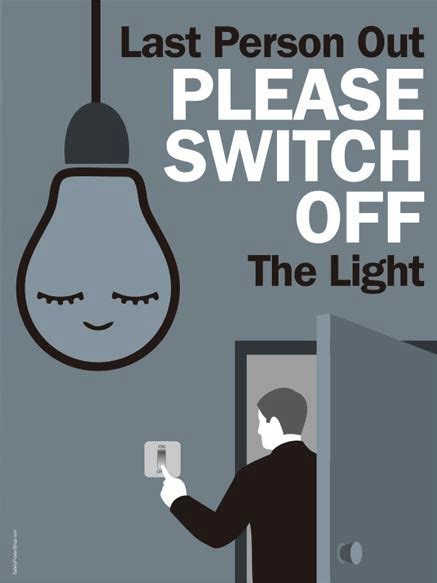
Turn off lights and appliance when not in use

During the oil crisis of the 1970s there was a widespread encouragement to switch of the lights and save energy.  Nowadays – perhaps because LED light bulbs make the cost of light cheaper – we seem to have forgotten that easy energy saving action. LED bulbs are definitely the most efficient way of lighting our homes, but even so the  Energy  Saving Trust says “Always turn lights off when leaving a room. The quickest way to start saving is just remembering to turn lights off when you don’t need them. The typical household could save almost £25 a year just by switching off the lights as you leave the room.”

For more information on using LEDs visit their website – https://energysavingtrust.org.uk/advice/lighting/

The Energy Savings Trust also estimate that we can save around £55 a year turning appliances off rather than leaving them on standby mode. Ovo Energy refers to this wasted energy as vampire power!  Find out more at – https://www.ovoenergy.com/guides/energy-guides/save-on-standby-energy

Prayers for creation

14th January 2024

Trust in the Lord and be doing good; dwell in the land and be nourished with truth.
  Let your delight be in the Lord and he will give you your heart’s desire.
Commit your way to the Lord and put your trust in him, and he will bring it to pass.  Psalm 37:3-5

You Lord are the bread of life;

feed us with your wisdom.

Our meat is to do the Father’s  will.

guide us in all we do

Whenever we eat or drink

Let it be to the glory of God.

Reading Matthew 25: 34-36 (The Message)

“Then the King will say to those on his right, ‘Enter, you who are blessed by my Father! Take what’s coming to you in this kingdom. It’s been ready for you since the world’s foundation. And here’s why:

I was hungry and you fed me,
I was thirsty and you gave me a drink,
I was homeless and you gave me a room,
I was shivering and you gave me clothes,
I was sick and you stopped to visit,
I was in prison and you came to me.’” 

My soul proclaims the greatness of the Lord,
my spirit rejoices in God my Saviour; •
he has looked with favour on his lowly servant.

Response
Praise to you O God, for the rich creation of this world 

for which you have created humans to be the gardeners.

From this day all generations will call me blessed; •
the Almighty has done great things for me
and holy is his name.

You have blessed us with fruit bearing trees and plants, 

ensuring food throughout the seasons.

He has mercy on those who fear him, •
from generation to generation.

Your wisdom guides those who, in each generation, 

are honest and humble enough to seek it

He has shown strength with his arm •
and has scattered the proud in their conceit,

Yet each generation sees the damage 

caused when there are those who disdain your will. 

Casting down the mighty from their thrones •
and lifting up the lowly.

Raise the spirits of those who work at the grassroots, 

give them strength to overcome the deceits of big business.

He has filled the hungry with good things •
and sent the rich away empty.

Bless the work of food banks and charities that feed the hunger, 

and teach those with wealth to be sacrificial in their giving.

He has come to the aid of his servant Israel, •
to remember his promise of mercy,

Help nations and communities to work together

for justice and for peace. 

The promise made to our ancestors, •
to Abraham and his children for ever.

May generations to come reap the harvest,

not of our greed, but of your grace .

Amen.