Counting on …day 73

25th January 2022

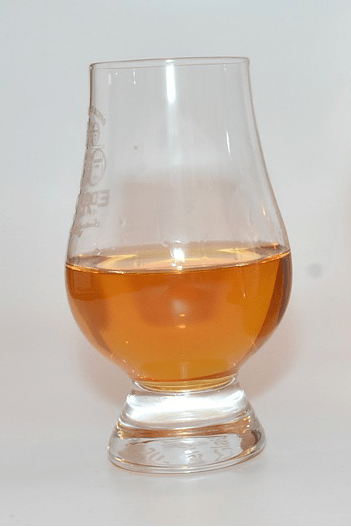
Burns Night is a time for poetry, haggis and whisky. Whisky production uses lots of energy in the distilling process much of which comes from fossil fuels. The Scotch Whisky Association is leading an industry wide campaign to address this – although their net zero target of 2040 is not inspirational. https://www.scotch-whisky.org.uk/insights/sustainability/

That said two distilleries have or are about to become net zero companies: Mc’Nean and Bruchladdich. The more consumers seek out net zero companies, the more companies will follow this trend. 

And for a vegan haggis see https://greentau.org/2021/11/30/counting-on-day-17/

Counting on …. Day 56

9th January 2022

Eating beans and pulses instead of meat and dairy products is a good way of reducing our carbon footprint. The Ethical Consumer’s Climate Gap Report lists  a top ten of things we can do as individuals to reduce our carbon footprint (https://www.ethicalconsumer.org/climate-gap-report) of which the top two are reducing meat consumption by 20% and dairy by 20%.

You can use beans to make soups and stews; you can blitz them to make pasta sauces or use lentils in  place of mince for lasagnes; hummus is made from chick peas and you can use other beans to make a variates of other spreads or pates. Chick peas are used in making falafel and split peas for dhal and again you can adapt these recipes for to the beans and pulses. Flour made from dried peas and beans can be used in making pastries and pasta, as well as a variation of a frittata. Soya beans and peas are being used to make alternative milks. 

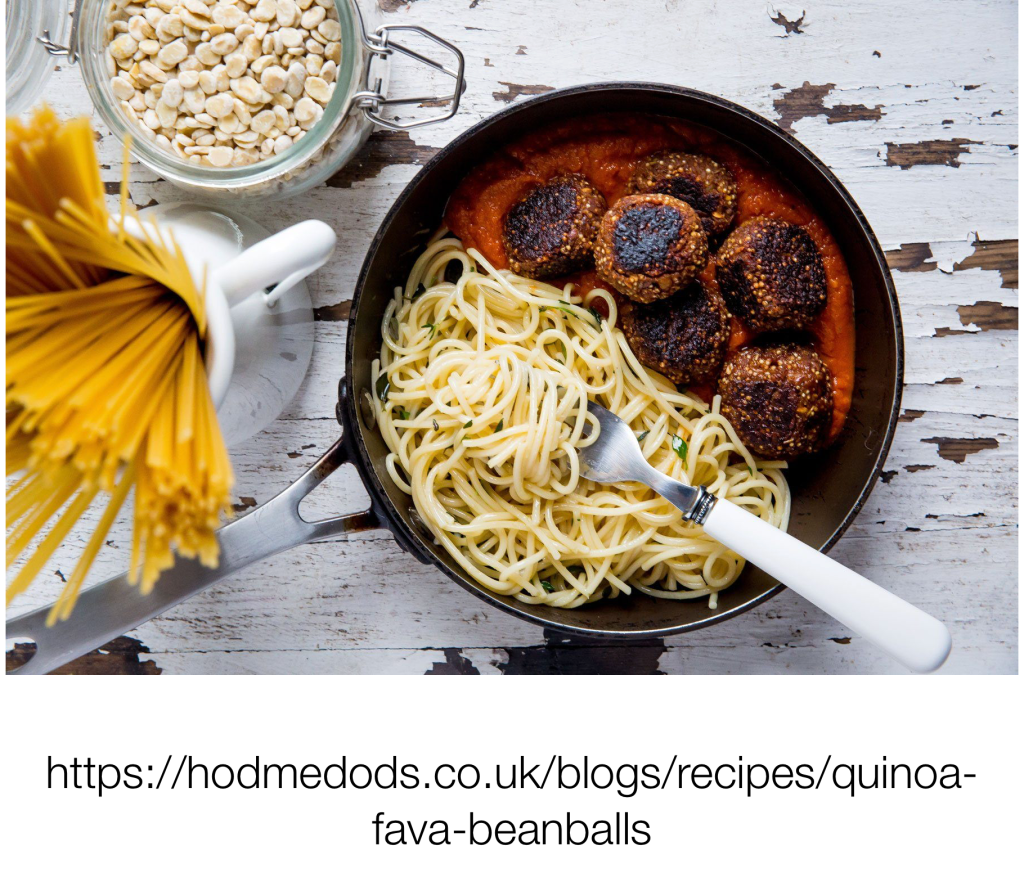
Try the Hodmedod website for lots of recipes – https://hodmedods.co.uk/blogs/recipes/tagged/vegan

The whale that keeps on giving

The wide vast oceans, 

tropical balm and arctic chill,

teem with living things 

great and small 

And  here dwells the whale – 

God’s tiller of the sea –

formed to frolic in its deeps 

and traverse its lengths. 

From an infinitesimal nil 

to 200 tonnes of mammalian flesh, 

its life spans a century full.  

A life of daily gorging and expurgating 10, 

nay, 20 tonnes of krill 

replenishes the seas with iron,

and spins once more 

the phytoplankton’s oxygen giving, 

carbon absorbing wheel.

From the depths the whale

redistributes food, 

sustaining small fry 

that dare not dive so deep.

Migrating between distant poles 

and warmer summer seas, 

the whale spreads the bounty 

of each mouthful it digests

and spins once more

the global food chain’s thread. 

Under the whale’s ocean watch, 

krill and plankton multiply, 

and so God’s worker feeds 

5000 mouths and more.

Its leviathan frame

 a maritime conveyor belt

of sequestered carbon 

that gracefully sweeps the seas 

till finally at whale fall

 it sinks to rest –

a carbon store 

for evermore 

upon the ocean bed.

Counting on … day 32

16th December 2021

Tackling the causes of global warming requires all of us to undertake changes in the way we live. In particular we need to make changes in the way we consume and in how much we consume. We are encouraged to be conscientious about how we shop: shopping locally, avoiding excess packaging, buying fairly traded products, supporting businesses that pay the Living Wage etc. In Sheen we have both a refill shop, a Saturday market, and an Amazon supermarket! It is up to us to make the right choices to shape the high street we want – and we have to count on each other doing the right thing too!

Counting On … day 8

21st November 2021

Rather than a Christmas card (complete with envelope) why not send Christmas postcards? They use half the card and none of the paper for the envelope.

You could make your own, hand drawn or print a design with your home printer (one A4 sheet of thin card can be cut down into four postcards).

You could buy postcards  from a local wildlife centre – Friends of Richmond Park have beautiful cards depicting deer. 

Counting On … day 6 

19th November 2021

One straightforward way of reducing our carbon footprint is  choosing the vegan option. When it comes to biscuits this is even easier than you would expect. Many traditional brands of biscuits sold in supermarkets are vegan and in many case have always  been so! Their vegan attributes as a consequence are not always highlighted. Jeni from the Choose Vegan website has complied a lost of all the commonly sold biscuits which are also vegan. 

Counting On …

16th November 2021

Adopting a plant based – ie vegan – is one easy way of reducing our carbon footprint. Here is another vegan cake recipe – vegan baking is straight forward!

Golden Parkin (sorry – no picture as we ate it all up!)

1 tbsp camelina or chia seeds soaked in 3 tbsp of warm water

100g margerine, 6 tbsp sugar, 2 tbsp syrup

2 tbsp oatmeal, 8 tbsp flour, 2 tsp baking powder, 1/2 tsp bicarbonate of soda, 2 or 3 tsp of ground spice (I used a mix of cardamon, all spice and cinnamon

150g grated squash

Method: melt the margerine and add sugar and syrup. Add all the other ingredients and mix well. Add oat milk if needed to create a dropping consistency.

Bake: tip into a lined tin, approx 180 x 300mm, and bake for 25 – 30 minutes until form to touch.

The Green Tau: issue 25

14th November 2021

Governments and world leaders have not take action that matches up to the structures of the scientists. Now it is up to us as the people. We are not insignificant. We have money to spend – albeit not as much as governments and the top “5 percenters” – and we have voices with which to speak out. 

Consumer power saved dolphins from tuna nets, saved puffins by ending the use of sand eel oil in biscuits, saved veal calves and hens from cages, saved whales by ending the use of whale oil in cosmetics, saved minks from becoming fur coats …  Consumer power has swung behind campaigns to wear seat belts, to give up smoking, to end drink driving. Now consumer power is seeing the end of single use plastic straws and plastic bags. Consumer power is feeding the growth of organic and vegan foods, and the popularity of vintage clothing. Consumer power is even increasing the number of cycles on the roads.  

We can continue to use our money strategically to shape the world we want to live in. We can band together for greater effect. We can boycott products and service – even entire lifestyles – than damage our future. 

We can be influencers and game changers. We can set the example, we can be there trail blazers. We can show others – individuals like ourselves, small businesses and big businesses, schools, civic groups and faith centres, local councils and governments – that this is the way we want to live. 

We can write letters and petition. We can make posters and banners. We can write articles, we can blog and vlog. We can hold coffee mornings and parties. We can sing and we can be theatrical. We can inform and enthuse. We can demonstrate. We can speak out and we can speak up.

We can also be game changers by not spending money! Not everything we do, not everything we enjoy has to cost money. And things that are free seldom have a carbon footprint! A walk in the park. A chat with a friend. A wave to a neighbour. Giving presence not presents. Sharing and lending. Swopping and exchanging. Upcycling and cycling. Swishing and re fashioning. Repairing and recycling. So telling and singing. DIY and home baking. Growing and preserving. 

We may feel that as one individual we can’t make a difference. We may be unsure what is the best action we can take. We may fear that we might fall under the bewitchment of green wash. We may fear that our best intentions may prove to be unwittingly destructive. We may be overwhelmed by choices before us, the flood of information that is out there, that we don’t even know where to start. 

That is why we need to come together, to find like minded companions. To learn from one another, to encourage and support each other. To know that together we can make positive change a reality. 

Next week’s Eco Tips will list some of the many organisations and groups that can help you find answers and/ or provide a framework for eco living. 

Halloween Scones

Food waste is a big contributor to global warming. Waste can occur anywhere from on the farm, whilst in transit, at the supermarket or in the home. In the home we should aim to  use all the food we buy. So here is a recipe for using up raw pumpkin – or squash. It is also cooked in a frying pan rather than in the oven which will use less energy. It is also plant-based  – another plus for the environment. 

250g self raising flour

60g vegan butter

1 tbsp of chia or camelina seeds

150g raw pumpkin/ squash

4 cardamom pods

Oat milk


Mix the seeds with 3 tbsp of warm water. Mix in the seeds from the cardamon pods. 

Cut the butter into,cubes and rub into the flour.

Chop the pumpkin into small pieces.

Mix everything together, adding enough milk to create a soft dough. 

Heat a frying pan with a little oil in the bottom.

Roll out the dough and cut into rounds or triangles. Place these in the pan. 

Cook for 5-10 minutes or until browning on the bottom. Turn over and cook on the other side.

Enjoy plain or with jam.