Action 37: Have a go at sprouting seeds to add to your salads. The Vegetarian Society has a useful guide – https://vegsoc.org/lifestyle/sprouting-how-to-sprout-at-home/
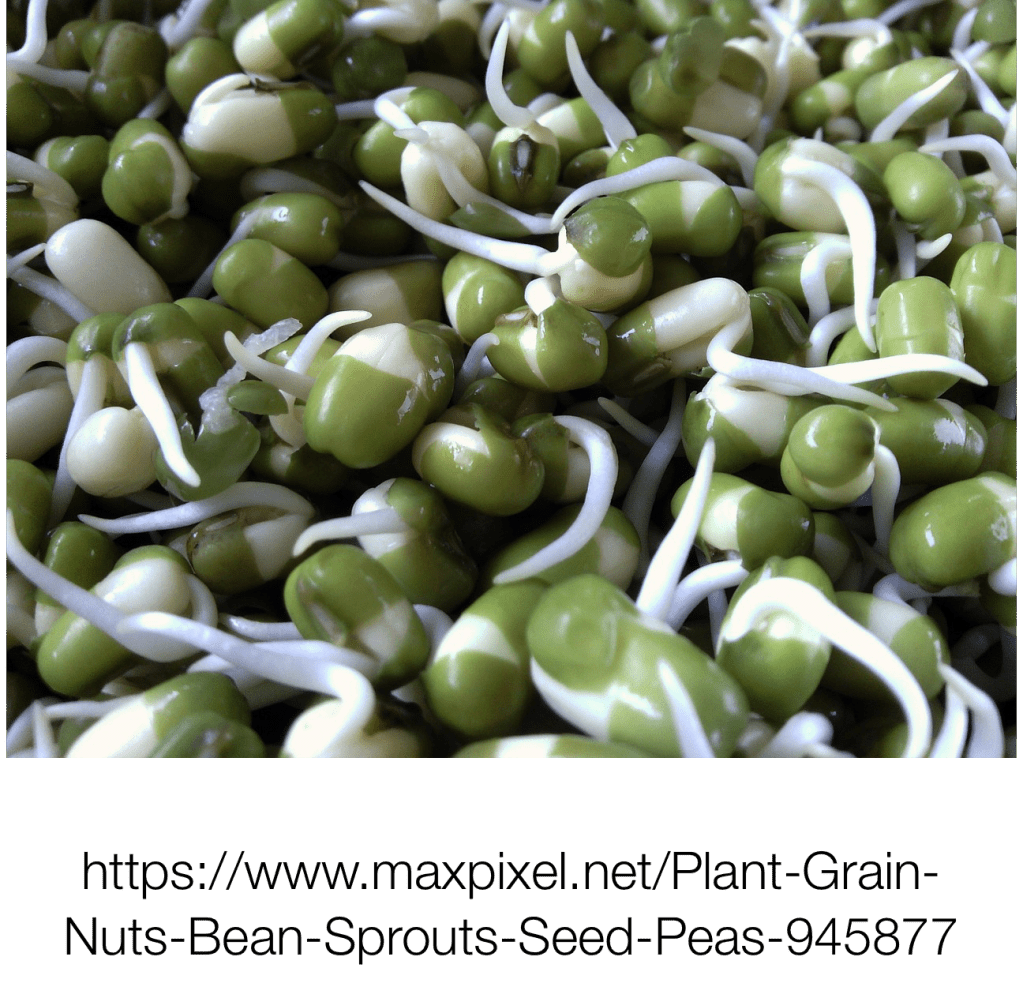

Action 37: Have a go at sprouting seeds to add to your salads. The Vegetarian Society has a useful guide – https://vegsoc.org/lifestyle/sprouting-how-to-sprout-at-home/
Missing from yesterday! Action 35: Set aside part of your garden for wildlife. Climate change places extra pressures on wildlife so give them a helping hand by encouraging wild plants (weeds) to colonise part of your garden. Nettles are very good for ladybirds and butterflies, dandelions flowers are good for bees and dandelion seeds are tasty food for goldfinches.

Action 36: Make next week a vegan week. Stock up on beans and pulses, tofu and nuts, assorted types of rice and pasta. Make a shopping list with plenty of seasonal fruit and vegetables. Add miso pastes, chutneys, yeast flakes and herbs for extra flavours. Plan some easy meals combinations. Be inspired by new recipes – try these from Hodmedod : https://hodmedods.co.uk/blogs/recipes/tagged/vegan

Action 34: Green your insurance. Insurance companies, pension companies and banks are amongst the biggest investors in fossil fuels and related industries – yet it is the continuing use of fossil fuels that is accelerating our climate crisis. It would be far better if our monies were invested in green industries that are and can increasingly actively decarbonise our economy. Switch to a home insurance company that does not underpinning the fossil fuel industry. Check out the Ethical Consumer’s Guide on home insurance: https://www.ethicalconsumer.org/money-finance/shopping-guide/ethical-home-insurance.
Action 20: Take a photo of the youngest person in your family – this is my 4 month old grand nephew. How old will that person be in 2030? By then we hope the world will have reduced our greenhouse gas emissions by at least 55% below 1990. This should keep the rise in global temperatures to 1.5C. Try and imagine what their world then will be like? Will summers be even hotter and even wetter than now? Will there be more and stronger storms and floods? Will houses be better insulated? Will they have been adapted to cope with heat waves? Will transport system be all electric? Will they have been adapted to cope with floods and landslides? Will there still be the same diversity of wild plants and animals that we see now or will some have been pushed out of their niche in the ecosystem by climate change? Will schools be solar powered? Will school leavers be finding jobs in a burgeoning green sector?
What kind of future are we creating for the next generation?

A question of justice: what is climate justice? Part 2
What then of climate justice? What is the upright behaviour, the righteousness behaviour that God expects us to show vis a vis the climate?

And God said, “Let there be lights in the dome of the sky to separate the day from the night; and let them be for signs and for seasons and for days and years, and let them be lights in the dome of the sky to give light upon the earth.” And it was so. God made the two great lights—the greater light to rule the day and the lesser light to rule the night—and the stars. God set them in the dome of the sky to give light upon the earth, to rule over the day and over the night, and to separate the light from the darkness. And God saw that it was good. And there was evening and there was morning, the fourth day. (Genesis 1:14-19)
The writer of Genesis tells us that the climate and its seasons, shaped by the sun, is a key part of the world God created. Both creation stories in Genesis give humankind a key role in occupying and caring for and tending the world that God created. Humans are given a role of responsibility vis a vis the fish of the sea, the birds of the air and all living things that move on the earth. They are given the task of cultivating the land and the plants which God intended should transform the earth from the bare form with which it began. And they are instructed to multiply and be fruitful ensuring generations of humans to come.
Have we looked after all the fish, the birds and living things? The decline in biodiversity with a third species threatened with extinction, suggests not.
Have we cultivated the earth and maintained its greenness? The expansions of deserts, the destruction of rainforests and temperate woodlands, and the loss of native plants suggest not.
Have we provided for the well being of generations to come? Currently the world is on track for an increase in global temperatures of some 3 to 5°C by the end of the century which would render large parts of the earth uninhabitable for humans – so no!
If we were to hold up a plumb line to measure how upright our living on the earth has been, we would see a world that is on the verge of collapse, a world which will be in a worst state than when we inherited it, and a world in which life for our children and grandchildren would be very bleak.
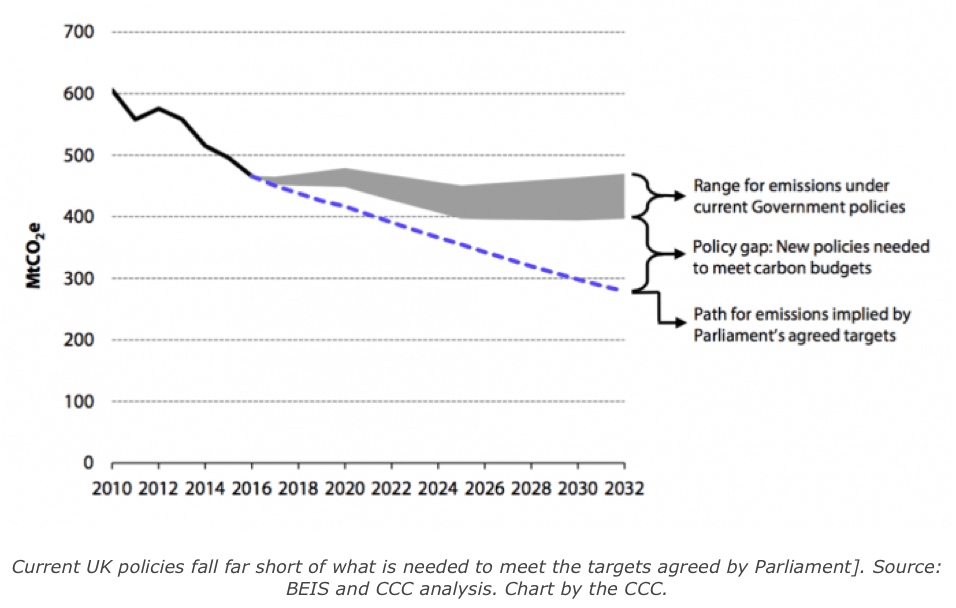
The diagram below is the equivalent of Amos’s plumb line. It was put together by the government’s Climate Change Committee an independent, statutory body established under the Climate Change Act 2008) is part of their review of the progress being made tickling the climate crisis. It shows with a blue dotted line the target reduction in carbon emissions agreed by Parliament. The grey band shows the levels of emissions that current policies will achieve. The gap between the two is the shortfall where new, firmer polices are needed. Just as plumb line measure how true a wall is, so this diagram shows how adrift we are of doing what is right for the climate and the world.
Prophets like Amos and Jeremiah called out to those in power when they were not meeting God’s standards. They also called out examples of wrong behaviour by merchants/ business leaders and those who abuse their power to oppress the vulnerable. They also called out those who falsely prophesied that all would be well and that no one need to repent and amend their patterns of behaviour!
Climate justice requires us to call our government and business leaders to account when policies and actions fail to address the climate crisis and rather allow the state of the earth to decline. We can write to our MPs and our local councillors asking what they are doing to avert the climate crisis, asking not just for wishful statements, but for concrete actions with measurable results. We can write to businesses, both multi nationals and our small, local businesses and ask what they are doing to achieve net zero carbon by 2050. Kiss the Hippo, coffee roasters in Richmond is a carbon negative coffee company – https://kissthehippo.com/blogs/news/good-news-we-ve-gone-carbon-negative we can sign petitions and join one of the many groups campaigning on the climate crisis issue – eg Friends of the Earth, XR, 350.org .
Climate justice requires us to look at our own lifestyles and measure whether they improve or damage the earth and the heritage that we will pass onto future generations. There are numerous suggestions on the internet about what we can do. This will be the topic of the next issue of the Green Tau.i
Active Travel
Active travel is getting from A to B using our own person power – be that
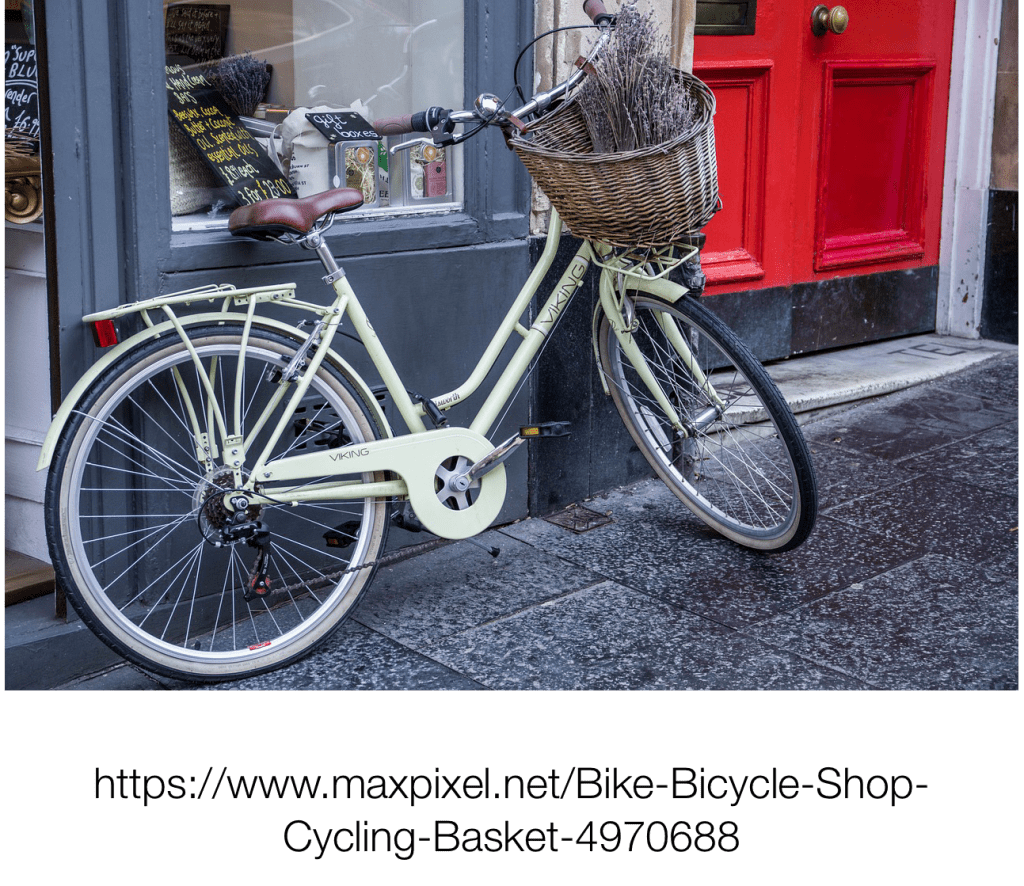
pedalling a cycle, wheeling a chair, pushing a scooter or simply putting one foot in front of the other. It gets us from home to school/the shops/ the gym/ the railway station … and back. It keeps us fit and it keeps our environment fit – free from air pollution, congestion and carbon emissions.
A question of justice: what is climate justice? Part 1
What is justice?
The Central Criminal Court of England and Wales, more commonly known as

the Old Bailey, is surmounted by a statute of Lady Justice. In one hand she holds a sword, and in the other, a set of scales. The scales remind us that justice requires the evidence of the case to be weighed and only if the evidence of guilt is more than the opposing evidence, is the accused found guilty. The sword symbolises the implementation of the judgement made – ie what punishment or reparations are due. Many images of Lady Justice also show her wearing a blindfold as a reminder that justice if to be given impartially, ie favouring no one person more than another.
But how do you know when an offence has been committed, something that requires the salve of justice? Most/all? countries have laws: laws that lay down what is right or wrong, what is acceptable or unacceptable. Typically such laws will embrace not killing or injuring people, not stealing from others nor damaging what belongs to someone else.
Laws exist to both prevent certain actions and to prompt certain actions: driving at excess speeds and buying car insurance. Laws exist to protect rights and to impose obligations: House owners have the right to forbid someone to enter their property but if they do invite someone in, they have a responsibility to ensure their safety. Laws exist to protect those who would otherwise have no rights: refugees have a right to safety, wives have the right to be protected against abusive husbands (and vice versa). Laws exist not just to protect the rights of humans: animals, plants, buildings can all be given legal protection.
Justice is the process by which laws are enforced. Justice judges whether or not, on the balance of evidence whether a law has been broken and whether or not the accused is guilty of that offence. Justice serves to maintain harmony in a nation by ensuring that the law of the land is followed. But what if those laws have been chosen by a minority and applied to a majority who do not favour them? Will sticking to such laws create a contented society? Will they work to achieve the good of all society? What if those laws are out of date and support a social order that no longer exists. What if these laws support an economic system that is no longer viable? Good laws are as important as justice. Good laws tell us what is right.
The Greek word for justice, ‘dikaiosyni’, also has the meaning of equity and righteousness. Hebrew has two words that can be translated as justice, ‘mispah’ and ‘tzedaqah’. Mispah has more the meaning of executing justice or giving judgement, whilst tzedaqah has the meaning of righteousness and fairness. In a similar way in English justice can also have the meaning of fairness.
In the Old Testament justice and righteousness are frequently paired together as if you can’t have one without the other.:-
But let justice roll down like waters, and righteousness like an ever-flowing stream. (Amos 5:24)
Righteousness and justice are the foundation of your throne; steadfast love and faithfulness go before you. (Ps 89:14)
The days are surely coming, says the Lord, when I will raise up for David a righteous Branch, and he shall reign as king and deal wisely, and shall execute justice and righteousness in the land. (Jer 23:5).
I think that righteousness means God’s laws, God’s standards. Not just – or not even always – the laws laid down in the Old Testament, for they were laws given at a certain time and to a certain group of people – but something far greater than that. God’s laws are holistic, an everlasting set of principles that are shaped by God’s love and rightness. They can be summarised, as Jesus did, as loving God and loving one’s neighbour – including all that is commensurate with love, and that takes a life time to discern!
Here I would like to backtrack to the idea that justice might have the meaning of fairness. Lady Justice wears a blindfold to ensure fair and impartial justice. With her blindfold on, her judgement is not influenced by the character or background of one on trial. Whether the accused is rich or poor, popular or despised, low class or high class, the judgement made, the justice received will be the same. But is impartiality the same as fairness? No, which is why when it comes to sentencing, the character and circumstances of the accused are taken into account. It is why fines may be proportionate to the accused’s income. This partiality is applied when sentencing not during the trial when the evidence is weighed in the scales. Justice can thus remain impartial – and I would like to suggest – sometimes unfair.
If a person is so deficient in funds that they cannot buy food but instead steal, justice will find them guilty of theft. But if one were concerned with fairness, one might want to weigh in and ask why the person is so deficient of funds that they cannot afford to eat? And to ask in all fairness, how it is that society allows someone to go hungry when edible food is daily thrown away as waste?
God’s righteousness would suggest something very different. God’s righteousness would expect us to ensure that everyone has the means of earning or deserving sufficient funds, and would expect that come what may, all would be fed.
Thus says the Lord: Maintain justice, and do what is right, for soon my salvation will come, and my righteousness will be revealed. (Isaiah 56:1) The word given as justice is mispah, and the words given as right and righteousness are tzedaqah.
What then is justice from a theological or God-viewpoint? If secular justice is represented by Lady Justice and her weighing scales, then the biblical image of justice is, I think, the plumb line. A simple tool comprising a string and a weight which when suspended vertically uses gravity to show whether or not the things being judged – usually a wall – is true and upright and not in danger of collapsing. Amos sees this image as God shows him the short comings, the wrong doings of the nation of Israel.
Here justice is not just a case of weighing up the evidence to see if the accused is guilty, but of measuring the quality of the accused’s behaviour. Has their behaviour been upright, morally correct, righteous even? Have they followed the precepts and the tenor of God’s will? Justice only has value if it is linked to a divine standard – an uprightness – of behaviour. Justice is doing what is right in accordance with God’s righteousness.
“I will make justice the measuring line and righteousness the plumb line” (Isaiah 28:17).

Last year we were counting down to COP26 which was being held at Glasgow with the United Kingdom as host. I posed the following questions:-
Are the nations, the leaders, the civil servants, the interested parties, ready? Are they equipped with ideas and proposals? Are they ready to negotiate and encourage and take bold steps to reach an agreement that will see carbon emissions reduced to net zero by 2050? Will they be sufficiently pragmatic to be generous in funding support to enable poorer countries to be part of the movement to net zero? Will they be clear sighted, seeing the bigger global issues rather than being blinkered or distracted by individual agendas? Are they going to be supported by overwhelming popular support for those policies and actions that safeguard our shared future?
The outcome was perhaps better than might have been feared, but certainly not as proactive as it might have been. One of the outcomes was that, in recognition of the severity of the crisis we face, all parties should meet again a year later to review progress and restate targets to keep the process of net zero on track. Thus it is that in 100 days from now, on 6th November, all the parties will be convening in Sharm El-Sheikh for COP27. This time the hosts will be Egypt.
Last year I also posed some questions for ourselves and I propose to repeat/ review these this year.
Can we be part of that popular support? Can we also take action regarding our own lifestyle to contribute to the net zero emissions target? Are there 100 actions we can take between now and the Conference?
Action 1: Write to your MP and let them know why you think this Conference is important and why you hope it will be a turning point in addressing the global climate crisis.
NB What does ‘net zero’ mean?
Net zero refers to achieving a balance between the amount of greenhouse gas emissions produced and the amount removed from the atmosphere. There are two different routes to achieving net zero, which work in tandem: reducing existing emissions and actively removing greenhouse gases.
A gross-zero target would mean reducing all emissions to zero. This is not realistic, so instead the net-zero target recognises that there will be some emissions but that these need to be fully offset, predominantly through natural carbon sinks such as oceans and forests. (In the future, it may be possible to use artificial carbon sinks to increase carbon removal, research into these technologies is ongoing.)
When the amount of carbon emissions produced are cancelled out by the amount removed, the UK will be a net-zero emitter. The lower the emissions, the easier this becomes.
https://www.instituteforgovernment.org.uk/explainers/net-zero-target
Live Local: the Fifteen Minute City
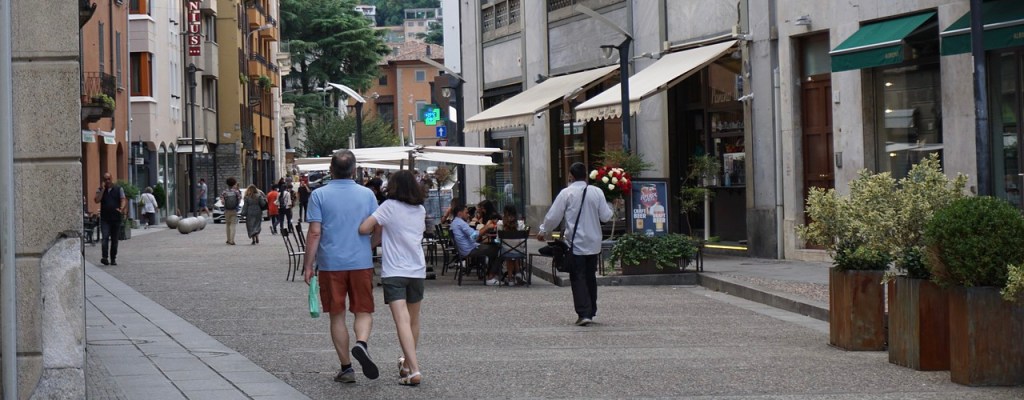
Imagine living in a neighbourhood where everything one needed on a daily basis lay within a fifteen minute journey – on foot or cycle – of one’s home. A neighbourhood where you can safely walk or cycle to the shops, school, medical centre, park, gym, swimming pool, office, cafe, the pub. A neighbourhood with (largely) traffic free streets, where children can cycle safely and those with impaired mobility/ sight/ hearing can easily cross the road. A neighbourhood where you know your neighbour, the barista at the cafe, the coach at the gym. A neighbourhood where you know you are part of the community.
How far can you walk in 15 minutes? 3/4 or even a full mile.
And by cycle? – maybe 2 to 4 miles.
Could you get much further by car?
The average speed of traffic in London is around 7-8mph, suggesting one could travel 2 miles in quarter of an hour. But then one would have to find somewhere to park, so the distance you could travel by car might well be much less than 2 miles.
Imagine a whole city made up of such neighbourhoods and you have the Fifteen Minute City. This concept is being a actively pursued in Paris by the mayor, Anne Hidalgo. Hidalgo proposes to have a cycle lane in every street and to remove 60,000 parking spaces for private cars whilst at the same time spending €1b per year for on greening both streets and school playgrounds. She has already added some 50km of cycle paths and banned high polluting vehicles. Similar projects are being trialed in Milan, Madrid, Seattle and Ottawa, whilst Melbourne and Edinburgh are pursuing twenty minute neighbourhoods.
What are the benefits?
Benefits social cohesion and community strength.
Supports local business and enterprise.
Less time spent commuting. Fewer traffic jams.
Less air pollution. Reduced CO2 emissions.
Option to repurpose road space as green spaces. Greater biodiversity.
Improved levels of mobility for everyone. Better health.
Increased quality of life.
If you want to hear about the Fifteen Minute City from its creator, Carlos Moreno, tune into the following YouTube episode:-
Can we as individuals go some way to creating our own fifteen minute neighbourhood? We can choose to patronise local shops and businesses, use local leisure facilities and green spaces. We can choose to walk or cycle to each destination, and we can seek out routes that green and interesting – and perhaps discover paths we didn’t know existed!
If we become accustomed to walking or cycling 15 minutes on a day to day basis, we will find we can transfer to a lifestyle that doesn’t need a private car. For those longer but less frequent journeys we can as easily walk to the station and take the train, or book a taxi or hire a car. If that becomes the norm just imagine the effect it will have on local neighbourhood and on carbon emissions.
This pictogram shows my 15 minute neighbourhood: why not have a go at drawing one centred on your home?

Transcript of a talk a church group about my experience of being arrested during an XR climate crisis uprising.
Micah 6: 1-8 (abbreviated)
Hear what the Lord says: Rise, plead your case before the mountains, and let the hills hear your voice. Hear, you mountains, the controversy of the Lord, and you enduring foundations of the earth; for the Lord has a controversy with his people, and he will contend with Israel. “O my people, what have I done to you? In what have I wearied you? Answer me! …”
Has he not told you, O mortal, what is good; and what does the Lord require of you? Do justice, love kindness, and walk humbly with your God.
But what is justice?
That is a question I would like you to hold in mind, and I will ask it again at the end.
I have always had a Christian faith and a concern for justice. As a teenager I restricted my diet to 1000 calories a day in solidarity with women in India. When I was at university in the early 80s I was aware that human production of green house gases plus our excessive use of raw materials was damaging the world’s environment. That knowledge together with my Christian faith has shaped the way I lived. As a family – Paul and I have three children, now all grown up – we have constantly been adjusting our lifestyles to try and mitigate the damage we were causing to the earth.
As the internet age developed, so I have signed more petitions, written to and spoken with our local MP, joined marches and protests. Yet nothing seems to change. The world is continuing to grow warmer, extreme weather events occur more frequently, ecosystems are being destroyed, the poor are being disadvantaged – and yet the human output of carbon dioxide and other greenhouse gases continues to rise. I felt that nothing was going to stop this crisis.
In the spring of 2019 I went to Cornwall with my daughter to walk the Celtic Pilgrim Way. We returned on Good Friday when the XR Easter uprising had begun and we stopped off at Marble Arch. Pitched tents, crèche, a stage, workshops, a welcome desk, sunshine, smiling people, even the drivers of vehicles whose routes had been diverted were cheerful. The same in Waterloo Bridge which had been transformed into a garden bridge with trees and pot plants, a skate board ramp, sofas and easy chairs, and story-telling circles. It was all a vision of what the future could be!
When I heard that the October uprising was to include a Faith Bridge I wanted to be a part. The Faith Bridge was conceived as a coming together of different faiths – Buddhist, Muslim, Jewish, Quakers, pagans, Christians – to express our joint concern for the well-being of the earth. We were to occupy Lambeth Bridge for the duration where we would set up a tepee for worship (which would be led by the different faiths throughout the day) a stage for talks and music and drama, places to meet and share with others our hopes and fears, and as the centre piece a large wooden ark.
To secure the bridge we would need a small group of people willing to be arrested whilst a larger group of people set up these bases. Drawing inspiration from both my Christian faith and from the example of the Suffragettes, I volunteered to be an arrestable. For this XR provides training and on going support.
The first day of the uprising dawned – literally -as we gathered by Lambeth Bridge. Initially we blocked the slip roads leading onto the bridge. Another group of protesters were doing the same at the other end. Once the traffic had been brought to a standstill we moved onto the bridge itself. The police had pre-empted us. They were massed in lines across the bridge such that each group of protestors was confined to small area at opposite ends of the bridge. At the same time another group of police saw the ark being delivered in its flat pack state and confiscated each part as it was unloaded.

Undaunted we sat on the tarmac surrounded by banners and prayer flags, facing the police line. We were a mixed group – all ages, backgrounds and faiths – and together we sang and prayed and shared our stories. Faith leaders and CEOs of charities and NGOs came and told us their stories as to why the climate crisis was such a critical issue. And still we sat and sang and prayed. It was a uniquely special experience of being in the presence of God.
Around mid afternoon, the police gave us the option of joining our fellow protestors at the other end of the bridge – provided we walked round the long way, via Westminster Bridge. We gathered up our banners and flags, our musical instruments and the remaining box section of the ark and set off along the road past St Thomas’s hospital, singing as we walked. We must have looked like the Israelites setting off for the promised land. Having negotiated our way through the blockades on Westminster Bridge and we’re almost in sight of the north end of Lambeth Bridge, we were stopped by another group of police who wanted us to divert with the ark to Horseferry Road. Negotiations took place. Whilst we waited we sat and we sang. Then a whisper spread round and looking behind us, a double line of police officers were advancing towards us. On arrestables drew back, the rest of us sat firm holding onto the ark. Arrests began. A police officer tried to persuade me to let go, and when I did not, I was physically lifted up and back, ending up on my back in the road – time send to stand still. Them everyone was crowding round. The police officer cautioned and handcuffed me. The XR legal observer wanted my details. People were shouting abuse at the police; others were cheering and applauding those who were being arrested. My mind went into a blur and my body into shock. My arresting officer was considerate and concerned and helped me across to the pavement where I joined others who had been arrested. We sat there for a couple of hours with our arresting officers whilst police stations were contacted to find spare cells. Four of were loaded into the cage compartments in the back of a police van and taken to Walworth. And still the wait continued, as we waited to be processed by the custody officer. Finally I was put into a police cell, given a vegan meal and a blanket.
At 2 in the morning I was released pending further investigation having been charged with obstructing the highway and causing a public nuisance. As I left the police station I was greeted by an XR volunteer who offered me chocolate and looked up the night bus time table so that I could get home and to bed!
My day in court was delayed by Covid. After numerous postponements, the case was heard in March of this year at the City of London Magistrates Court. I was represented in court by a barrister – the cost of both the barrister and the lawyer were met by XR funds. I could have pleaded guilty – I had indeed been obstructing the highway – but as a matter of principal I wanted to present the counter arguments: that I had been exercising my right of peaceful protest; I had done something that would ordinarily be criminal but in the circumstances it was necessary to draw attention to a greater danger vis the climate crisis. The example usually given is that one would not be prosecuted for breaking a window in order to sound the alarm for a fire. I also wanted to explain that my actions were motivated by my Christian faith and my belief that I – we – have a duty to care for and protect the earth.
The court staff were helpful and courteous. The XR observers were encouraging and supportive. Only the three magistrates seemed to be set against my defence. I was found guilty, fined and given a conditional discharge of 9 months.
Whose rights should have prevailed?
My right to protest or the road users right to use that particular public highway? Had I merely sat on the pavement would anyone have taken notice?
Do road users have an unlimited right to use use the roads? What if the volume of vehicles on the road causes an obstruction either to other vehicles, or to cyclists? What if the volume of vehicles prevents emergency vehicles getting through? What if the volume of traffic creates levels of pollution that endanger people’s lives, or increases the risk of dementia? What if the volume of traffic increases CO2 emissions such that global temperatures keep rising? What then of the rights of people both here and in other parts of the world to live lives not affected by rising sea levels and extreme weather events?
To return to my original question, what is justice?
 The Green Tau