Count Down

 Action 95: Heating our homes is one of the biggest components of our domestic carbon footprint. This autumn the weather is still quite mild. Why not see how long you can keep warm with out turning the heating on? And thereafter see just how many hours it needs to be in each day to keep you warm? On the Eco Tips page you will fin suggestions for alternative ways of keeping warm, including thermal underwear. 

Bug Hotel

Caring for our future is about caring for all different sorts of creatures. We are continually learning how important so many large and small creatures are for keeping the environment healthy – be that worms who keep the soil fertile, ladybirds that keep aphids under control, ants that eat parasites, geese that stop lakes silting up, pigs that loosen and fertiliser soil under trees.

Today’s project is making a bug hotel. It is a place where small beetles and insects can overwinter ready to resume their activities in the spring. For this you will need a tin.

Using a skewer make two holds at top and bottom on one side of the tin. You might like adult help. 

Thread a paper clip through each of the holes.  

Collect from your garden bits of dead twigs and plant stalks. Choose ones of different thicknesses. Cut these into equal lengths, just  long enough to stand upright in the tin.

Dear Dear

Fill the tin with these twigs and stalks. Ensure they are well packed so that none can fall out. The little gaps will provide the hiding places that insects seek.  

Take a piece of string and thread it through the paper clips and tie the ends together. Hang the bug hotel outside in your garden. Find somewhere sheltered from the wind and rain so that your bug hotel won’t become flooded or blown away in a storm. 

Green money

How we use, spend or save our money, makes a difference.

  • Protect peat bogs: don’t buy composts that contain peat, instead buy peat-free varieties or make your own.
  • re peat, ask whether the mushrooms, herbs, salads, you are buying are grown in peat – or not
  • Buy bee friendly (and insect/ butterfly friendly) seeds and flowers to promote local biodiversity.
  • If you have space, buy and plant fruit bushes/ trees and enjoy fresh fruit. 
  • Even if you only have a windowsill buy seeds so that you can grow your own herbs and salads.
  • Use local shops and local suppliers so that your money supports jobs for local people and the local economy.
  • Buy locally produced food so as to reduce supply lines and their associated carbon footprint. Avoid foods bought in by air freight.
  • Buy organic food to prevent more soils and waterways from being polluted by nitrates and pesticides.
  • Buy organic foods to prevent insects, birds and small mammals being poisoned by pesticides.
  • Buy organic foods to prevent wild plants and creatures being killed off by herbicides.
  • Buy plant-based foods from sustainable sources in preference to meat and dairy products – these have a larger carbon footprint.
  • Avoid products that come with excess packaging – even if it is recyclable, the whole process is unnecessarily using up time and resources!
  • Swop/ buy second hand items to cut back on waste and conserve scarce resources. 
  • Maintain and/ or repair things to make them last longer or find a professional to do this for you. NB Anything electrical should only be mended by a professional; ditto boilers etc. 
  • Buy gas and/or electricity from a green supplier and support the transfer to renewable energy.
  • Buy a cycle and good wet weather clothes and be an active traveller. Fewer cars on the roads reduces CO2 levels and air pollution and creates quieter, less congested neighbourhoods.
  • Where you go by rail rather than air, buy a train ticket. Where you can go by bus rather than drive, buy a bus ticket. Opt for the greenest travel option.
  • Avoid companies that don’t pay a living wage to their employees, who don’t pay their taxes, and offer minimal support for a greener world. Instead spend your money supporting  companies that treat people and the environment with respect.
  • Do buy wonky and misshapen fruit and vegetables and limit what goes to waste.
  • Do buy insulation for your home, thermal linings for your curtains, and low energy light bulbs.
  • Do consider a heat pump over a boiler. The former is more energy efficient and has a much smaller carbon footprint.
  • Don’t buy food you won’t eat, clothes your won’t wear or appliances that just take up space.
  • Don’t buy new when a good second hand option is available. 
  • Don’t use banks/ insurers/ pension fund providers that invest funds in the fossil fuel industries.
  • Do seek out companies that actively invest to support a green economy.
  • Do support wild life funds, re-wilding and habitat conservation projects. 
  • Do enjoy the outdoors and green spaces – often access is free!

Count Down

 Action 94: Review your spending. Go through your bank statement of credit card bill. Where are you spending your money? Who is benefitting from it? Is it promoting greener, sustainable businesses or activities, or is it propping up carbon greedy businesses? Is it supporting businesses or activities that have respect for their employees and their suppliers? Is it helping our society transition to a more sustainable, more equitable world?

Autumn Collage

Having a concern for the environment is also about taking note and taking care of it. For today’s activity I have made a collage with leaves and seeds. There are so many lovely colours and shapes of leaves at this time of year, and so many different types of seeds: conkers and acorns, thistledown and apple pips. Taking time to notice and admire what is around us in the natural world is important – and what we see and love, we are far more likely to protect. 

Having made my collection of leaves and seeds, I took a sheet of coloured paper. Then  I arranged the leaves on the paper … looked at them … moved them around … until at last I had a pattern I liked. Then I used some glue to hold them in place.  


I also took a photo as the leaves will not last for ever. 

I like the idea of making something without having to buy lots of things. The less we have to buy, the less damage we do to the environment. 

Why don’t you have a go and make a collage too?

Sunday Reflection

24th October 2021, Proper 25

Jeremiah 31:7-9 (https://bible.oremus.org/?ql=501918569) Hebrews 7:23-28 (https://bible.oremus.org/?ql=501918639) Mark 10: 46-52 (https://bible.oremus.org/?ql=501913875)

Reflection 

The reading from Jeremiah is so upbeat and full of joy. God is bringing together all God’s people, from the very ends of the earth, those who have been disadvantaged and sidelined, the marginalised, the young and the old. God will bring them back together, console and lead them, caring for them as a loving parent. The passage begins with a call to the leaders that they should praise God and pray for salvation. Will our nations’ leaders do the same for us at COP26? There are plenty of people around the world waiting for a time of celebration!

The Letter to the Hebrews reminds us that we have in Jesus the ultimate companion, guide and priest. The one who will always be with us, who will always be the means of our salvation, and who will always intercede on our behalf. At times of seeming hopelessness, we need to be reminded of this certainty.

It is not often we learn the names of the people that Jesus encounters. We hear of the woman with haemorrhage but not her name, of the paralysed man – ditto, the Syro-Phonecian woman, Peter’s mother-in-law: all are anonymous. But here we know the man’s name and that of his father too, and we know where he lives: he is Bartimaeus, son of Timaeus, resident of Jericho.  He is a beggar so maybe life’s opportunities have passed him by. As a crowd gathers along the road side, people are less than generous towards Bartimaeus. They scold him for calling out to Jesus – are they embarrassed by him? Do they think people like him should be kept in the background? Do they think Jesus should only meet upright, ‘proper’ people?

If so, they have not been paying attention. Jesus is often sought out by the vulnerable, the excluded, the despised, and each time his response to them is always focused on their needs, full of love and compassion. Once Jesus has responded to Bartimaeus’s call, the crowd shifts its approach and now encourages Bartimaeus to get up and meet Jesus. How fickle a crowd can be!

Jesus’s question to Bartimaeus is interesting. He doesn’t assume that what Bartimaeus wants is sight – indeed may be Bartimaeus’s first desire was to be heard. People labelled as disabled, don’t always see their difference as something unwanted, as something they wish to be rid of. Rather what they may want acceptance and understanding, an place of equal standing in society. In this instance, Bartimaeus does want to regain his sight, he wants to see again. It transpires that what Bartimaeus doesn’t want to do is to stay where he is. He doesn’t want to remain by the roadside on the way into Jericho, the butt of people’s shifting opinions. He wants to go with Jesus, to follow him and become part of the transformative society that Jesus is creating. 

In that there is a message for us. What do we want, both for ourselves and our society – our world?  And can we be part of the change? Next Sunday sees the start of COP26 in Glasgow. Decisions made there have the potential to transform for the better, the lives of so many. Let us make sure our voices are heard, our wishes declared.

A Marble Run: a race to zero


The dangers of the climate crisis are real, but we can all be part of the solution. The single most important thing we can do is to reduce our carbon footprint to net zero. 

Today’s activity is about things go down. In this case a marble – but hopefully it will also be your carbon footprint too!

For this activity you will need a cereal packet, some thin card – eg another food packet – a stapler, scissors and glue. To finish you will need a flat board such as a cork table mat or chopping board, and some tape. 

Cut the thin card (mine is a cake packet) into three strips that are a little longer than the width of the cereal packet and about 6cm wide. This you bend into box-shaped gutter. The side of my packet comes ready folded into this shape. 

Fold and staple the flaps at one end of the gutter. 

At the other cut a gap in the base of the gutter and then fold and staple the end flaps.  

Once all three gutters have been made, glue these to the side of the cereal packet. Angle the gutters so that they slope downhill with the gap/ hole at the lower end. 

It may help if you unstick the bottom of the cereal packet so that you can lay it flat.

Cut out triangles of plain paper to fill the gaps between the gutters. On these you draw some pictures or write a message – as I chose to do. Glue these onto the cereal packet.

To make the marble run stable,  we are going to fix it to a flat board – I used an old chopping board. If you haven’t already, unstick the bottom flaps of the cereal packet and spread them out. Place the cereal packet on the board and tape the flaps down. Now your marble run should be stable. If it still a bit wobbly put a packet of sugar or a tin of baked beans inside the cereal packet to weigh it down.

Have fun! 

Count Down

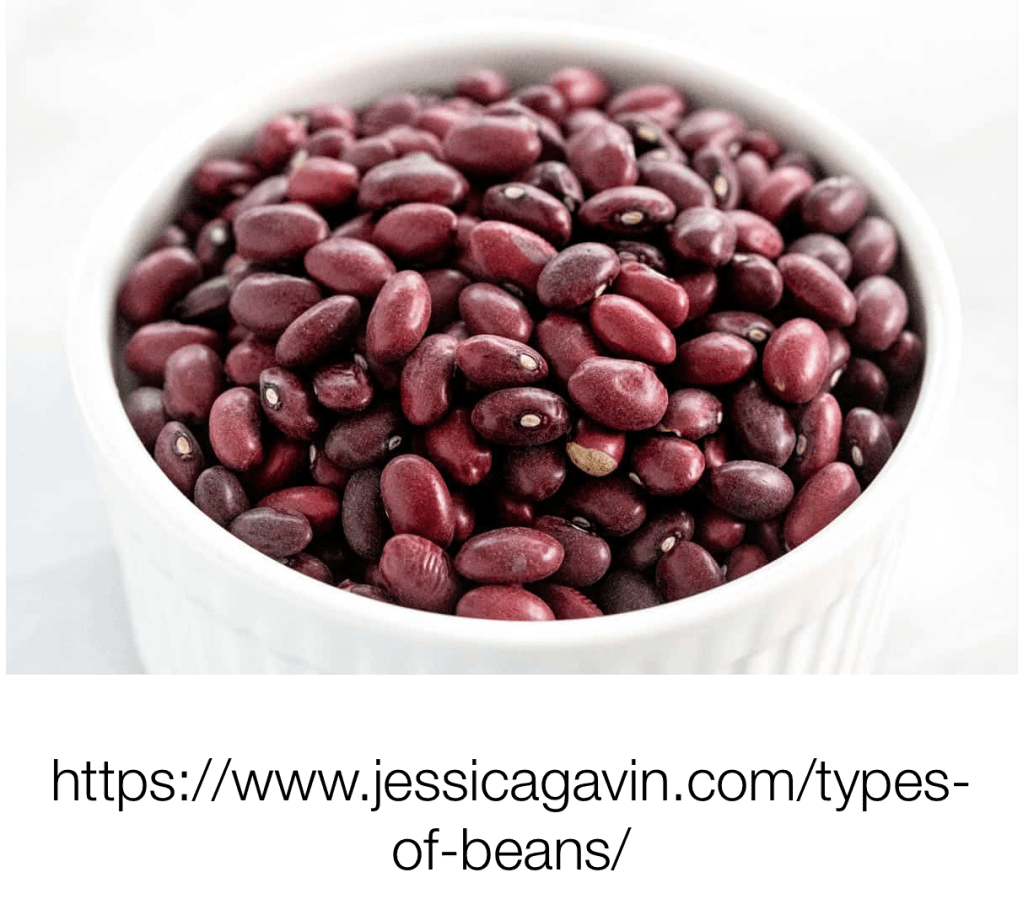
 Action 91: can you challenge yourself to a plant-based November? With squashes and pumpkins and mushrooms and brassicas very much in season, lots of delicate and hearty meals await you. Try out a hole range of different plant-based proteins – fava beans, pinto beans, cannelloni beans, Puy lentils, Carlin peas, blue peas, black badger peas, tofu, walnuts, almonds …. I am sure you can have a different one each day!