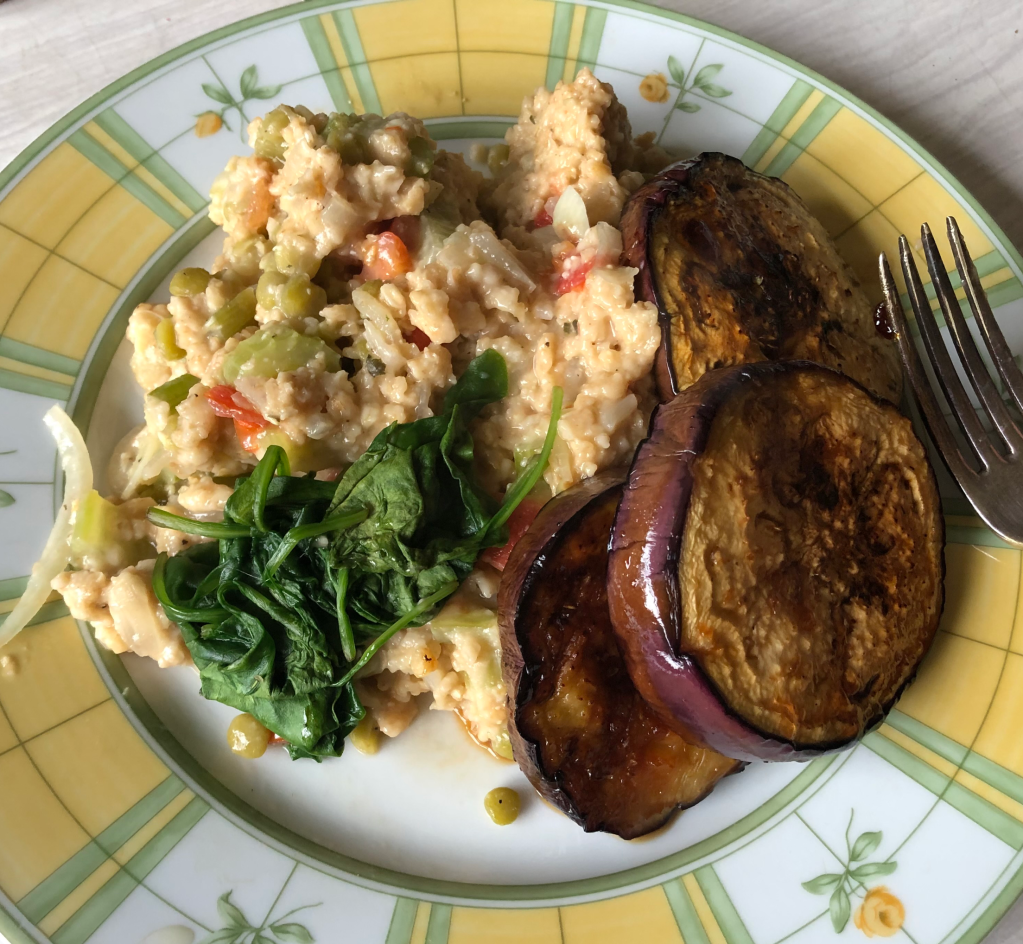
The wrinkled peas have become a version of risi bisi but rather than rice I have used porridge oats. Beginning with a chopped onion and come garlic cooked in oil, I added the oat flakes as if I were making a risotto. Next I added the peas and their cooking liquid and a chopped tomato, and stirring from time to time allowed the oats to swell and absorb the liquid. For extra flavour I added some pepper and nutmeg. Once the desired texture was achieved, I added some nutritional yeast flakes (ones fortified with vitamin B12). Another time I might add lemon juice and zest, or parsley, or salted lemon for different flavours.
What does sustainability look like in daily life? I thought I would share our (that’s me and my husband) experiences. What we cook and eat and where we shop, has been shaped by three principles.
L is for local: locally produced food, which can include things grown or produced in one’s immediate locality and things where local can mean the UK rather than abroad. For example in East Sheen we can buy honey that comes from Richmond Park. We can buy coffee beans roasted across the river in Chiswick. We can have breakfast in Putney enjoying porridge or eggs Benedict made on the premises. We can choose to buy strawberries from Kent as opposed to imported from Spain. Equally we can eat strawberries grown in our back garden. We buy beans and pulses, seeds and grains such as quinoa, from Hodmedod whose produce is all UK grown.
O is for organic: organic food has a less damaging impact on the planet than non organic food. Indeed it’s effect can be positive, with soils improved with vegetable matter rather than being stripped of its micro-organisms by fertilisers, with pollinators encouraged rather than being killed by pesticides, with livestock well cared for rather than being routinely treated with antibiotic prophylactics. We buy organically grown oats, and flour that comes from farms in Cambridgeshire and which is milled in a windmill!
A is for animal friendly: animals that live as near a natural life as possible (often organically raised). If we buy eggs for my husband we opt for free range, organic ones (although at the moment no eggs are free range owing to restrictions around bird flu). At Christmas the festive bird for my husband is a cockerel that has enjoyed a whole year of life unlike most of chicken meat which comes from birds that live may be 6 – 8 weeks (up to 12 for organically raised birds).
F is for fairly traded: the Fair Trade mark is well known as measure where production has guaranteed a price above the market minimum, where the work force receive fair wages and where provision is made for services such as schooling and health care. We buy fair trade bananas, chocolate and tea which are now widely available. We buy coffee beans that have been ethically sourced from small scale producers who grow top quality beans, appreciating that the higher cost reflects their value.
2. Secondly we avoid excess and plastic packaging, a habit we learnt through a zero waste experiment. We buy dried fruit and nuts, and dry goods such as rice, baking powder and bicarbonate of soda, spices, sugar, cocoa, millet and polenta from local refill stores where goods are dispensed into paper bags – often ones we have brought to reuse. We also buy refills of olive oil, soy sauce, maple syrup, tahini and peanut butter, taking our own jars and bottles to refill. Milk – both oat and dairy – comes in reused glass bottles on the milk round. Since we cook meals from scratch we avoid lots of single use plastic boxes. Likewise making our own cakes and biscuits reduces the amount of waste we generate. Jam jars are reused when we make jam, marmalade and chutneys and when we bottle summer fruits. Deliveries from Hodmedod come in paper or compostable bags, flour and oats come in bulk in paper sacks.
3. Thirdly we seek to reduce the carbon footprint of what we eat. Most meals are vegan – Paul enjoys cheese in his sandwiches and dairy milk on his cereal. A vegan diet can save in the region 400 and 900 kgCO2 a year. Even with a vegan diet there are ways of being more or less carbon efficient. By choosing locally produced food, food that is in season and cutting back on food waste (other vegetable leaves, tea bags and coffee grounds all go into the compost bin whilst apple cores go to make cider vinegar) we aim to minimise our carbon footprint. We have a weekly fruit and vegetable delivery from OddBox which collects fruit and vegetables from farmers and suppliers that would otherwise go to waste – because supermarket demand has dropped, crops have been larger (or sometimes smaller) than expected), crops have ripened too quickly/ slowly, or items are too small/ big/ misshapen for general sale. OddBox by preventing food from going to waste, saves some 11,000 tonnes of CO2 a year.
The yellow split peas have become this week’s sandwich spread. This is a type of hummus ( true hummus is made from chick peas). The drained peas are blitzed to a paste with the juice of a lemon, some olive oil, garlic and a couple of spoons of tahini. Exact quantities vary as necessary to achieve the desired texture. If it becomes too runny, I add pumpkin or sunflower seeds to thicken things. Extra flavours come by adding pepper or paprika, lemon zest or herbs: I especially like dill.
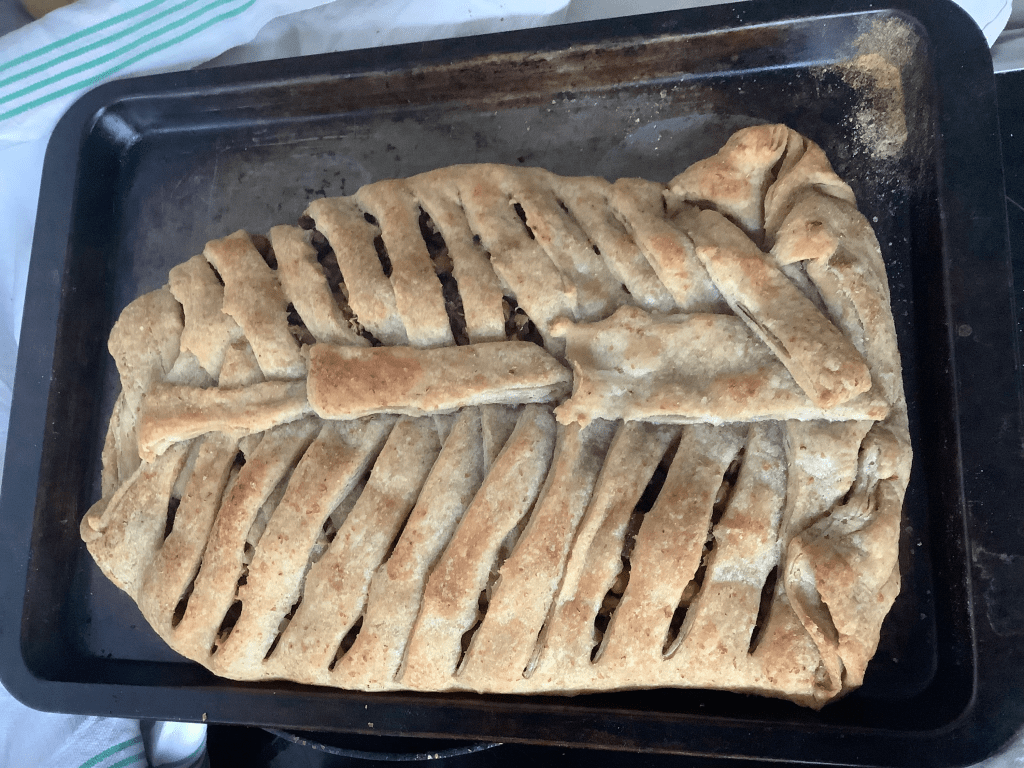
The cooked chicken peas I have combined with chopped mushrooms and Brazil nuts and wrapped in a flaky pastry case, adapting a recipe from Betty’s Cookery School (of Harrogate tea room fame).
Flaky pastry made from250g flour and 225g vegan butter
Filling made from a chopped onion, fried with garlic, to which I added about 250g of chopped mushrooms, flavoured with black pepper and rosemary. After a little more cooking, I added 100g each chick peas and chopped Brazil nuts. To add more flavour, I added a spoonful of quince jelly and some poppy seeds. Finally I added a couple of spoons of polenta to absorb any moisture, before laying the filling in the middle of the rolled out pastry. The edges of the pastry I cut into and plaited, before baking 30+ minutes at 200C.
In an earlier blog I explained how I cook a week’s worth of beans/ pulses at a time. This includes chick peas, red Carlin peas, wrinkled green peas, yellow split peas and marrow fat peas. How will these turn into meals?
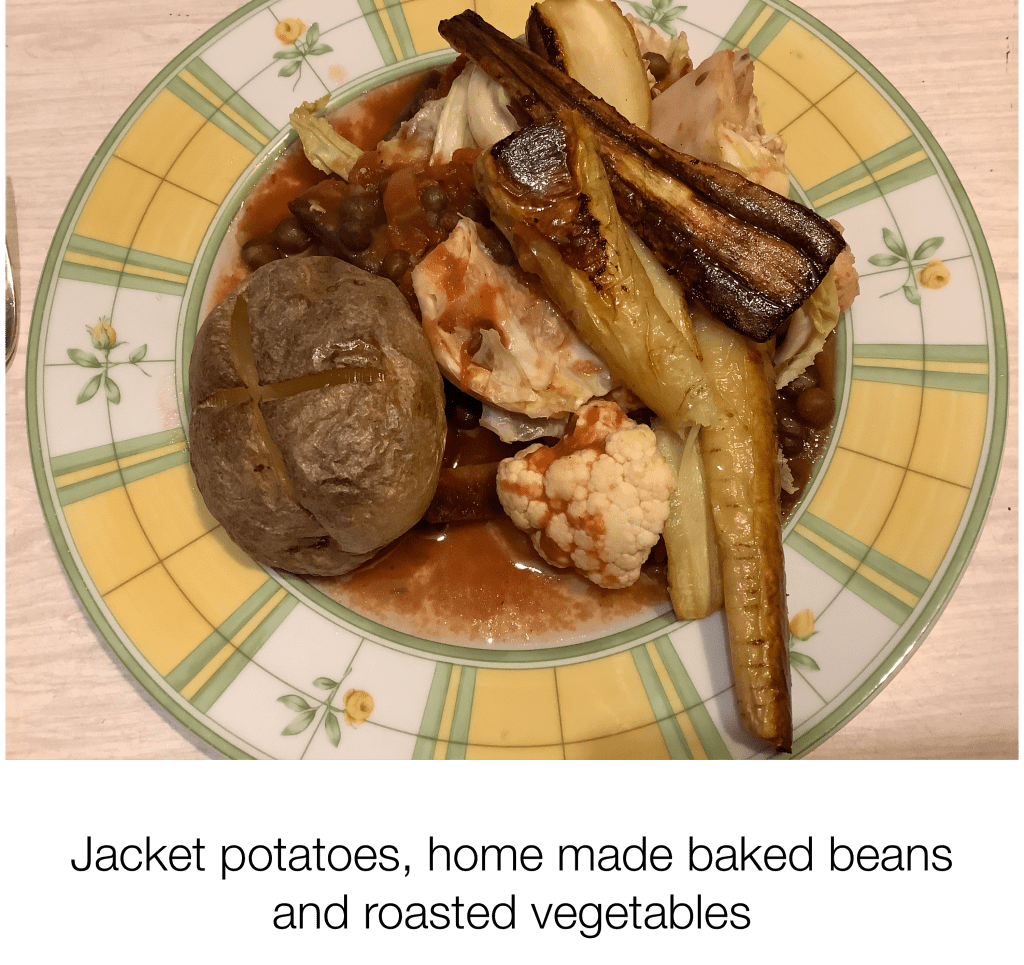
The cooked marrow fat peas I put in a dish and baked in the oven (30c minutes at 200C) with chopped tomatoes, olive oil and black pepper, and served with roast cauliflower and potatoes.
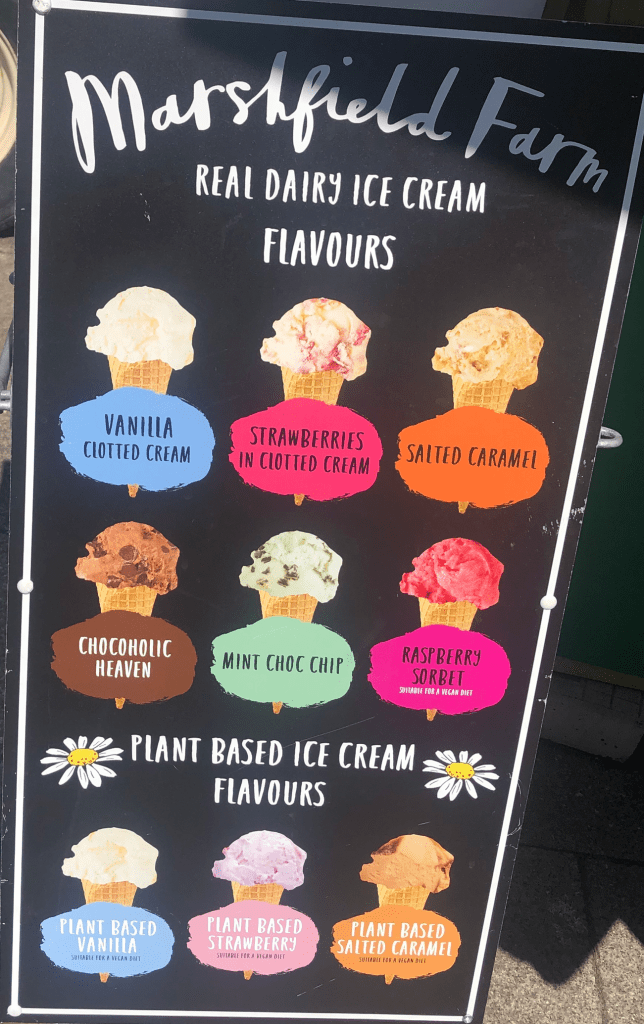
Kew Gardens in the sun is the place for an ice cream treat. The ice cream stand not only offers three plant based flavours, but also compares the carbon footprint of the different flavours on offer. The vegan strawberry ice cream has half the carbon footprint of its clotted cream sister.
I wonder if they would sell more vegan ice cream if those flavours featured at the top of the bill board?
Strawberries and raspberries are in season. Now is the time to preserve their flavour for enjoyment later in the year. I have been making jam and bottling these soft fruits. As strawberries and raspberries are quite delicate fruits, I bottle them with rhubarb. I precook the rhubarb till it is soft, mix in uncooked soft fruits and fill the jars with this combination before sterilising them in hot water.
Eating less meat is good for the environment, for the climate and for releasing resources to ensure everyone across the globe can be fed. An environmental newsletter, The Conversation, provides tips to help people reduce the amount of meat they eat, based on research by the LEAP team (Livestock, Environment and People) at the University of Oxford.
Make at least one of your main meals vegetarian.
Double the veg, halve the meat in your meals.
Set a maximum number of animal products to eat today and stick to it.
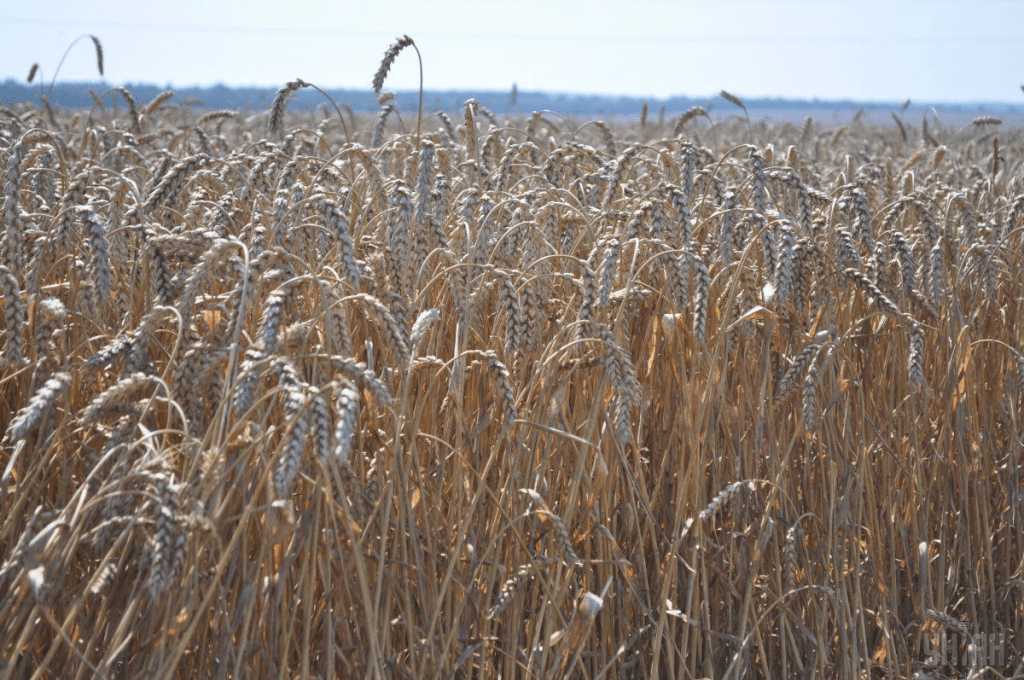
One victim of the war in Ukraine, is the global supply of wheat. Ukraine is usually a major exporter of wheat but this year will only produce a fraction of their normal harvest. This short fall in wheat supplies will affect many countries across the world – eg Lebanon, Egypt, Somalia and Laos. Across the globe wheat is grown not just for human consumption but as animal feed too. If more people followed a plant based diet, we would be better able to feed everyone.