Weekly Green Tau

Counting on …day 249

18th July 2022

In May many people took part in the Big Plastic Count organised by Greenpeace. They have now produced the results of survey  and a report in which they highlight that only 12% of plastic household waste is recycled in the UK, as opposed to being buried as landfill, incinerated or sent abroad. This is not a happy state of affairs and not surprisingly they now have set up a petition calling on the government for more responsible action.

The Green Tau: issue 44

An addendum to Sunday’s reflection

On Sunday (17th July) with a focus on the environment, we looked at the plight of five creatures threatened by our human lifestyle choices. And it is not just these creatures whose futures are threatened but ours too as we all part of one interconnected ecosystem.

What action can we take to change these prospects?

“Orang-utans live in great tropical forests. They depend upon the forests for food and shelter, as a well as a  place to live and to play. But the forests where they live are being chopped down and cleared away to make space for acres and acres of palm oil plantations to make lipsticks and margarine, shampoo and pet food, sunscreen and bio diesel. When the forests go, the orang-utans have no where else to live. It seems as if we are saying to the orang-utans ‘Go away you don’t belong here’.”

By carefully choosing what we do and don’t buy we can reduce the pressure on forests such as those where orang-utans live. We can avoid products that use palm oil or we can seek out producers who follow a code of conduct that requires them to protect indigenous wild life and farming communities.

It takes a bit of effort but research via the internet and especially using web sites created by ethical and environmental groups such as The Ethical Consumer and the Fair Trade movement can gives us the information we need to make better choices. We may conclude that some of things we have been buying are not really essential and that buying less is another way of taking action. We can also investigate the sourcing of other crops such as cocoa, sugar cane and soya which can be equally detrimental to the environment. NB the vast expansion of soya beans as a crop goes not to create soya milk, but as fodder for the world’s escalating meat farms.

“Polar bears live in the Arctic where they go hunting across the ice. They dive into cracks and holes in the ice to catch fish and seals. But climate change is making the world hotter and the ice is melting. Without the ice the polar bears cannot hunt fish and seals. Instead they and their cubs starve. It seems as if we are saying to the polar bears, ‘If you can’t cope with climate change and melting ice caps, then we don’t need you.’”

“Sand martins spend the winters in Africa and the summers in Europe. In the spring they fly thousands of miles across the Sahara to Britain and in the autumn they fly the same thousands of miles back. But climate change is making the world hotter and when they fly over the Sahara Desert, the air is so hot that many martins simply cannot cope and they fall to the ground. It seems as if we are saying to the sand martin ‘If you can’t cope with climate change, then there’s no place here for you any more.’”

The climate crisis is rapidly increasing and is causing and exacerbating many other problems. We can each take action by changing our lifestyle to reduce our carbon footprint. There are many books and web sites on ways and means. The principal areas of change we can make in our individual lives are in Transport: not flying, rescuing significantly our dependence on cars and instead using public transport, cycling and walking. 

Food: eating locally produced, seasonal, organic food, and replacing meat with plant based meals

Heat and electricity: reducing demand by insulating our homes (which also helps keep them cool in the summer) and turning down the thermostat, using renewal sources of energy,  reducing the frequency with which we wash ourselves and our clothes, and reducing our dependence on so many high energy consuming appliances

Consumption: the things we buy and consume all have a carbon footprint. We can consume less including  less packaging, we can repair and reuse what we do have, when we do buy new we can seek out things that are ecologically and ethically made, and we can make sure that everything is recycled at the end of its lifecycle.

But we won’t be able to make the necessary reduction in carbon emissions on our own. We are locked into systems that make it impossible – rail travel  is made more expensive than air travel through taxation, regions outside London and especially rural areas are inadequately provided with public transport, people’s incomes are often too low to allow for investment in insulation and home improvements that would reduce energy costs, large fossil fuel companies across the globe continue receive tax subsidies, manufacturers are not required to pay for the cost of collecting and recycling their products, the true  value of nature is not included in investment decisions, our pensions fund  not only fossil fuel investment but also the destruction of forests for palm oil and soya crops … the list goes on. We need to engage with and support environmental groups that call for system change.

“Around the world in different oceans live whales. Whales get caught up in fishing tackle and crashed into by shipping. They are disoriented by noise from oil exploration. Every year fewer and fewer whales are born. It is as if we are saying to the whales, ‘Go away, we don’t need you’.”

But we do need whales! They are amazing creatures. In the oceans there tiny tiny things called phytoplankton that, like leaves on trees, convert carbon dioxide and sunlight into oxygen and energy. And phytoplankton provide food for slightly bigger plankton and the plankton provides food for all manner of other sea creatures – including whales. But there is one thing that phytoplankton needs and that is iron. And do you know where that iron comes from? Whale poo! If oceans are to remain healthy with phytoplankton providing oxygen and energy for plankton and seaweed, and  fish and other sea animals, then we need  whales.”

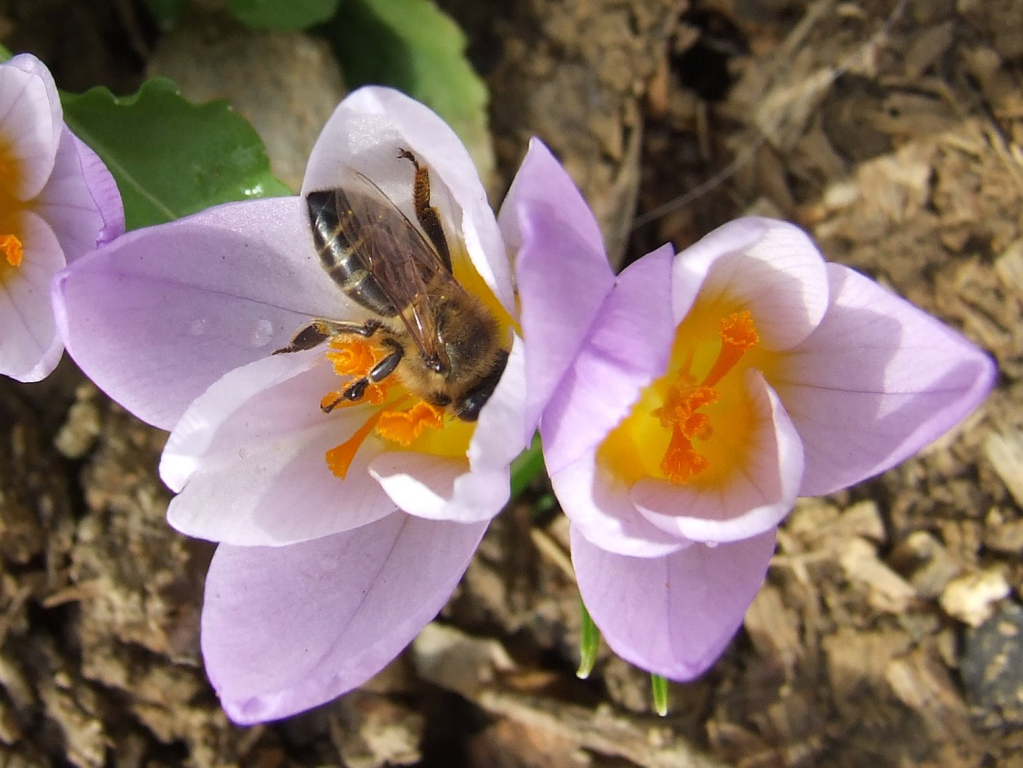
“What about bees? Bees live in lots of different parts of the world feeding on nectar from plants. But we have been getting rid of wild plants and hedgerows, and spraying fields with herbicides so that there is not enough food for the bees. And we have been spraying crops with pesticides that kill not just the ‘pests’ but the bees too. Every year there are fewer and fewer bees. It is as if we are saying to the bee, ‘Go away, we don’t need you.’ 

But we do need bees. Without bees to fertilise crops we won’t have apples and pears, or strawberries and cherries, or figs and kiwi fruits, or almonds, avocados, mangos …. the list goes on and on.”

The loss of biodiversity is immense and accelerating. We can support biodiversity locally by the way we use our gardens, growing wild life friendly plants, providing food and water  for birds and insects, by avoiding the use of pesticides and herbicides and peat.  We can help by supporting local and international organisations that protect and conserve biodiversity. And as above, we can use our spending money to influence change.

Saving the environment is a numbers game, so talk about the actions you take with friends and family, with shopkeepers and suppliers, with local councillors and MPs, and encourage them to take action too.

Environment Sunday 

17th July 2022

Our church is dedicating this Sunday to the Environment as well as holding baptisms. 

Readings 1 Corinthians 12. 12-27 (The Message)

Each of us is now a part of Christ’s resurrection body, refreshed and sustained at one fountain—his Spirit—where we all come to drink. The old labels we once used to identify ourselves—labels like Jew or Greek, slave or free—are no longer useful. We need something larger, more comprehensive. I want you to think about how all this makes you more significant, not less. A body isn’t just a single part blown up into something huge. It’s all the different-but-similar parts arranged and functioning together. If Foot said, “I’m not elegant like Hand, embellished with rings; I guess I don’t belong to this body,” would that make it so? If Ear said, “I’m not beautiful like Eye, transparent and expressive; I don’t deserve a place on the head,” would you want to remove it from the body? If the body was all eye, how could it hear? If all ear, how could it smell? As it is, we see that God has carefully placed each part of the body right where he wanted it. But I also want you to think about how this keeps your significance from getting blown up into self-importance. For no matter how significant you are, it is only because of what you are a part of. An enormous eye or a gigantic hand wouldn’t be a body, but a monster. What we have is one body with many parts, each its proper size and in its proper place. No part is important on its own. Can you imagine Eye telling Hand, “Get lost; I don’t need you”? Or, Head telling Foot, “You’re fired; your job has been phased out”? As a matter of fact, in practice it works the other way—the “lower” the part, the more basic, and therefore necessary. You can live without an eye, for instance, but not without a stomach. When it’s a part of your own body you are concerned with, it

makes no difference whether the part is visible or clothed, higher or lower. You give it dignity and honour just as it is, without comparisons. If anything, you have more concern for the lower parts than the higher. If you had to choose, wouldn’t you prefer good digestion to full-bodied hair? The way God designed our bodies is a model for understanding our lives together as a church: every part dependent on every other part, the parts we mention and the parts we don’t, the parts we see and the parts we don’t. If one part hurts, every other

part is involved in the hurt, and in the healing. If one part flourishes, every other part enters into the exuberance. You are Christ’s body— that’s who you are! You must never forget this.

Gospel Reading – John 4.13-14

Jesus said to her, ‘Everyone who drinks of this water will be thirsty again, but those who drink of the water that I will give them will never be thirsty. The water that I will give will become in them a spring of water gushing up to eternal life.’

Collect

Loving God, by whose great generosity we are granted the gift of life, so breathe on the spark of your presence within us, that we

 burn with a flame of love that banishes our fear, and lights up the world around us. We ask this in the name of Jesus, Light and life of the World. Amen.

Talk 

Baptism services remind us that we are all one community, one body in Christ. No one can say to someone else you don’t belong here, or go away, we don’t need you. We are all equal and important and necessary just as we are.

Today I want us to think about the world. 

Lots of people and lots of birds and animals, fish and insects and creepy crawlies and the list goes on –  live here.

What can you see?

A polar bear.   A sand martin.   An orang-utan.  A bee.   And a whale.

Orang-utans live in great tropical forests. They depend upon the forests for food and shelter, as a well as a  place to live and to play. But the forests where they live are being chopped down and cleared away to make space for acres and acres of palm oil plantations to make lipsticks and margerine, shampoo and pet food, sunscreen and bio diesel. When the forests go, the orang-utans have no where else to live. It seems as if we are saying to the orang-utans ‘Go away you don’t belong here’.

Polar bears live in the Arctic where they go hunting across the ice. They dive into cracks and holes in the ice to catch fish and seals. But climate change is making the world hotter and the ice is melting. Without the ice the polar bears cannot hung fish and seals. Instead they and their cubs starve. It seems as if we are saying to the polar bears, ‘If you can’t cope with climate change and melting ice caps, then we don’t need you.’

Sand martins spend the winters in Africa and the summers in Europe. In the spring they fly thousands of miles across the Sahara to Britain and in the autumn they fly the same thousands of miles back. But climate change is making the world hotter and when they fly over the Sahara Desert, the air is so hot that many martins simply cannot cope and they fall to the ground. It seems as if we are saying to the sand martin ‘If you can’t cope with climate change, then there’s no place here for you any more.’

Around the world in different oceans live whales. Whales get caught up in fishing tackle and crashed into by shipping. They are disoriented by noise from oil exploration. Every year fewer and fewer whales are born. It is as if we are saying to the whales, ‘Go away, we don’t need you’.  

But we do need whales! They are amazing creatures. In the oceans there tiny tiny things called phytoplankton that, like leaves on trees, convert carbon dioxide and sunlight into oxygen and energy. And phytoplankton provide food for slightly bigger plankton and the plankton provides food for all manner of other sea creatures – including whales. But there is one thing that phytoplankton needs and that is iron. And do you know where that iron comes from? Whale poo! If oceans are to remain healthy with phytoplankton providing oxygen and energy for plankton and seaweed, and  fish and other sea animals, then we need  whales.

What about bees? Bees live in lots of different parts of the world feeding on nectar from plants. But we have been getting rid of wild plants and hedgerows, and spraying fields with herbicides so that there is not enough food for the bees. And we have been spraying crops with pesticides that kill not just the ‘pests’ but the bees too. Every year there are fewer and fewer bees. It is as if we are saying to the bee, ‘Go away, we don’t need you.’ 

But we do need bees. Without bees to fertilise crops we won’t have apples and pears, or strawberries and cherries, or figs and kiwi fruits, or almonds, avocados, mangos …. the list goes on and on. 

If we are not going to say to bees and whales, to orang-utans and polar bears, to sand martins and to so many other amazing creatures – we don’t need you, you’re not part of our world, then we have to change the way we live. We are one body, we are one world.

Prayers

Take a look at your left foot. Think about people who cannot move freely, perhaps because of illness or disability; perhaps because of imprisonment; perhaps because they are women. Think too of animals that cannot move freely. May they be treated with compassion. May we be agents of change.

Lord in your loving kindness:

Hear our prayer. 

Now look at your other foot. Think about people who are having to flee from danger: from war and fighting,  from oppression and prejudice, from poverty, from floods , from wild fires, and from hunger. Think too of wildlife that is being forced out of its natural habitat. May they be protected and welcomed. May we be agents of change.

Lord in your loving kindness:

Hear our prayer. 

Now look at your hands. Think about people who use their hands to stack supermarket shelves, sew clothes, pick fruit and vegetables – especially those in poor working conditions. Think about people who use their hands to care for others:  cleaners, nurses, care workers. Think of those who use their hands to care for the environment. May they all be treated fairly, may they be valued and supported. May we be agents of change.

Lord in your loving kindness:

Hear our prayer. 

Now think of your bottom. Think of times when it is easier to sit back and do nothing, times when it is easier not to stand up for those in need: people in our own country who have to rely on food banks; people  in North Africa facing hunger as wheat prices rise; seabird colonies facing extinction because of bird flu, the world as it struggles with the climate crisis. Give us courage to act for we are all body. May we be agents of change.

Lord in your loving kindness:

Hear our prayer. 

Now think of your heart: think of all those you love and all who love you. We pray for those in need of healing and comfort: Angela Robinson, Jeane Dunsford, Alban Clarke, Joy Clarke, Lawrence Bell-Wright

We remember those who died recently: Pat West, Iris Lofting, Isabel Howlett, Hazel Acus, Anne Lawry, Peter Rivett.

and those who have died in past years: David Brown, Derek Marshall

Unite us all in your love.

Lord in your loving kindness:

Hear our prayer. 

Lastly try and look at the end of your nose. Think of those things which are hard to see, those things we would rather not see, those situations we would rather overlook: poverty, injustice, homelessness, hate, prejudice. Give us wisdom to understand ourselves and the world in which we live and to tend to its needs. May we be agents of change.

Lord in your loving kindness:

Hear our prayer. 

Merciful creator and Father

 accept these prayers for the sake of your son, our saviour Jesus Christ. Amen. 

 Counting on … day 247

16th July 2022

Also on the nature front, Friends of the Earth are asking us to ‘notice nature in the everyday’.

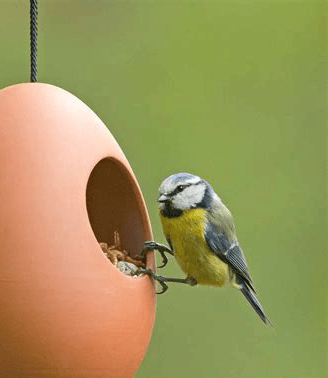
Whilst at the gym I spotted a dozen (each) sparrows, starlings and jackdaws, 3 parakeets, a goldfinch, a blue tit, a magpie and a kestrel!

 Counting on … day 242

13th July 2022

Urban areas are generally hotter than their nearby rural areas. Buildings and vehicles all add heat to their local micro climate, whilst vegetation reduces temperatures. Not driving cars during hot weather is one small way of keeping the air cooler. You too will probably feel cooler walking on the shady of side of the street rather than being sat in a hot metal box.

Stuff and sustainability

What does sustainability look like in daily life? I thought I would share my experiences.

Previous pages have looked at the use of heating and energy, food and travel for which it is generally easier to calculate one’s carbon footprint and assess the sustainability of alternative choices. Today I am going to reflect on the none food things I buy such as books, clothes, things for the house and garden. These all have a carbon footprint and have more or less sustainable credentials. Here are some of the ways I try to ensure that I use stuff sustainably.

*Not acquiring things that I don’t actually need. It is surprising how often we are tempted  – or encouraged by advertising – to buy things we don’t need. Do I really need it? Do I need to buy it now or could I wait and see if I still need it at a later date? Have I got something similar that will fulfil the same purpose?

* Research – find out what choices are available: which product is most sustainably, how long it will last and, if electrical, its energy efficiency. The internet is useful, as is Ethical Consumer which has both a web site and a magazine. When we needed a new printer, we bought a more expensive Epson model that instead of using disposable cartridges (which hardly last any time at all) has an economical  refill system  – and 8 months later we have yet to need to refill these. 

  • Buying second hand – or more endearingly, preloved – items allows existing resources to be reused  rather than consuming even more fresh resources. I buy clothes and books from charity shops with the plus of funding a worthwhile cause. Sometimes I can also find household items here too – such as a saucepan or a pestle and mortar – but then I do have to be patient as what a charity shop stocks is not predictable! I bought my mobile phone and iPad from Music Magpie – an online second hand site.  When I need a particular book I try web sites such as World of Books and Oxfam – I avoid Abe Books and The Book Depositary being subsidiaries of Amazon. If I buy new books, I use our local independent book shop. 

* Repairing rather than replacing. When something breaks, see if it can be repaired – either at home or via a specialist. Years ago, I bought a Globe Trotter suitcase because of their reputation for quality. When the handle broke, I was able to take it back and have a new one fitted. I frequently darn socks and T shirts, patch up tears, glue broken items in the kitchen, mend punctured tyres, takes shoes to the cobbler,  and buy spare parts from the manufacturer.

  • Up cycling – sometimes rather than buying, I can make what I need from something I already have. Eg pillow cases from worn sheets, plant pots from have cartons, a seed sprouted from a jam jar and a piece of muslin. Old inner tubes become garden ties, and shoe laces are reused as string. Old trousers become shorts, and trouser legs bags for root vegetables.
  • Making do with – enjoying! – what I have: I could buy a food processor but instead I use the knife and the ballon whisk I already have. We have an old kettle whose automatic switch no longer works but since the rest functions, we continue to use it. 

* Lending and borrowing: do I need to buy something if I am only  go to use it occasionally? As well as libraries for books and videos, there are libraries for things. I prefer to rent skis  knowing that they are going to be well used, as opposed to buying skis that would become obsolescent before they wore out.

* If I can, I look for options that will make a positive contribution to someone else: eg choosing a fair trade or organic option, supporting a local producer, buying from a B corp.

  • Packaging – I often make choices dependant on packaging, choosing not to buy something because it comes wrapt in plastic. For example buying a pencil I might choice the pencils sold loose over those pre-packed in plastic.
  • I prefer to spend money on doing rather than having: going to a cafe for a coffee and a cake rather than buying a magazine, going to the theatre rather than buying clothes, buying membership for a nature reserve (eg The Wetlands Centre) rather than cosmetics.

 Counting on … day 241

12th July 2022

Double glazing also keeps excess heat out! When the outside temperature is hotter than inside, closing the windows and drawing the curtains can help insulate rooms from high temperatures outside. On the other hand if you can open several windows causing a flow of air through the room, the movement of air may feel more comfortable.