Green Tau: issue 38

29th March 2022

Am I Wealthy?

When we think of wealth our first thoughts are probably of piles of money – and if not actual notes and coins, them lots of zeros on one’s bank balance. When we talk about someone’s wealth, we do so in terms of pounds. According to The Times Rich List the wealthiest person in the UK for 2021 was Sir Leonard Blavatnik, with a wealth of £23 billion. The wealth of nations is also typically measured in pounds/ dollars etc. The wealthiest nation in the world is the United States with a gross domestic product of  $18.62 trillion. The UK stands in 5th position with $2.65 trillion. 

Although we talk in terms of pounds and dollars, these examples of wealth are not piles of money (whether as cash or bank balances). Rather they are investments in stocks and shares, investments in property, luxury yachts, art works etc – all of which can be expressed in monetary terms and could in theory be sold/ liquidated to provide cash. 

But are there other forms of wealth? 

Wealth has in the past had the meaning of happiness as well as financial riches, and the word developed from the Middle English ‘wele’ or ‘weal’ meaning well-being. 

As a resident of Richmond in south west London, many things have and do contribute to my well-being. They are a wealth that I have inherited through being a citizen of the UK.

  • I was born into stable middle class family. My childhood was happy with no traumatic events. My parents were supportive and encouraging. I had a happy extended family of grandparents, aunts and uncles. 
  • I spent my childhood in a rural part of the country where I learnt to appreciate the natural world.
  • Growing up I had the benefits of free health care (including dental care) and free education right through to my graduation from university. 
  • I continue to benefit from free healthcare – and can afford to access dental and other therapeutic treatments.
  • I am free to follow my chosen religion.
  • Even though I am a woman I can vote, I am free to work outside the home, and I can expect my husband to assist with domestic tasks and childcare.
  • I live in a country with reliable mains water, electricity and gas; with well maintained roads and a public transport network; with regular refuse collections; with dedicated emergency services and with a welfare and benefits system. I will in due course benefit from a state pension.
  • I live in a country with a respected police service and judicial system. 
  • I live in a country where bribery and corruption is not an every day occurrences.
  • I live in a country with well endowed schools, universities, museums and libraries. 
  • I live in a country with a free press. 
  • I live in a country where green spaces are protected, where there are rigorous standards for food quality and animal welfare. 

I am not saying that all the provision of all these in the UK is perfect and that there isn’t considerable scope for improvement, but compared to what is available for the average member of our global community, they are a significant source of wealth and wellbeing.

This wealth, from which I have and do benefit, arises from investments made by earlier generations and, to a lesser extent, from the current spending of tax revenues by the government and local authorities. It is a wealth that derives from the UK’s early investment in the Industrial Revolution, and from its exploitation of resources from other countries – either those which it colonised or those with which it arranged beneficial trading relationships. It is a wealth that has developed through the widespread use of, initially coal, and subsequently oil and gas, which has contributed significantly to the global climate crisis that we all now face. 

Is this wealth that I have something I can redistribute? I benefit from it but I don’t own it. I can’t realise its cash value and redistribute it. I can’t divide up or share my education or my good health, but I can use them to change the world. I can inform and campaign; I can recognise the injustices and inequalities that exist between people and across the world; I can volunteer and protest; I can influence by example; and I can effect change through my financial spending and donations.

 Counting on …day 135

29th March 2022

Wellington boots are ideal for jumping in puddles! Growing up in rural Warwickshire in the 60’s and 70’s, Wellington boots were the main footwear for a good half of the year. We wore them so often they would physically wear out developing cracks around the ankle. Now I have walking boots to cover both wet days and long walks. Regular cleaning and re waterproofing ensures my feet stay dry. Good maintenance prolongs the life of so many things we own and is something  sustainability counts on.
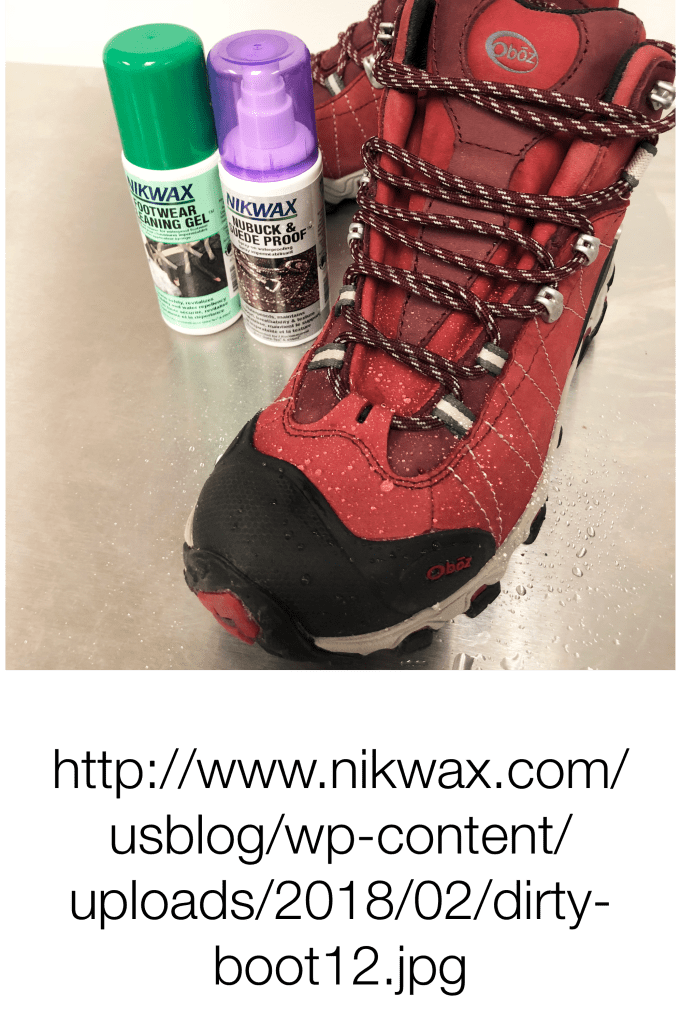
Waterproof garments also last longer when regularly cleaned and waterproofed. 

Lent Reflection
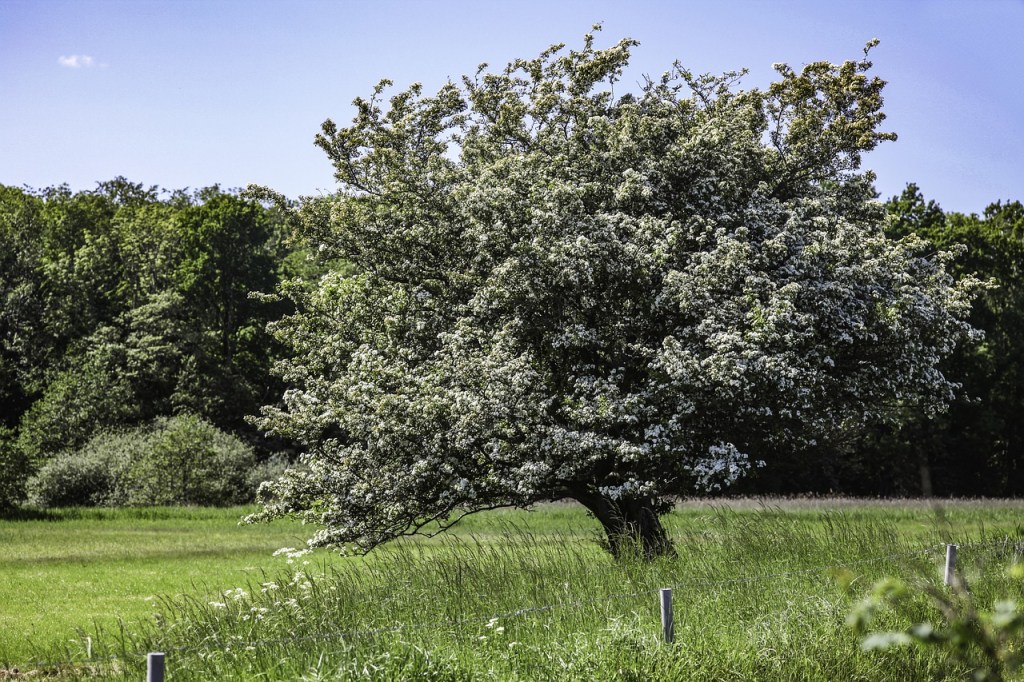
Meadow Sky Summer Landscape Sun Tree Hawthorn http://www.maxpixel

The hawthorn tree – crataegus monogyna – is native to Britain and grows to a height of 15m. It has a shrubby shape which provides safety for nesting birds. The hawthorn bears white, and sometime pink, blossom in May and hence is also known as a May tree. It can provide food for 300 different insects, and its fruit, haws, are eaten by various birds and small mammals. 

The early green leaves can be eaten freshly picked – known as ‘bread and cheese’ or as a salad. Its haws can be made into jellies and sauces. Hawthorn is widely used for hedging and provides good shelter for livestock. The wood is used for carving and for veneers.

Symbolically hawthorn represents hope.

But those who hope in the LORD will renew their strength. They will soar on wings like eagles; they will run and not grow weary, they will walk and not be faint. Isaiah 40:31

Love is a magical shelter where you will feel yourself safe beneath it. Mehmet Murat ildan 

Lent Reflection
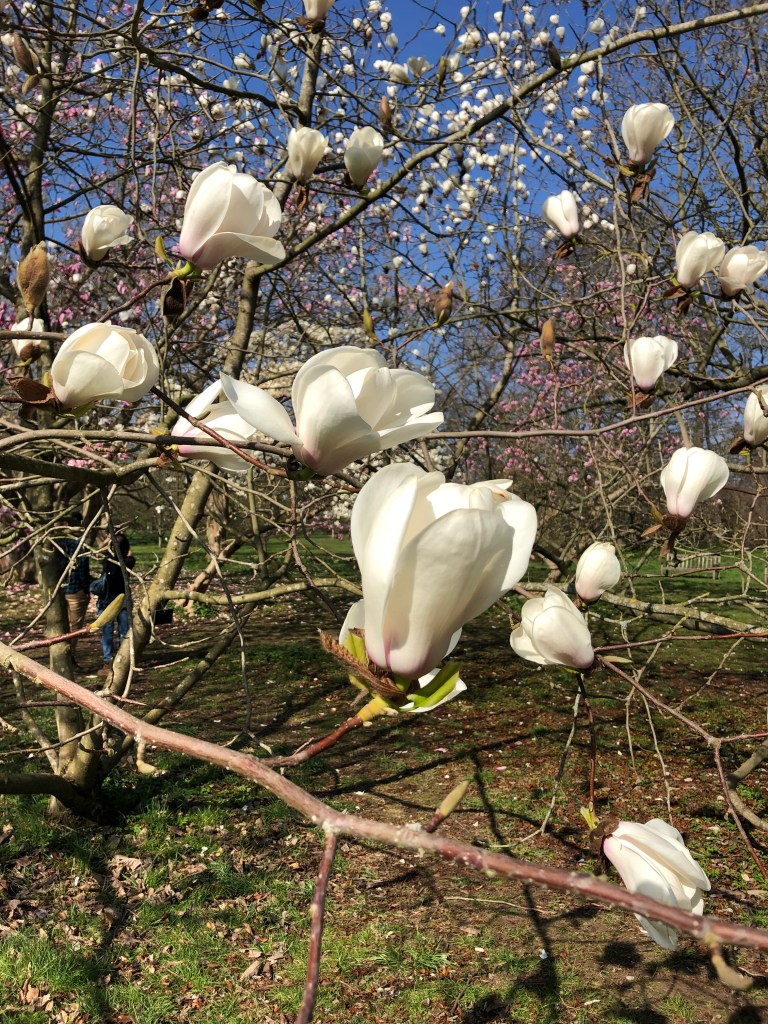
Kew Gardens, Saturday

There are about 200 types of magnolia. The original species predates the evolution of bees and it is thought that the magnolia’s distinctive large and robust flower had evolved so as to attract, and be fertilised by, beetles. 

The magnolia stellata originates from northern Japan. It is a small tree, usually less than 2.5m in height. It bears star-shaped flowers in early spring which appear in advance of its leaves.

Those who are wise shall shine like the brightness of the sky, and those who lead many to righteousness, like the stars for ever and ever. Daniel 12.3

A thing of beauty is a joy forever: its loveliness increases; it will never pass into nothingness. John Keats, Endymion, Book 1

Counting on …day 134 

28th March 2022

What a run of beautifully warm, sunny days! 

We can of course count on there being some wet days to come – and rain is a necessary part of our survival. Can we enjoy wet days just as much as sunny ones?  Wet becomes uncomfortable when one gone gets cold and/or when you end up sitting in damp clothes. But otherwise we tend to veer unnecessarily away from going out in the rain. Waterproofs can keep us dry and getting wet doesn’t really hurt – it can be fun feeling rain drip on to your face. As can watching the rain drip off leaves or run down gullies.

Welly Wandering is number 6 of the National Trust’s 50 Things to do! And in Sweden they are developing play grounds that come to life in the rain!

https://www.theguardian.com/world/2021/may/06/wetter-the-better-gothenburgs-bold-plan-to-be-worlds-best-rainy-city

Mothering Sunday/ Fourth Sunday in Lent

27th March 2022

Joshua 5:9-12

The Lord said to Joshua, “Today I have rolled away from you the disgrace of Egypt.” And so that place is called Gilgal to this day.

While the Israelites were camped in Gilgal they kept the passover in the evening on the fourteenth day of the month in the plains of Jericho. On the day after the passover, on that very day, they ate the produce of the land, unleavened cakes and parched grain. The manna ceased on the day they ate the produce of the land, and the Israelites no longer had manna; they ate the crops of the land of Canaan that year.

Psalm 32

1 Happy are they whose transgressions are forgiven, *
and whose sin is put away!

2 Happy are they to whom the Lord imputes no guilt, *
and in whose spirit there is no guile!

3 While I held my tongue, my bones withered away, *
because of my groaning all day long.

4 For your hand was heavy upon me day and night; *
my moisture was dried up as in the heat of summer.

5 Then I acknowledged my sin to you, *
and did not conceal my guilt.

6 I said,” I will confess my transgressions to the Lord.” *
Then you forgave me the guilt of my sin.

7 Therefore all the faithful will make their prayers to you in time of trouble; *
when the great waters overflow, they shall not reach them.

8 You are my hiding-place;
you preserve me from trouble; *
you surround me with shouts of deliverance.

9 “I will instruct you and teach you in the way that you should go; *
I will guide you with my eye.

10 Do not be like horse or mule, which have no understanding; *
who must be fitted with bit and bridle,
or else they will not stay near you.”

11 Great are the tribulations of the wicked; *
but mercy embraces those who trust in the Lord.

12 Be glad, you righteous, and rejoice in the Lord; *
shout for joy, all who are true of heart.

2 Corinthians 5:16-21

From now on, we regard no one from a human point of view; even though we once knew Christ from a human point of view, we know him no longer in that way. If anyone is in Christ, there is a new creation: everything old has passed away; see, everything has become new! All this is from God, who reconciled us to himself through Christ, and has given us the ministry of reconciliation; that is, in Christ God was reconciling the world to himself, not counting their trespasses against them, and entrusting the message of reconciliation to us. So we are ambassadors for Christ, since God is making his appeal through us; we entreat you on behalf of Christ, be reconciled to God. For our sake he made him to be sin who knew no sin, so that in him we might become the righteousness of God.

Luke 15:1-3, 11b-32

All the tax collectors and sinners were coming near to listen to Jesus. And the Pharisees and the scribes were grumbling and saying, “This fellow welcomes sinners and eats with them.”

So Jesus told them this parable:

“There was a man who had two sons. The younger of them said to his father, ‘Father, give me the share of the property that will belong to me.’ So he divided his property between them. A few days later the younger son gathered all he had and traveled to a distant country, and there he squandered his property in dissolute living. When he had spent everything, a severe famine took place throughout that country, and he began to be in need. So he went and hired himself out to one of the citizens of that country, who sent him to his fields to feed the pigs. He would gladly have filled himself with the pods that the pigs were eating; and no one gave him anything. But when he came to himself he said, ‘How many of my father’s hired hands have bread enough and to spare, but here I am dying of hunger! I will get up and go to my father, and I will say to him, “Father, I have sinned against heaven and before you; I am no longer worthy to be called your son; treat me like one of your hired hands.”‘ So he set off and went to his father. But while he was still far off, his father saw him and was filled with compassion; he ran and put his arms around him and kissed him. Then the son said to him, ‘Father, I have sinned against heaven and before you; I am no longer worthy to be called your son.’ But the father said to his slaves, ‘Quickly, bring out a robe–the best one–and put it on him; put a ring on his finger and sandals on his feet. And get the fatted calf and kill it, and let us eat and celebrate; for this son of mine was dead and is alive again; he was lost and is found!’ And they began to celebrate.

“Now his elder son was in the field; and when he came and approached the house, he heard music and dancing. He called one of the slaves and asked what was going on. He replied, ‘Your brother has come, and your father has killed the fatted calf, because he has got him back safe and sound.’ Then he became angry and refused to go in. His father came out and began to plead with him. But he answered his father, ‘Listen! For all these years I have been working like a slave for you, and I have never disobeyed your command; yet you have never given me even a young goat so that I might celebrate with my friends. But when this son of yours came back, who has devoured your property with prostitutes, you killed the fatted calf for him!’ Then the father said to him, ‘Son, you are always with me, and all that is mine is yours. But we had to celebrate and rejoice, because this brother of yours was dead and has come to life; he was lost and has been found.'”

Reflection 

Today, as well as being the fourth Sunday of Lent, it is also Mothering Sunday – for which alternative readings are given. Mothering Sunday has come to be Mother’s Day, a day when we tell our mums how much we love them and appreciate what they have and do do for us. Saying thank you and showing one’s love, is always a good thing to do! But sometimes one can feel uncomfortable about being unduly praised especially if others equally deserving of praise are overlooked. Or the focus on mothers may bring back painful memories: not everyone has happy experiences of being mothered or of being a mother; not everyone who would wish, has had the opportunity of being a mother. 

As a child I was taught that Mothering Sunday was about giving thanks for Mother Church. What might we mean when we say ‘Mother Church’? It sounds rather hierarchical! A central church in charge of all its offspring? Or should it mean the mothering nature of God that can be expressed by a church community? Last week’s Psalm talked of clinging onto God and from that I digressed to the images of ducklings following their mother and of lambs sticking close to their mums. (One could also include baby elephants who tag alongside both mum and aunts). Mothering in the context of a church community might be that which helps us stick close to God, as well as to one another. We know that both ducks and sheep will respond when their young get lost, quacking and bleating for help and reassurance. So mothering in the context of a church community might also be about responding to people’s needs and pleas. 

At this point comes aptly today’s gospel with the parable of the lost son. All the characteristics of the father – love for his offspring, the desire to treat them fairly, the letting them go their own ways, the forgiving and welcoming of them when they go astray – are as much a mother’s as a father’s. God is both our Father and our Mother. 

For the young man, the story is a rollercoaster ride of change and transformation. At the beginning of the story, we might describe him as eager but immature, self assured, self confident that he can do better with his inheritance than can his father. He goes from being a child living within the support – to him perhaps, the confines – of the family home, to being an independent person of means,  off to experience all that life has to offer. 

His life goes downhill, money and friends gone, he confidence goes and he becomes a drudge, the lowliest of the low, effectively a slave labourer, reliant on an employer who has no regard for his well-being. Reliant too on the pigs that their appetite will be satisfied before they have eaten every scrap of food. This bottom of the pit moment becomes another turning point in the young man’s life. Understanding dawns. He is aware that he is where he is because of his own actions. He has the option of staying or leaving. He owns his failure both to himself and, later, to his father. He sees there is another way of behaving. He now accepts the need to be dependent on the goodwill of others. He accepts the need to change his attitude. He accepts the need to amend his life. Home he goes, penitent and remorseful, willing to forgo all that he had had, to be under the charge of someone far wiser than himself. He knows where he wants to belong.

And the final transformation, the one he least expected: the young man is restored as a son of the household, as his father’s beloved. His humility and acceptance of his own short comings and his recognition of his need for the benevolence of his father, have changed him into a mature, life-scarred young man. 

The father is a figure of constancy, always there, always loving all his children. He is not a dictatorial figure, nor a disciplinarian. He is not a ‘helicopter’ parent nor a ‘tiger’ parent: he doesn’t hover around his children, never allowing them to learn through experience, nor does he push them to be someone they are not.   Yet he does remain the back stop, the one who will always love them. 

The short reading from Joshua is also about a time of change. Up until this point the people of Israel have been wanders in the desert, fed each day by God. Now they will no longer be wanderers but established as farmers and town dwellers, living on and from the land which God is giving them. They will have to contribute their effort to the process of producing food to eat. In the wilderness they were guided every foot of the way by God – as column of fire by night and as a column of cloud by day. Now on, they will have to ensure they spend time with God, checking in and making sure that they are on the right path. Rather than just being led, they will have to plot a route and follow it. As it says in the Psalm, “Do not be like horse or mule, which have no understanding” – rather take responsibility for your actions, be savvy!

Paul’s letter to the community at Corinth is also about new beginnings: specifically the new beginning that we all have through Jesus Christ. Just as the young man at first only saw the world through the rose-tinted  self-assurance of his youth, but then through the recognition of his faults and the love of his father, saw life in a completely new way, so Paul tells us that whilst we had at first seen Jesus only as a human – or only seen him through human eyes – we now are transformed into a new creation, seeing the world as those who have been reconciled to God through Jesus. Through Jesus we are given a new way of understanding the world. And we are tasked with enabling others to experience this transformation. 

Let us then return to the mothering church – knowing that to be motherly is also to be fatherly. We are God’s new creation, called to help each other stay close to God and close to one another; called to listening out for cries of help; called to share the means and gift of reconciliation with everyone. 

Happy Mothering Sunday!

 Counting on …day 132

26th March 2022

‘Electric cargo bikes deliver about 60% faster than vans in city centres, according to a study. It found that bikes had a higher average speed and dropped off 10 parcels an hour, compared with six for vans. The bikes also cut carbon emissions by 90% compared with diesel vans, and by a third compared with electric vans, the report said. Air pollution, which is still at illegal levels in many urban areas, was also significantly reduced.’ https://www.theguardian.com/world/2021/aug/05/cargo-bikes-deliver-faster-and-cleaner-than-vans-study-finds

You can hire a cargo delivery service through companies such as Pedal Me to collect and deliver all manner of goods – and as a taxi service for people . Pedal Me offers such a service within a 9 mile radius of central London and can carry one/ two passengers and/or luggage and even dogs. 

Lent Reflection

Nature Blue Contrast Spring Rapeseed Sky http://www.maxpixel

The apple tree – malus domesticus – first grew in Asia, but it is now found in its numerous cultivated forms – over 7500 – throughout the world. The crab apple – malus sylvestris – is native to Britain. It has small, sour fruits and its own range of uses (eg crab apple jelly). Cultivated apple trees vary in height from under 2m to over 10m, and have an average life span of 100 years. The fruits provide food for animals and birds (especially blackbirds and thrushes) as well as humans. Apples are used for cooking and for eating raw, for making into cider, vinegar and spirits, and for jams, chutneys, mincemeats and other preserves. Apple wood is occasionally used for carving.

The apple is associated symbolically with youth and fertility. It is also linked to the sin of temptation although the actual type of fruit eaten by Adam and Eve is not specified in the Book of Genesis. 

Strengthen me with raisins, refresh me with apples, for I am faint with love. Song of Solomon 2:5

Even if I knew that tomorrow the world would go to pieces, I would still plant my apple tree. Martin Luther 

Lent Reflection

Fig Tree Nature Tree http://www.maxpixel

The fig tree – ficus carica -is native to the Middle East and is a member of the mulberry family. It has been cultivated since ancient times and is now found in many parts of the world. It grows up to 20m in height and has a deep root system that enables it to cope with both dry conditions and poor soils. Overtime it develops a large canopy and, having drawn up plenty of water into its leaves, it creates a cool, shady microclimate that benefits both humans and creatures alike. The fig has been cultivated as a crop since ancient days in the Middle East, predating the cultivation of wheat and barley.

The fig tree in the Bible symbolised Israel and its fruitfulness – or not – the wellbeing spirituality and physically of the community 

.

… nation shall not lift up sword against nation, neither shall they learn war any more; they shall all sit down under their own vines and under their own fig trees …. Micah 4:3b, 4a

Peace is not just the absence of conflict; peace is the creation of an environment where all can flourish, regardless of race, colour, creed, religion, gender, class, caste, or any other social markers of difference. Nelson Mandela