Counting on ….day 220

21st June 2022

This month at church we have been encouraged to calculate our individual carbon footprint. There are various on-line calculators available, some quick and easy, and some more complex but more reflective of the uniqueness of our individual lifestyles. Using Carbon Independent’s calculator my footprint came out at 4.26 tonnes. 

https://carbonindependent.org/

 Counting on … day 219

20th June 2022

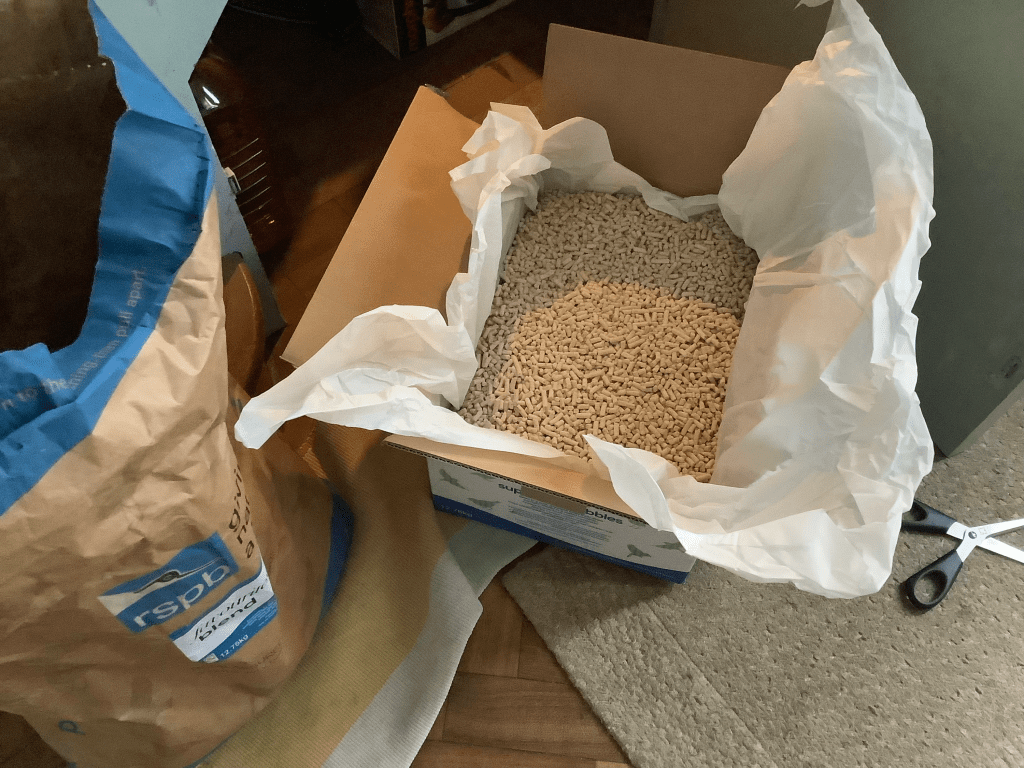
Zero waste and plastic free are two main objectives in our daily living so I am really pleased to,find that. The RSPB’s fatty nibbles for birds now comes in all paper rather than plastic packing! Card and paper I will recycle with an easier conscience than plastics. And by buying the  largest size I am minimising the total packaging footprint. 

Counting on …day 218 

19th June 2022

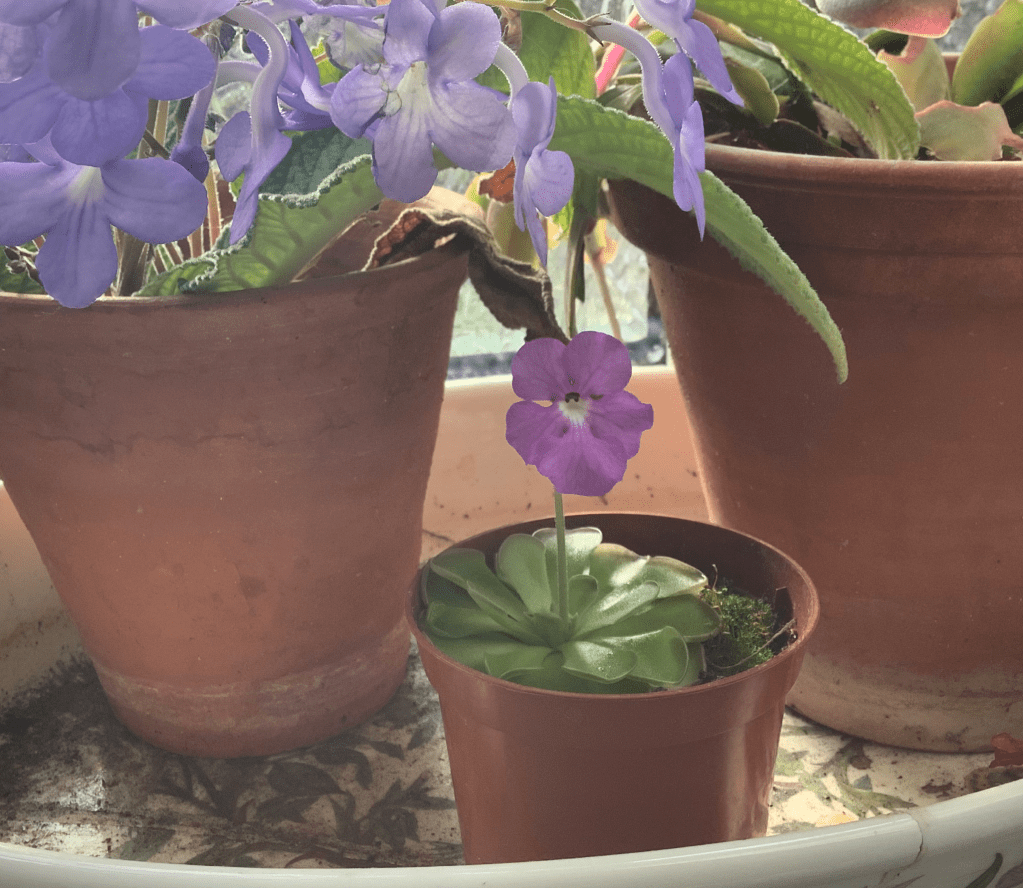
Sometimes it is the little things that bring joy – like this little butterwort that has come into flower. We bought a couple of these plants as they ‘eat’ soil gnats which tend to breed in plant pot soil. The shape of the leaves is always beautiful but when a delicate flower pops up, it’s the icing on the cake! 

Proper 7: 

19 June 2022

Reflection 

We may not believe in demonic forces nowadays but we are certainly aware that there are many  things that have an unhealthy level of control over our lives. Social media, diets, cars, pollution, throw away convenience, anxiety, fashion, alcohol, gambling, climate change, elitism, poverty, oil, tax evasion, futures markets, housing costs, racism, low wages, depression – the list goes on. For all our progress, life is still tough for many people. 

It was to such people, those who were finding life tough, those on the edge of society, the sick and the vulnerable, that Jesus brought his message of good news, of salvation. Here in today’s gospel we have just such an encounter. Jesus is able to break through the barriers that have prevented Legion from communicating with his fellow countrymen. He has been able to get to heart of Legion’s problem and together they removed the burden, the barrier of his illness. Jesus stays with him until others come who will continue the healing process, reintegrating Legion back into the community. Jesus leaves Legion with a task, a reason to carry on. 

The reading from Isaiah describes the frustrations of a prophet trying to speak to a ‘rebellious people’ – by which I think is meant people who rebel against God’s ways. The passage tells how these people are living their lives, with the traditions and routines of their daily life that keep or distract them from God, things that entrap them, snaring them in unholiness.  (The effects of these entrapments are probably not much different from those things blight our daily lives). Yet the prophet’s persistence – a persistence that comes as a gift or a power from God – reflects God’s ongoing concern and desire that the all humans should be encouraged and enabled to live according to God’s values, and that creation should be healed and humanity restored to its right mind. The last few lines add a measure of hope, that there will be found sufficient goodness in humankind to achieve God’s vision for the world. 

Who are our prophets today? Are they people like David Attenborough and Greta Thunberg, George Monbiot and Jack Munro? Are they groups like Extinction Rebellion? Groups like Amnesty, 38 Degrees, and  The Trussel Trust? Do we take time to listen to their messages, to measure and explore what is being said, to discern where God’s will may lie? Equally are we ready to hear God’s message, are we able set aside some of the barriers that trap us and weigh us down? Like Legion can we break free from our past and find renewal and healing?

Paul, writing to Galatians, remind us that for all of us our baptism represents a new beginning, a fresh start. In baptism we are all one – baptism is the ultimate In levelling up! What ever our past, where ever we have come from and however we have come – raised and bred as part of the establishment, or refugee fleeing a hostile environment, someone who has pulled themselves up by their boot straps or someone who has never managed to hold down a job – we are all equal as ‘children of God’. Like Legion, our restoration is shown in that we have all been clothed with Christ. And, like Legion, we are all commissioned to spread the Good News of Jesus Christ to our own communities.

As we look around the world – like the prophet Isaiah – we see the threats and obstacles that block the freedom of life: heat waves that are keeping one third of US citizens confined to their homes; 7.1 million people displaced by fighting in Ukraine; a third of people in Sudan facing starvation; 3.9 million children living in poverty in the UK; half the population of Chile living with water shortages. Are we sufficiently enraged as Christians, sufficiently enraged as were the prophets, sufficiently enraged as humans, to stand up and say this is not how God wants the world to be? How are we to bring Good News to our communities and to the world?

Isaiah 65:1-9

I was ready to be sought out by those who did not ask,
to be found by those who did not seek me.

I said, “Here I am, here I am,”
to a nation that did not call on my name.

I held out my hands all day long to a rebellious people,

who walk in a way that is not good,
following their own devices;

a people who provoke me
to my face continually,

sacrificing in gardens
and offering incense on bricks;

who sit inside tombs,
and spend the night in secret places;

who eat swine’s flesh,
with broth of abominable things in their vessels;

who say, “Keep to yourself,
do not come near me, for I am too holy for you.”

These are a smoke in my nostrils,
a fire that burns all day long.

See, it is written before me:
I will not keep silent, but I will repay;

I will indeed repay into their laps
their iniquities and their ancestors’ iniquities together,

says the Lord;

because they offered incense on the mountains
and reviled me on the hills,

I will measure into their laps
full payment for their actions.

Thus says the Lord:

As the wine is found in the cluster,
and they say, “Do not destroy it,
for there is a blessing in it,”

so I will do for my servants’ sake,
and not destroy them all.

I will bring forth descendants from Jacob,
and from Judah inheritors of my mountains;

my chosen shall inherit it,
and my servants shall settle there.

Psalm 22:18-27

18 Be not far away, O Lord; *
you are my strength; hasten to help me.

19 Save me from the sword, *
my life from the power of the dog.

20 Save me from the lion’s mouth, *
my wretched body from the horns of wild bulls.

21 I will declare your Name to my brethren; *
in the midst of the congregation I will praise you.

22 Praise the Lord, you that fear him; *
stand in awe of him, O offspring of Israel;
all you of Jacob’s line, give glory.

23 For he does not despise nor abhor the poor in their poverty;
neither does he hide his face from them; *
but when they cry to him he hears them.

24 My praise is of him in the great assembly; *
I will perform my vows in the presence of those who worship him.

25 The poor shall eat and be satisfied,
and those who seek the Lord shall praise him: *
“May your heart live for ever!”

26 All the ends of the earth shall remember and turn to the Lord, *
and all the families of the nations shall bow before him.

27 For kingship belongs to the Lord; *
he rules over the nations.

Galatians 3:23-29

Now before faith came, we were imprisoned and guarded under the law until faith would be revealed. Therefore the law was our disciplinarian until Christ came, so that we might be justified by faith. But now that faith has come, we are no longer subject to a disciplinarian, for in Christ Jesus you are all children of God through faith. As many of you as were baptised into Christ have clothed yourselves with Christ. There is no longer Jew or Greek, there is no longer slave or free, there is no longer male and female; for all of you are one in Christ Jesus. And if you belong to Christ, then you are Abraham’s offspring, heirs according to the promise.

Luke 8:26-39

Jesus and his disciples arrived at the country of the Gerasenes, which is opposite Galilee. As he stepped out on land, a man of the city who had demons met him. For a long time he had worn no clothes, and he did not live in a house but in the tombs. When he saw Jesus, he fell down before him and shouted at the top of his voice, “What have you to do with me, Jesus, Son of the Most High God? I beg you, do not torment me” — for Jesus had commanded the unclean spirit to come out of the man. (For many times it had seized him; he was kept under guard and bound with chains and shackles, but he would break the bonds and be driven by the demon into the wilds.) Jesus then asked him, “What is your name?” He said, “Legion”; for many demons had entered him. They begged him not to order them to go back into the abyss.

Now there on the hillside a large herd of swine was feeding; and the demons begged Jesus to let them enter these. So he gave them permission. Then the demons came out of the man and entered the swine, and the herd rushed down the steep bank into the lake and was drowned.

When the swineherds saw what had happened, they ran off and told it in the city and in the country. Then people came out to see what had happened, and when they came to Jesus, they found the man from whom the demons had gone sitting at the feet of Jesus, clothed and in his right mind. And they were afraid. Those who had seen it told them how the one who had been possessed by demons had been healed. Then all the people of the surrounding country of the Gerasenes asked Jesus to leave them; for they were seized with great fear. So he got into the boat and returned. The man from whom the demons had gone begged that he might be with him; but Jesus sent him away, saying, “Return to your home, and declare how much God has done for you.” So he went away, proclaiming throughout the city how much Jesus had done for him.

Counting on …day 217 

18th June 2022

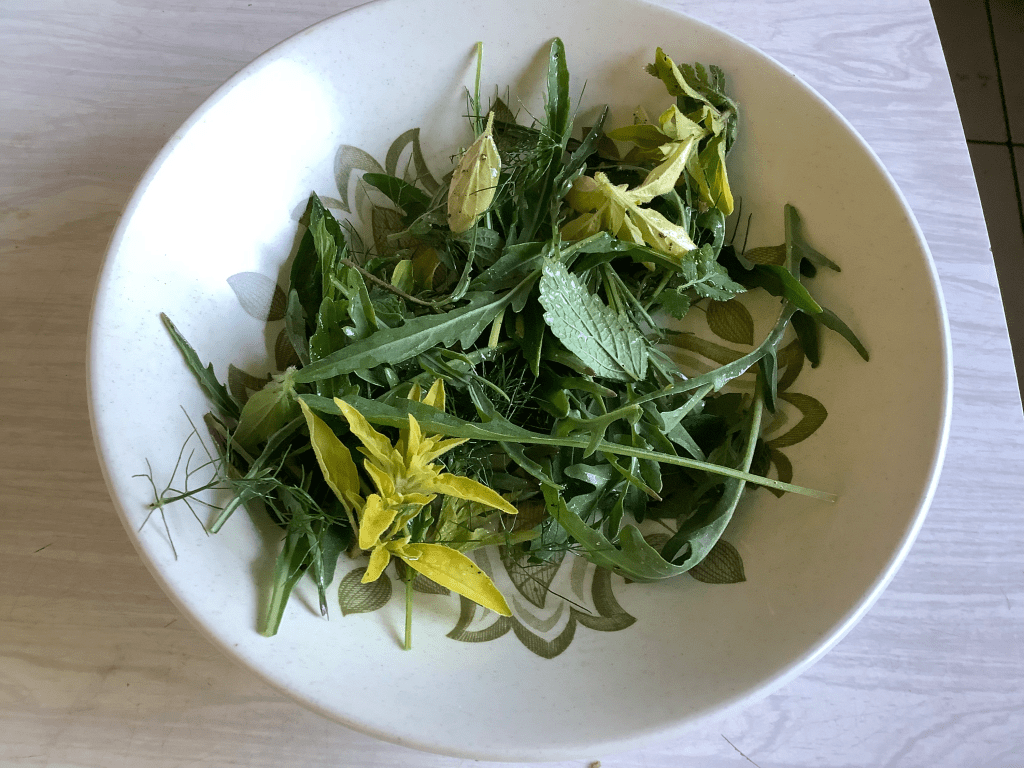
Earlier this week the Guardian featured an article on foraging for food. I do this occasionally in the wild – picking blackberries, sloes, and juniper berries – but more frequently in our garden. Whilst not a complete wilderness, I take a relaxed approach to weeding and encourage plants to seed where they will. Most lunches we have a salad from the garden being a mix of what ever I find: rocket,  lambs lettuce and mustard are staples as they self seed and grow all year round; mint, sweet cecily, marjoram, and fennel; in the spring baby dandelion leaves; and in the summer nasturtium leaves and flowers. 

https://www.theguardian.com/lifeandstyle/foraging

Living sustainably while heating our homes.

What does sustainability look like in daily life? I thought I would share our experiences.

About ten years ago we installed double glazing, put solar panels on the roof, installed cavity wall insulation and fitted two wood burning stoves in an effort to reduce our carbon footprint. The cavity wall insulation and the double glazing produced an instant effect with the house feeling much warmer. The stoves, when we use them, warm the whole house. We have burnt wood from two trees felled in our own garden (both had grown too large) plus wood collected from a local tree surgeon. All reducing our heating costs and carbon footprint. Both stoves were chosen for their clean burn credentials but current scientific advice suggests we should not use them because of the contribution they make to air pollution. 

Otherwise our main source of heat is a gas condensing boiler. To minimise our gas consumption and carbon footprint, we limit the hours when we run the boiler to an hour or so around breakfast time and for about four hours in the evening, turning the heating off about an hour before we go to bed. We heat only the rooms we use in the day time – kitchen, living room, study – plus the bathroom. We keep the thermostat at about 16C and wear several layers of clothes as necessary! Once the sun sets we draw the curtains in all the rooms, and these have thermal linings. In bed we have hot water bottles. 

The boiler also provides hot water. When we upgraded the house’s insulation, we also replaced the bath with a low powered shower – think light rainfall. Over the last year we have cut back on daily showers, replacing them with a wash in the handbasin. The distance from the hot water cylinder to the kitchen sink is such that to get hot water, you need to draw several litres of colder water. As this ultimately waste hot water left in the pipe, we use a kettle to heat water for washing up. This saves about 5 litres of hot water a day. 

This summer, given that we shower once or twice a week, we are cutting back further on gas by turning off the boiler. Instead we use the electric emersion heater when we do need hot water for showering. As we have solar panels, we aim to run the emersion heater when the sun is shining. 

Our annual gas consumption for the last twelve months has been 6739 KWH and for electricity 1542 KWH.

 Counting on ….day 215

16th June 2022 

‘Air pollution can impact every organ in everybody – not just those who are vulnerable. Even though we can’t see it, air pollution impacts our health from our first breath to our last’ – Larissa Lockwood, Director of Clean Air at Global Action Plan. The simplest thing we can all do is to cut out  short car  journeys and walk instead – better for both our health and our environment. The focus of this year’s campaign is on contacting our local authorities to tell them what actions they can take to make walking easier in our own area.  https://www.globalactionplan.org.uk/news/clean-air-day-2022-theme-confirmed 

NB The Met Office produces an air pollution forecast – https://uk-air.defra.gov.uk/forecasting/locations?q=+M50+3AZ

The Green Tau: issue 43 

“MAKING SUSTAINABLE LIVING THE DEFAULT OPTION”

– strap line for the UN’s Earth Day. 


What is sustainable living? And how do we go about it? Something that is sustainable is something that can keep on going for a lengthy period of time without diminishment. We might look at household budget and apply the Micawber principle: 

“Annual income twenty pounds, annual expenditure nineteen, nineteen and six, result happiness.  Annual income twenty pounds, annual expenditure twenty pounds ought and six, result misery.”

As long as the required input is equal or less than output, the budget is sustainable. When what is consumed exceeds what is coming in, the budget is no longer sustainable. Sustainable living is the same: our lifestyle is sustainable if what we consume is equal to or less than resources we use. 

Let’s us taking heating for our homes as an example. 

If say we were to heat our homes with a wood burning stove, for that to be sustainable, we would need sufficient mature woodland to produce each year the wood we would burn. (This is not taking into account the cost to society of the pollution to the air). 

What if we hear our homes with oil and gas? That is ‘sustainable’ only in the short term as both these fossil fuels are non renewable. Once they are gone, they are gone. They cannot be replaced. Aside from air pollution, the major problem with soil fuels is the amount of carbon dioxide that they release into the atmosphere. It is a rate that far exceeds the rate at which it can be absorbed by the planet. This is why heating our homes with fossil fuels is not sustainable in either the short or long term. 

The most sustainable way of heating our homes is not to use any fuel but rather to build/ refurbish them with insulation levels that make extra heat (over and above our own body heat) unnecessary. Houses equipped to this standard are known as a “passivhaus” – https://www.passivhaustrust.org.uk/

Retrofitting is not without its financial cost which puts it out of reach for many people. (Sadly our government doesn’t understand that the whole nation would all benefit if insulating homes was state funded). Nevertheless any improvement we can make to the insulation of our homes will reduce our carbon footprint and energy bills and therefore makes heating our homes more sustainable: https://energysavingtrust.org.uk/insulating-your-home-back-to-the-basics/

A related area to that of heating, is electricity. What determines the sustainability of electricity?

Electrical production can be divided into two categories, renewable and non-renewable. Non-renewable electricity comes from power stations powered by coal/ gas/ oil. These fossil fuels are finite and cannot be replaced. Because of the scale of their carbon emissions, using them is highly destructive due to the adverse effects they cause of climate change and air pollution. Electricity produced by a fossil fuel driven generator is similarly non-renewable. 

Renewable electricity is produced using wind, solar, tidal or geothermal energy. These sources of energy are not diminished through use; they are available on an ongoing basis. In other words, they are sustainable.

Less easy to define is electricity produced using nuclear energy and that produced using biofuels such as wood chips, sugar cane etc. The amount of nuclear fuel needed in proportion to the energy generated is minuscule which is why nuclear power is often included along side renewables, but there are huge problem surrounding the safety of nuclear power stations and the disposal of nuclear waste that raises questions about its sustainability. 

Wood chips and sugar cane are both renewable resources but using them as an energy source is questionable. In a world where many go hungry and where more and more of the world’s natural or wild landscape is being lost, is it sustainable to use scarce land resources to grow crops for fuel rather than food?  

Questions around the sustainability of energy sources also apply to the sustainability of different forms of transport. The most sustainable means of transport is walking. It’s what we are designed for and uses no more energy than that required to feed us. The same is true of cycling, although according to Mike Berners Lee in his book, How Bad are Bananas, suggests that, depending on whether our diet is made up of beef burgers or bananas, a battery powered bicycle may have a lower carbon footprint! As above any transport reliant on fossil fuels – whether that is a petrol car, a diesel train or a plane – is not sustainable. Electric powered transport where the source of electricity is renewable is more sustainable but there are downsides to consider. Electric vehicles rely on batteries which are made from non renewable minerals such as lithium and cobalt – and cobalt in particularly comes predominantly from mines where employee welfare is minimal.

In sparsely populated areas, transport systems that rely on buses or trains may need to develop on-demand rather than time-tabled services, in order to make their use of limited resources sustainable. 

Plants are a naturally renewable resource but that doesn’t make all food equally sustainable. Factors to take into account include water, fertilisers, transport to markets, food waste, and whether the plants are feeding us directly or indirectly. Some crops such as rice, strawberries, blue berries and almonds,  require large amounts of water. In water sensitive regions irrigating such crops may divert water away from supplies used by local people for growing staple foods, as well as for drinking. It may also divert water away from aquifers and wetlands regions thus damaging local flora and fauna. In such circumstances, these crops cannot be classified as sustainable.

Fertilisers, especially artificial ones, use up limited non-renewable mineral resources, as well as contributing large amounts of carbon dioxide to the atmosphere. In addition the run off from fertilisers damages water courses and kills plants and creatures, compounding existing biodiversity losses. 

Where foods are imported over longer distances – and especially so when the mode of transport includes airfreight -will consume more resources and in particular will increase the food’s carbon footprint. Imported Spanish  strawberries, out of season avocados and air freighted asparagus are a few examples of unsustainable foods. In some instances the sustainability of a product becomes questionable when it takes over land used to grow staple foods for the local population or where it involves the clearance of indigenous wild vegetation such as the clearance of tropical rainforest to grow sugar cane. 

The majority of farm land globally is used not to feed people directly but to grow food for animals intended for human consumption.  It takes 100 x more land to produce 1kg of beef than to produce the equivalent in plant based food. In terms of feeding the global population a diet with high levels of meat consumption is not sustainable.

Plants as a renewable resource are also used for making things – clothes and fabrics, paper and furniture, rubber, paints etc. As with plants brown for food, similar questions about sustainability arise. Cotton for example is a heavy user of water – water abstracted for cotton growing was the major factor causing the disappearance of the Aral Sea. The growth in demand for palm oil used in products as diverse as lipstick and margerine, has led to the clearance of vast areas of natural habitat including mangroves. Demand for paper has seen naturally biodiverse forests replaced with monoculture pine plantations. 

The sustainability of every product we use needs to be measured in terms of renewability, carbon footprint, water footprint, impact on biodiversity, impact on local populations, the working conditions for those who grow, produce or sell, transport footprint, and the ease with which at the end of its life it can be recycled or disposed. Sustainability may begin as a question about individual lifestyle but quickly becomes a question about global sustainability. 

 Counting on ….day 214

15th June 2022

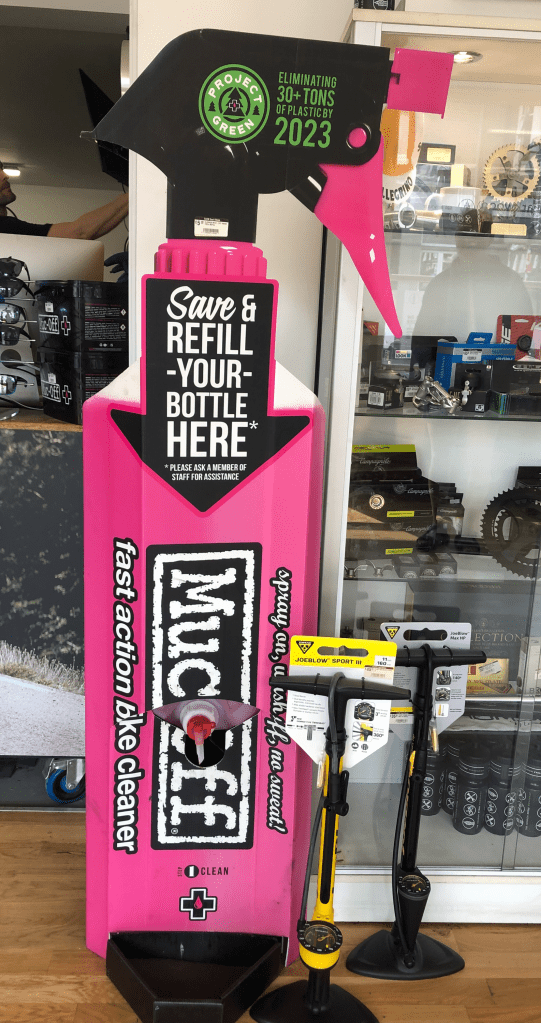
Tomorrow is  World Refill Day. Refills are more sustainable than a constant flow of single use glass or plastic bottles – even if the latter are recycled (as opposed to reused). I noticed in one of our local cycle shops a refill point for bike cleaning liquid. Keeping your bike clean will keep it in working order for longer – ie improves its sustainability – so why not go further and make the process of keeping it clean more sustainable too?