Action 42: Plant spring bulbs: the ideal time for this is between now and November. This is also the time to plant summer bulbs such as lilies and alliums. Plant a variety of bulbs from the earliest flowering crocuses to the later flowering tulips to ensure an ongoing supply of nectar for insects as well as scents and colours that will bring us joy too.
As we continue to mark the days until the COP26 climate conference you might like to subscribe to the United Nations climate change news letter. https://news.un.org/en/newsletter/climate-change
This week saw a stand off between Christian climate activists and the clergy in St Paul’s cathedral over the Church of England’s continued investment in companies profiting from fossil fuels. It has distressed me greatly.
Woe to you … you tithe mint and rue and other herbs, and neglect justice and the love of God; it is these you ought to have practiced, without neglecting the other. (Luke 11: 42)
Medicinal Plant Herb Bee Pasture Plant Mint Plant
Is it that the Pharisees that Jesus was addressing have become so bogged down in the minutiae that they can’t see the bigger picture? Had they become so concerned that all the ‘t’s be crossed and the ‘i’s dotted that they could no longer read what the writing said? They could only see the spelling mistakes but not the story.
Is it that they found it is easier to address the needs of personal hygiene than issues of social justice, poverty and victimisation that were prevalent ills of the world in which they lived? Did they find it easier to keep washing their hands before meals than to address the luxury lifestyle enjoyed by Herod Antipas at the expense of the rural poor.
Is it that by observing the smaller and easier religious requirements, that they could to all outward appearances be seen as upright exemplars of their faith and so earn the honour and respect of their fellow believers. Perhaps the observances of small things gave the impression of great integrity – if they so routinely practice these small religious acts how much more must they be observing the full law?
Yet Jesus sees through the outer show. He has seen that inside the polished exterior they are full of greed and wickedness (Luke 11:40). He is critical of them for their lack of love and disregard for justice. Whilst they have sought the best seats in the synagogue and respectful greetings in the market place, Jesus has been focused on the work of feeding the hungry, healing the sick, releasing the imprisoned, validating the forgotten, turning social expectations upside down, calling for a turning away from unsustainable lifestyles – and bringing in the kingdom of God.
Jesus and his disciples knew from experience that doing God’s will meant getting hands dirty, getting down alongside the sick, withstanding jeers, taking the lower place, and ultimately to be self sacrificing. Such a lifestyle is not always easy, and do we not all want some degree of love and respect? Yet equally experience tells us that if we have confidence in God, even when we are ill-treated, scorned, marginalised, we will still find joy in doing God’s will.
Notice that in Jesus’s reply he reminds the Pharisees that doing the small things should have been an ‘and also’ to the exercise of love and justice. Paying attention to the small things as well as the large is about integrity. For this reason we see Jesus coming to be baptised alongside his fellow country folk. We see Jesus going regularly to the synagogue and taking his turn to read the scripture. We see Jesus observing the traditions of Passover. But for Jesus outward actions do not take the place of an inward commitment to the kingdom of God.
At the present time the single most overwhelming disaster facing the world – God’s world – is human-made climate change. The effects of the rise in global temperatures is already being felt, and the accelerating affect that ongoing temperature rises will create is predictable. Plants and creatures unable to adapt are rapidly becoming extinct. Humans too are struggling and failing to adapt.
The elderly cannot readily cope with extremes of temperature and death rates are rising. The poor cannot afford to adapt their homes to improve insulation levels nor can they afford house insurance against flooding and fires as these becomes more frequent. Not can the poor readily move to more amenable climes. Islanders and those living along river deltas cannot stop rising sea levels from destroying their homes. Farmers cannot adapt practices quick enough to cope with extreme weather conditions. Young children cannot survive as drinking water supplies dwindle to nothing.
All this because we did not pay heed to the warnings, we did not stop polluting the atmosphere with more and more carbon dioxide. Instead we have kept our focus on our everyday habits – school run refuel the car, laundry in the tumble dryer, Sunday lunch roast beef, half term holiday in the sun- and ignored the long term direction of the climate crisis. We have not wanted to admit our responsibility for climate change, not even accepting that we might have been unknowingly guilty of causing harm. Nor have we wanted to change our lifestyles, our habits of a life time – to forgo our metaphorical seats in the synagogue – or loose the respectful comfort of western citizenship.
Surely, we said, this problem is so big it must be a problem for governments, big businesses and world organisations to deal with? It must be their responsibility not ours. And if they act as if there is no emergency, no urgency to act, should we not follow their lead and let things sort themselves out?
We are happy to do the small things, to reuse our plastic carrier bags, recycle the newspapers, buy an eco friendly hammock for the garden and make sure our new T-shirt is made from organic cotton. But to address the big problem, to seek love and justice for the earth and all its inhabitants, is beyond what we can even imagine.
But in the background there have been people calling for and working for change. People who see the problem for what it is and see the scale and urgency of the changes needed. People who are prepared to stand up and stand out and say it like it is.
And where in all this is the church? Where in all this are those who are followers of Christ? Where is the leadership, the penitence, the will to turn things round? Why are we still counting out our tithe of mint and rue whilst supporting a vast carbon producing, fossil fuel dependent economy?
The world around us is full of curious, beautiful and amazing things. As small children our curiosity and our amazement knew no bounds. Every day would produce novelties- things to see, things to chew or eat, things to grab and hold, things to poke and explore.
As we have grow older we have often lost that sense of wonder. Things that were new have become mundane. In the rush to be busy, small things flop below the radar. Decorum dictates that we shouldn’t prod or lick things and, unless we’re wine tasters, swirling stuff around our mouth and spitting are frowned upon. Stopping suddenly just to look is discouraged – it interrupts the flow of traffic. Daily routines take over.
And our love for the world wains and falters.
Today begins the season of creation-tide which runs from 1st September till 4th October, the Feast of St Francis. Let’s fall in love again with creation.
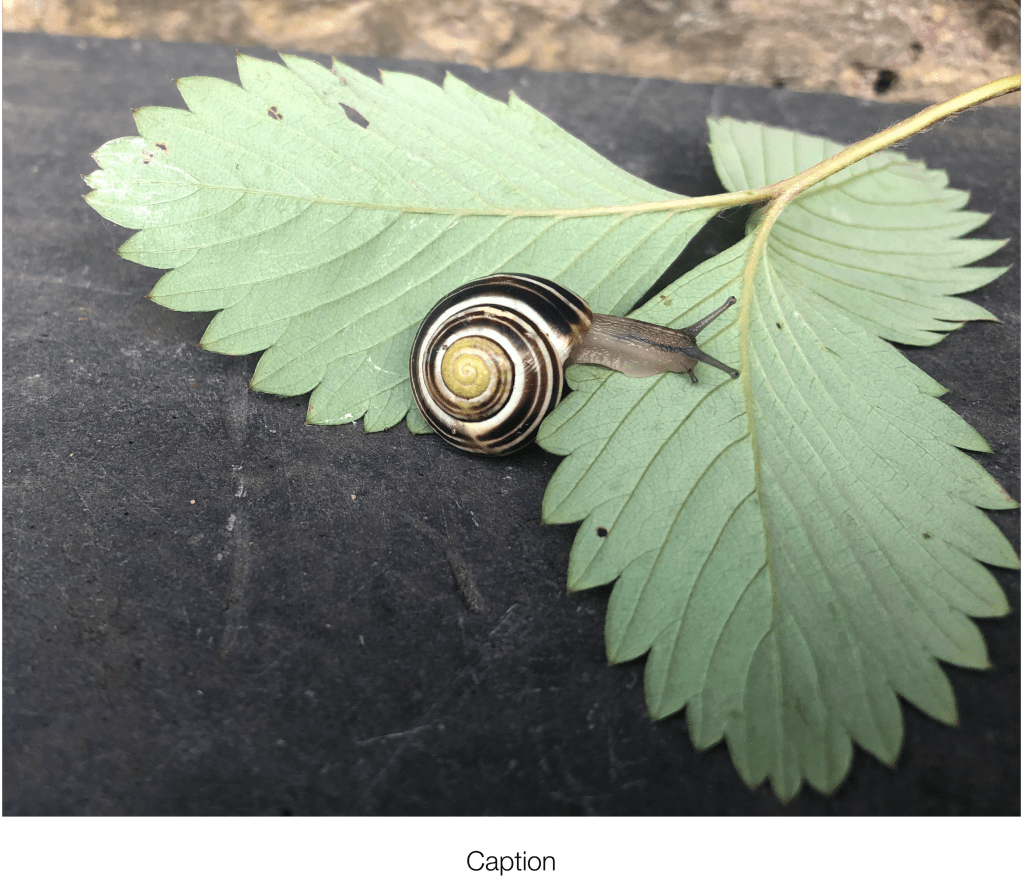
Snails may be slimy, commonplace and the bane of gardeners but look again ! They are beautiful, with muted colours, a fluid muscular body and a wonderful spiralling shell. This is a white lipped snail, one of many which has occupied our garden this year.
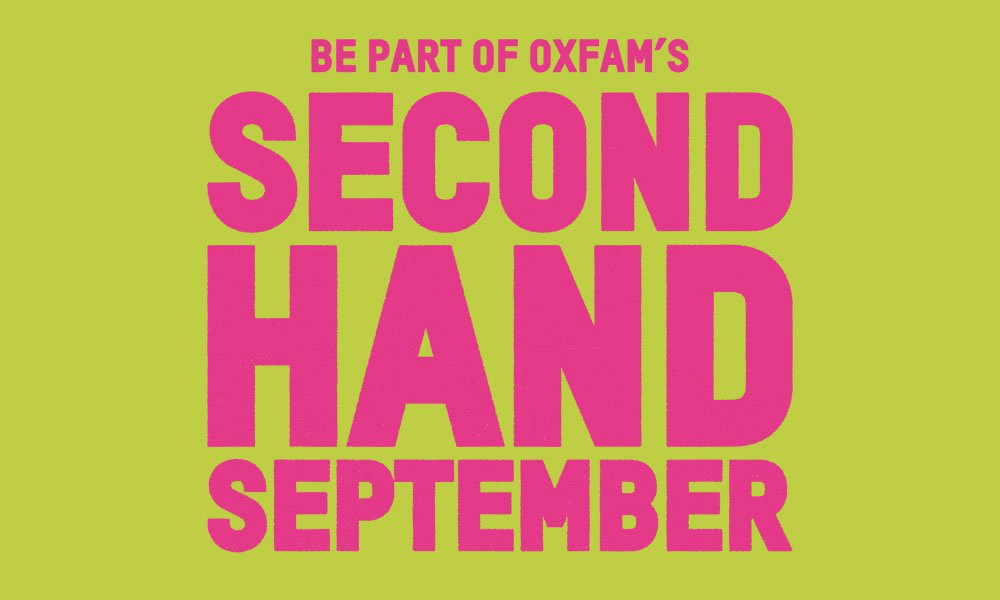
Action 41: Get involved in Oxfam’s Second Hand September. Buy only second hand clothes for 30 days or more. And donate your pre-loved items. Share your one-of-a-kind finds using #SecondHandSeptember and tag @OxfamGB.
Action 40: Check out high visibility clothing. With schools terms starting and the evenings drawing in, it is a good time to think about staying visible as both pedestrians and cyclists when it is dark. After dark even light coloured clothes do not make the wearer clearly visible to other road users. Fluorescent markers on bags and coats, cycles, helmets, wrists and ankles are all good options.
New! Starting a from tomorrow and everyday during creationtide (1st September – 4th October) I will be posting a picture of something from the natural world to encourage us to ‘fall in love again with creation’. These will feature under the new heading added to the menu ‘Falling in Love’
Action 39: Don’t over tidy your garden. Leave seed heads, dead leaves and old branches to provide both food and safe havens for birds, insects and other creatures. Goldfinches, for example, will enjoy feasting on lavender seeds later in the autumn.
As well as minimising the amount of carbon we emit/ consume/ use we need also to do all we can to keep as much carbon locked away undisturbed in the ground. Our gardens can be made into carbon sinks ie net absorbers of carbon.
Don’t buy or use peat. The UK’s peatlands are an important carbon sink (1 hectare of peatland can absorb up to 2000 tonnes of CO2 per year). Digging up and removing the peat seriously damages these fragile habitats.
Don’t buy plastic plant pots whether with or without plants (plastic is made from oil). Instead use pots made from plant fibres, paper or clay. The Hairy Plant Pot Company grows plants for sale in coir pots. The whole pot with plant goes straight into the solid where the coir will decompose over time.
Don’t use artificial fertilisers, pesticides or herbicides. These have a high carbon footprint and are damaging to natural ecosystem.
Make a compost bin and fill it with garden waste and plant based kitchen waste. Once well rotted, the bin’s contents will provide soil enriching natural compost that locks the carbon into the soil. Compost bins can be made from wood (eg recycled pallets), wire mesh or you could buy a plastic bin made from recycled plastic.
Plant trees and shrubs as these will, by their size, be able to absorb more carbon as they grew.
Opt for perennial plants over annuals. The perennial plant both develops a larger root mass and has a longer growing season enabling it to absorb more carbon. Interestingly you can opt for perennial varieties of vegetables rather than growing them each year from seed: spinach, watercress, kale, perennial leeks and onions, cabbage etc.
Choose plants that will be happy in the micro environment that your garden offers. You can waste time, energy and carbon, trying to make plants grow where the conditions are unsuitable. Grow together plants that form a natural ecosystem so that they help each other.
Avoid over digging the soil as this can release carbon locked into the soil.
Avoid leaving the earth bare as carbon from the soil can easily be lost into,the atmosphere. Instead cover the earth with a mulch or with a cover crop.
Let your lawn grow. Frequent cutting of the grass requires the input of water and fertilisers to keep it green and the lack of depth of cover makes it susceptible to drying out during periods of drought. Instead let the grass grow longer – you can still run over it, sit on it and play on it.
Transform your lawn into a meadow by introducing a greater variety of plants, especially flowering ones. These extra plants will tend to have longer root systems enabling more carbon to be absorbed by the soil.
Avoid or replace hard surfaces, especially concrete ones. (Concrete has a particularly high carbon footprint). Hard surfaces leave the soils underneath compacted and bereft of mini beasts and micro organisms that absorb carbon. Use gravel and bark in preference to paving stones, or even bricks set in sand.
Build a pergola so that you can grow climbing plants to provide shade in the summer. Consider adapting any garden sheds so that you can plant them with a green roof. The more we plant, the more carbon our garden can absorb.
Action 38: Create a bank holiday vegan icecream sundae! Choose one or more of your favourite icecream flavours – I like Hackney Gelato’s chocolate sorbet – add some fruit, nuts or crumbled biscuits, jam or sauce, chocolate shavings, and maybe finish with a whipped vegan cream.
Proper 17: Deuteronomy 4:1-2, 6-9, Psalm 15, James 1:17-27, Mark 7:1-8, 14-15, 21-23
Reflection
Today’s passage from Deuteronomy talks in terms of statutes and ordinances, but what the people are being urged to do is to embrace the Torah as the key non negotiable summation of their life. Whilst we often translate the word ‘Torah’ as law it is something more fluid in meaning than the rigidity that law suggests. The word in Hebrew has the meaning of instruction or guidance, or of teaching – of that which flows, say, from the teacher to the disciple, from the parent to the child or above all, from God to God’s people. It can be seen as a concept that describes the relation between God and God’s people. Through the Torah God’s expresses the desire that people should live lives that are good, happy, loving, wise and productive.
The Torah is also used to name the first five books of the Hebrew Bible: Genesis, Exodus, Leviticus, Numbers and Deuteronomy. These five books lay out the story of Gods early relationships with the earth and with human kind and with the Hebrew people in particular. As well as describing this history, it includes laws – statutes and ordinances – that concern both daily life and community life, worship and relationships with God, farming practices, justice etc. Further on in Deuteronomy we hear of the very practical requirements such as setting aside a portion of all they produced – a tithe – to support the vulnerable in their communities and those unable to provide for themselves (Deut 14:28-29). And we hear very spiritual commands: You shall love the Lord your God with all your heart and with all your soul and with all your might. (Deut 6:4)
Whilst today’s passage talks about statutes and rules as if they were rigid, un-moveable, it helps in our understanding of the overarching nature of the Torah, if we remember that the Book of Deuteronomy is itself a revision of the laws written in Exodus, Leviticus and Numbers, written for the needs of the nation in the 8th century BCE. It is the loving relationship that God desires that is eternal, whilst the nature of rules is to evolve. In today’s psalm the Psalmist looks at how one finds a right relationship between God and human by observing the characteristics of a person who is living close to Go’s. That person is the one who live ‘a blameless life and does what is right, who speaks the truth from his heart’. The Psalmist then adds some flesh to this describing how this person lives their life.
Here we might also recall from last week’s Gospel the words of Simon Peter, “Lord, to whom can we go? You have the words of eternal life. We have come to believe and know that you are the Holy One of God.”
This thought is echoed in the words of the Letter of James, for ‘every generous act of giving, with every perfect gift, is from above, coming down from the Father of lights, with whom there is no variation or shadow due to change. In fulfilment of his own purpose he gave us birth by the word of truth, so that we would become a kind of first fruits of his creatures’. The gifts of loving and learning and all that shapes our lives, flows to us from God so that we may live as God’s intended creation.
James sees this as a gift that is only of benefit if it is acted upon, if it is built into the fabric of life. If it remains just as words, its benefit is non-existent. This seems to be at the nub of the argument between Jesus and his opponents in today’s gospel. If the law is honoured just as a set of words, but has no impact on the quality of life, has no positive impact on the way we love one another, has no benefit in sustaining our creation as God’s people, the it is of not being observed in the way God intends. The gift that comes from God is pure and undefiled and when received and acted upon, produces blessings. It is how the gift is received and acted upon that is important and when we hear the passage from Mark’s Gospel that is the difference between Jesus’ response and that of his opponents.
It is when we spurn God’s gifts, ignore God’s teaching, that our lives become compromised by fornication, theft, murder, adultery, avarice, wickedness, deceit, licentiousness, envy, slander, pride and folly. It is when we see other humans, and other creatures, as opportunities for profit, that we cease to feel God’s love. It is when we ignore the needs of the vulnerable – the orphan and the widow, the refugees and the migrant, the wild bee and the tiger, the bluebell and the Amazon rainforest, the contract worker and the carer – that we see lives destroyed and habitats lost; deceit and prevarication in government and big businesses; short term economic policies that fail to address the climate crisis; a lack of vision and determination create polices that ensure protection of the environment, or set up a sustainable care system.
Holy God, through Jesus you show us how to truly live life, how to fill our hearts with love so that love may shape the world in which we live, so bringing your kingdom on earth to be as it is in heaven.