The Green Tau: issue 18

Changing the Face of Business 

B Corps – Benefit Corporations – are the fair trade equivalent for businesses. Whilst remaining profit making concerns these are businesses that also undertake to meet certain in social and environmental standards. Their bottom line is threefold: profit, people and planet. 

To attain B Corp status companies are assessed against five categories:

  • Governance – the way their business is run internally
  • Workers – how they are treated and paid
  • Social sustainability – how they support or contribute to society, including charitable donations
  • Environmental – how they contribute to environmental sustainability 
  • Product – the social and environmental benefit of what they produce

Provided they meet the minimum standard, they are awarded B Corp certification. This is reviewed on a three yearly basis.

The benefit for the business is an enhanced brand image, and improved ability to recruit staff  and investors. The downside is the cost of obtaining certification which might exclude some small but ethical businesses.

There are 2778 B Corps world wide and 193 based in the UK. They include OddBox and Riverford veg boxes, Innocent and Danone drinks etc, Triodos and Coutts banks, Judes icecream, Lilly’s pet food, Volcano coffee roasters, Camden Town brewers, Vibro Barefoot shoes, and various media, marketing, and management companies. A full listing can be found here: https://bcorporation.uk/directory?search=&industry=&country=United%20Kingdom&state=&city=&page=5 

Social enterprises also aim to make a profit, which they then use to create positive social change through providing training and employment opportunities, supporting businesses in marginal areas, helping end homelessness, making donations to support communities in need etc. Increasingly social enterprises are focusing on environmental outcomes too. They tend to be small concerns, including repair workshops, bakeries, cafes, arts venues, grocery stores, gardening units, local energy generation, recycling units etc. Social Enterprise UK lists how you support these enterprises through what you buy: https://www.socialenterprise.org.uk/buysocial/where-can-i-buy-social/

The money in our pockets, like (or perhaps better than) our vote in an election, can change the world we live in.


Stewardship of Things

‘A dog is for life, not just Christmas.’ A message created 40 years ago by the Dogs Trust and still valid today. The Trust encourages people to think carefully before buying a puppy, to thoroughly research the implications of being a dog owner, understanding the needs and demands a dog will make and assessing whether these are compatible with the family’s own lifestyle. And remembering that ability to,love and care for the dog needs to be there for the whole of its life span. 

Each year scientists calculate how much resources are being used globally and the rate at which those resources are being renewed. Are we using more resources than the planet can sustain or less? In 1987 the first recorded Earth Overshoot Day was 23rd October. This year (2021) it was 29th July. We are consuming way more resources than the earth can sustain. In such a world we need to give the same consideration when we buy and use things, as we do when we buy a new pet.

  • Only buy what you need and want. Don’t feel forced into buying something you won’t feel happy with.
  • Consider the life of the thing: will you use it to its full life span? If not, can you see an obvious way in which you could pass it on so that it can continue to be used? Books can readily be passed on to another reader, children’s clothes to another family.
  • Be willing to buy second hand/ pre-loved items.
  • Be willing to rent, borrow or share things. 
  • Research before you buy. Is the item ethically produced? Is it durable? Is it easy to repair? What is its carbon footprint? Can it be recycled when its life ends?
  • A well designed item may cost more: can you be a patron of good design and workmanship?
  • An item made with long lasting materials may cost more, but balanced out over its life time, it may be more economic too.
  • Extend the life of what you buy by ensuring you use it properly and keep it well maintained. Eg keep shoes clean and well polished. Regularly clean and service cycles. Don’t over wash woollen goods.
  • Repair things that break. Some things you will be able to repair yourself. Others may need to help of an expert. There is growing trend for repair cafes where even fiddly electronic items can be mended. 
  • Think about the end life of what you are buying. Can you recycle it once its life has come to an end? If not is there something else that is recyclable that you could buy instead?
  • Is what you are buying made for a sustainable or recycled material?
  • Single purpose items may be ideal, but might you get more value from something that serves  a multiple of purposes?
  • Can we repurpose things when their initial use has come to an end?
  • Do all gifts need to be things? Could you gift experiences or services instead? Do we always need to give things to show our love or thanks?

The Green Tau: issue 17

17th September 2021

The Carbon Footprint of Things

Over the last few weeks Green Tau has looked at various aspects of our

 The Carbon Trust has a carbon footprint labelling scheme which it is hoped will grow in popularity

individual/ household carbon footprint and how we might reduce it as part of the overall global target of achieving net zero by 2050. 

The things we buy all have their own carbon footprint, whether that’s a pair of socks or a new car or a newspaper. The carbon footprint of things includes growing or producing the raw materials, be that iron, cotton, timber etc. Then there is the processing of those materials – turning iron into steel, spinning the cotton into yarn, timber into paper. And a further series of processes will transform those elements into the final product. Then there is the carbon footprint involved in transportation between the various stages of production and onwards to the warehouse and shop. 

It is a complex chain with lots of variables which may explain why it is hard, as consumers, to establish the carbon footprint of most consumer goods. But here are a few:-

  • A newspaper 0.3 – 0.8kg CO2
  • A pair of poly cotton pants (underwear) 0.6kg CO2
  • A paperback book 1 kg CO2
  • A cotton T shirt 2-3 kg CO2
  • A pair of trainers 10-15 kg CO2
  • A  pair of jeans 20 kg CO2
  • A smart phone 55 kg CO2
  • A lap top 119 kg CO2
  • A land rover 35 tonnes CO2

Can we reduce our carbon footprint when buying things? Yes. 

We can do some research and find out which products might have a lower carbon footprint. For example organic cotton has a lower footprint than non organic cotton because it doesn’t use pesticides and fertilisers. Polyester items have double the carbon footprint of cotton ones, but  some polyester fabrics are made from recycled plastic which is better than that made from oil. Synthetic fabrics such as viscose and rayon are made from cellulose  – eg from wood or bamboo – but require a high chemical input which adds to their carbon footprint. Tencel on the other hand uses a process with a much smaller footprint.

We can consider the life span of the product. A lap top that only lasts 2 years is less environmentally friendly than one with a lifespan of 10 years as the initial carbon cost is spread over 10 rather than 2 years. We might at this point also consider how easily the product can be repaired. Some laptops are more readily repairable. Maybe the product is something we can repair ourselves such as darning a pair of socks or replacing a zip on a pair of trousers. 

We can consider the running costs involved with the product. How much energy will it take to recharge different smart phones? How much energy will different flat screen TVs use? What about buying a hand powered alternative such as hand turned coffee grinder or a manual whisk? 

We might consider whether the product has an after life – ie can we pass on to someone else when we have finished with it? Books we have read can be passed onto a friend and donated to a charity shop. The same is true of clothes. Children’s clothes can be passed onto a younger sibling, or you might hold a ‘swishing event’ with friends. 

We should also consider how the product will be recycled at the end of its life. Some clothes manufacturers and retailers will take back old clothes and recycle them. This is easier when the fabric is from a single rather than a blend of materials. Newspaper and books can ultimately be recycled with other paper products. Electrical goods are currently less readily recycled.

Alternatively we could borrow, rent or buy second hand.  Equally we should consider whether we need the thing anyway! If we are to achieve net zero as a world, I am sure it means we will have to consume less, repairing and reusing what we do have. 

Energy saving in the home

Reducing our carbon footprint in the home is essentially about reducing the amount of energy we use – whether that is for lighting, cooking a meal or having a wash. Here are some tips.

  • Turn off lights when they are not needed.
  • If you have an emersion heater, make sure it is well insulated. 
  • Have a shower rather than a bath. Limit the length of your shower time especially if it is a high pressure shower – a 9 minute pressure shower uses more energy than a bath!
  • Instead of a daily shower, wash with a flannel. We are seldom as dirty as we might think!
  • Dishwashers are meant to be efficient but are not always the most ecological way of washing up. A dishwasher uses 1KWh for a 70-100 minute programme. Heating 2 litres of water to fill a washing up bowl uses 0.2KW.
  • Boil only as much water as you need when making hot drinks.
  • When boiling with a pan on a stove use a lid to keep the heat in (except when cooking pasta as the water will boil over).
  • Limit how many pans you need to cook a meal. Try and reuse a hot plates whilst they are still hot.
  • Turn off the hot plate (if electric) before the cooking time is over so as to make good use of the heat in the hot plate.
  • If you are using the oven, plan to cook several things at once to make full use of the energy you are consuming.
  • Use a microwave for steaming vegetables, stewing fruit, making porridge/ custard etc.
  • Run your washing machine on its coldest setting and choose the shortest programme time.  
  • Only run the washing machine when it is full.
  • Don’t wash clothes until they need it: ie they smell sweaty, have a tide mark or spots. We have grown used to the idea of washing everything all the time!
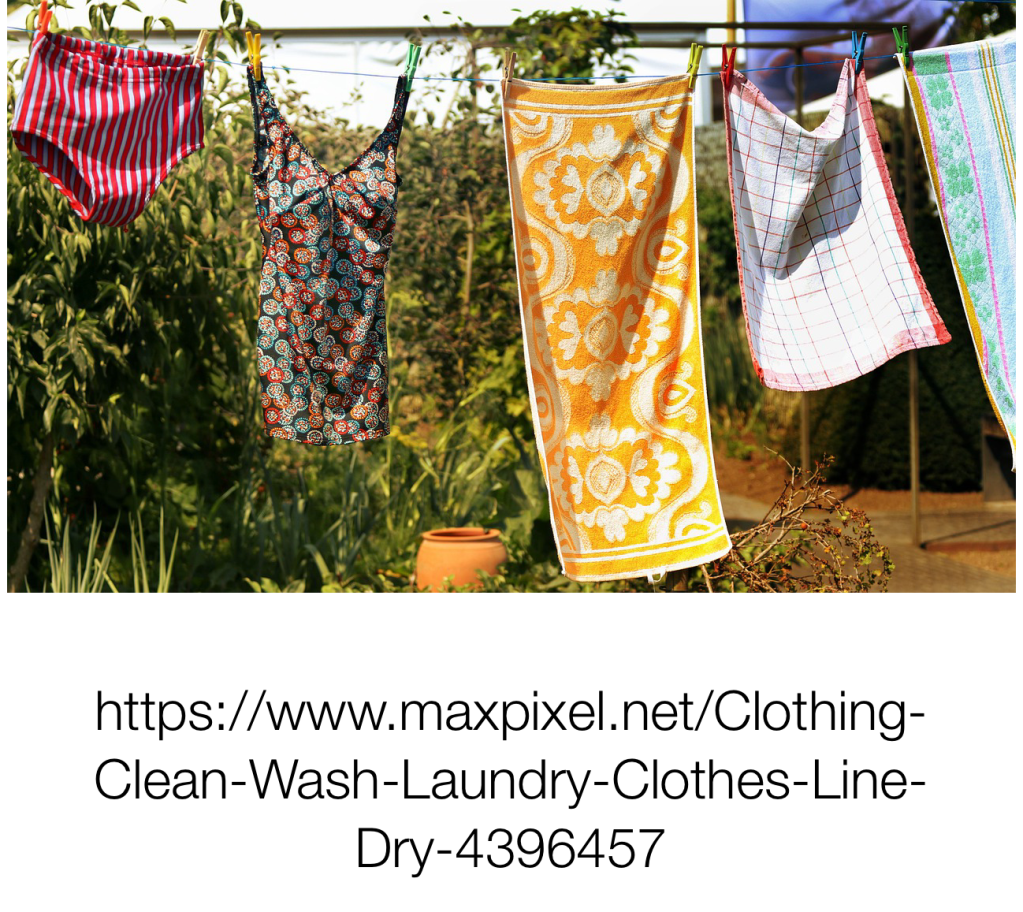
  • Hang washing outside to dry. Ideally wash things in the morning to allow plenty of drying time, especially in the winter.
  • When it’s raining, hang wet washing inside on a clothes dryer. 
  • Many kitchen appliances are labour saving but doing things by hand is good for arm muscles – and arm muscles can be applied for different  purposes obviating the need for lots of small appliances.
  • Similarly in the garden, manual appliances such as lawn mowers and brooms are good for exercise and fitness.
  • Turn off appliances when not in use as they will still be drawing a small amount of electricity. 
  • If you have solar panels choose to run electrical appliances when the sun is shining. The electricity will power these directly without any loss via the distribution system. 
  • Don’t buy new appliances until you need them. Do some research, which are ecological; which energy efficient; which have a long life; which are easily repaired if they break down? Check out Ethical Consumer’s advice: https://www.ethicalconsumer.org/ 
  • Consider buying second hand.
  • If you will only need an appliance for occasional use, consider borrowing one – eg via  neighbourhood app.

The Green Tau: issue 16

10th September 2021

The Appliance of Science

Heating consumes most of our household energy and consequently carbon budget. Of the remainder  some is used for heating water – for baths, showers etc – but most is used in the kitchen: about 60% on average. The typical kitchens contain a cooker, kettle, fridge and washing machine. There may also be a freezer and a tumble dryer. And then any number of smaller appliances which can take up so much space – coffee machine, blender, mixer, toaster, juicer, rice steamer, slow cooker, waffle maker, sandwich maker, bread maker, deep fat fryer, ice-cream maker, coffee grinder, electric whisk, soup maker, griddle … 

Think of an average day in the kitchen. Boil the kettle for a hot drink: approx 25g CO2 per mug of hot water; pop bread in the toaster: 75g; microwave a bowl of porridge: another 25g; run the dishwasher: 275g (70 minute programme); run the washing machine: 400g (100 minute cycle) plus 20 minutes in the tumble dryer: 250g; brew a fresh coffee with the coffee machine: 50g; bake a cake: 750g; half an hour’s ironing: 350g; make supper (eg pasta, sauce and vegetables) using three hot plates 250g; put another load through the dishwasher: 275g; boil the kettle for a bedtime hot drink: 25g. That adds up to  2750g. Meanwhile the fridge is contributing 1250g per day and the freezer 750g, giving a total of 4750g.

If we move around the home, we have the computer and the TV which might each be another 250g CO2 per day, the vacuum cleaner, mobile phone chargers (most homes have more than one), internet hub, Alexa,  hair dryer, pressure shower etc. Plus all the light fittings. 

Perhaps it is not surprising that energy consumption in our homes accounts on average for 22% of the UK’s national carbon footprint. But if we are to achieve the UN’s targeted  45% reduction on CO2 emissions  by 2030 – and net zero by 2050 – we need to find ways of reducing our personal footprint.  We can change the way we use our household appliances and next week’s Eco Tips will look at ways of making efficiency savings. 

We can use more energy efficient appliances – but is buying something new the best answer if that means throwing away equipment that is old but still working? 

Every appliance we buy, large or small, has already produced a carbon footprint  by virtue of its manufacturing, and distribution.  Information on the size of these footprints is not readily forthcoming. This may in part be because often these appliance – or their components – are manufactured elsewhere in the world. Current accounting procedures would allocate these carbon costs to the country of production and not the country of consumption. 

As well as considering the manufacturing carbon footprint of the appliance, we also need to consider the life span of the appliance. A fridge that has a life of 20 years will better repay its carbon footprint, than a fridge that is only used  for 5 years. Sadly many appliances now seem to have a very short life. Whereas a fridge or cooker might have lasted 30+ years, modern day equivalents have an expected lifespan of 10 -13 years. Even then they may not serve their full span as in out throw away society, many are discarded as part of the popular pastime of kitchen refurbishment. 

The UK has one of the highest rates of throwing away electrical appliances. In 2019 this was almost 24kg of waste per head.  Less than 20% of our electrical waste (e waste) is currently recycled  with the rest going to landfill with the potential harm of toxic chemicals leaking out, whilst at the same time failing to salvage valuable metals and other elements that could be reused. E waste will be a future topic for Green Tau. 

NB Recent EU legislation requires that electrical appliances should a, be repairable and b, that manufacturers should provide spare parts for up to ten years after a model has gone out of production. The UK introduced similar legislation in July of this year, although manufacturers have a two year window in which to bring in these changes. 

Keeping Warm in Winter

  1. Wear layers of clothes. Each layer will trap air that is warmed by your body. Every layer is another layer of insulation. 
  2. Wear thermal underwear or alternatively wear extra leggings and T-shirts which will save having to buy more clothes.  
  3. Outside wear a hat, gloves and scarf – and why not do the same inside? Historically people have often worn hats inside – neat bonnets, Tudor caps,  Monmouth caps, smoking hats, head squares and scarves, beanies and berets. 
  4. Cosy socks and slippers are pluses too – make sure your winter shoes and boots are big enough to allow for warm/ thick socks. If you have thin socks, double up and wear two pairs.
  5. Close curtains and pull down blinds at dusk, for once  the sun sets temperatures will drop. Drawing your curtains will keep the warmth in the room. The more layers between you and the outside, the better the insulation. You might have blinds and curtains for example. Alternatively you can get extra thermal linings to hang behind your curtains. 
  6. If overnight your bedroom has remained warm, allow that warmth to permeate the rest of the house before opening the windows to air the room.
  7. If windows are draughty, you can seal the gaps with a proprietary stick on strip.  
  8. If your doors are draughty or if they are not very thermally efficient (maybe with lots of glass) you can hang a curtain to pull across at night time. You can make a sausage shaped door stop  to prevent draughts that come under a door, or if it is an external door you could fix on a draught excluder. 
  9. Take exercise – it will warm you up. If you get cold through sitting still, even running up and down the stairs a few times will help. 
  10. Wrap up well and have a brisk walk. 
  11. Have plenty of hot drinks and at least one hot meal a day. 
  12. Use a hot water bottle in bed – you can also use one if you are sitting down for a while, either under your feet or on your lap. Equally if you are sitting still for a while, have a blanket to put over your knees. Or if you are watching TV you might  wrap yourself in a blanket.
  13. Make a hand warmer – this could be a cotton bag filled with uncooked rice  that you heat for a few seconds in a microwave. You will find plenty of DIY instructions on line. Or you could use a small heat resistant bottle or jar, fill it with hot water and wrap it in a sock. 
  14. Our own body heat will  heat up a room. Plan your day so that you spend most of it in one room rather than heating up several spaces. 
  15. With all these measures, you should be able to turn your thermostat down so reducing your carbon footprint. Similarly use the controls on your heating to limit the number of hours you need the heating on. During the day, especially if the sun is shining, or if you are active, you will not need extra heating.

Count Down

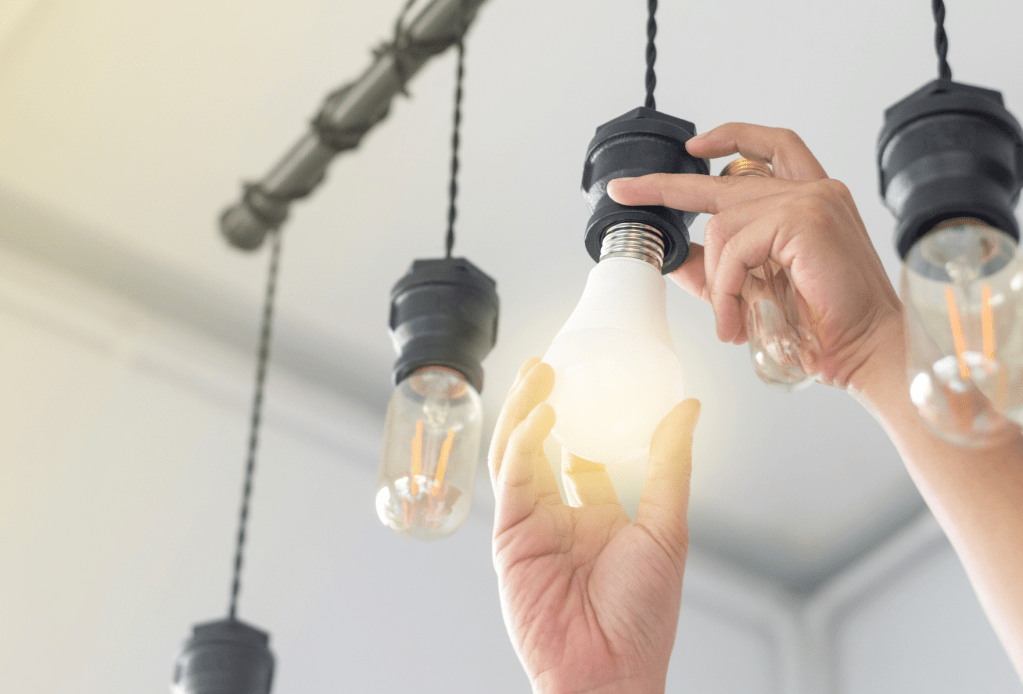
 Action 44: Change any high energy light bulbs. Replace them with LED bulbs – these use the least amount of electricity  and yet produce high levels of light (measured in lumen). The Energy Saving Trust provides a useful guide about LED  lighting. https://energysavingtrust.org.uk/how-get-best-out-energy-efficient-lighting/ And they also remind us that turning lights off when not in use is another easy way of saving energy.

Green Tau: issue 15

Varodrig took this photo from the Ula platformFirst – gas from the Oselvar module burns on the flare of the BP Ula oil platform in the North Sea on April 14th, 2012

3rd September 2021 – revised 11th January 2023

Heating homes without carbon?

Domestic energy use, ie for heating, lighting and electrical appliances, generates around 22% of the UK’s carbon footprint. The majority of that 22% comes from heating our homes. This is not surprising when you consider that 90% of homes are heated using gas boilers. Gas, one of the main fossil fuels, is burnt to heat water to warm our homes. As it burns, carbon dioxide is released. A three bedroom house with a 30KW condensing boiler will, for every hour the boiler is running, will emit around 7kg of CO2 or over the course of year around 3.65 tonnes of CO2.

It is obvious that we cannot continue to heat our homes using gas (or oil or coal) if we are to prevent the catastrophic rise in global temperatures. The Paris Agreement signed by parties at the Paris COP in 2015 set as it goal that participants should reduce carbon emissions so as to keep the rise in mean global temperature to below 2 °C .

In April 2021 the UK’s sixth Carbon Budget set the goal of cutting emissions by 78% by 2035. This time the Budget was set to also include the UK’s share of international aviation and shipping emissions. This revised budget should put us three-quarters of the way to achieving net zero by 2050.

Parties at COP27 in November 2021 agreed that this target should be reduced further to just 1.5 °C. To achieve this target the means by which we heat our homes will have to be radically transformed. 

This can happen in surprising ways. In Islington waste heat from the Northern Line is being soused to heat 1350 homes, a primary school and two leisure centres. In addition the heat is also generating electricity that powers lifts and communal lighting in a nearby tower block. Similar district heating solutions are being developed in other parts of the country too, for example heat  extracted from a flooded coal mine in Durham will heat 1500 homes. 

Both these projects use heat pump technology. This is the most promising solution for drastically reducing carbon emission whether heating a large office block or the average house. A heat pump is a scaled up fridge that works in reverse. Its refrigerant liquid absorbs heat from the air – or the ground – outside the building. This is compressed and transfers inside the building  where it is released as heat via warm air or via warm water (for radiators or underfloor heating). The heat pump is powered by electricity. Heat pumps, in terms of energy used and heat produced, are at least 3 times as efficient as gas boilers. In terms of running costs, the carbon footprint of a heat pump will depend on the source of the electricity it uses. Electricity from a wind farm has a carbon footprint of 10-20g/KWh compared with 450g/KWh for electricity from a gas fired power station. 

The Government’s net zero carbon targets anticipates the installing of 600,000 heat pumps a year by 2028. However in 2021 only 42,779 heat pumps were installed make this target look questionable.

There needs to be an expansion of both the production capacity of heat pump manufacturers and of the number of qualified heat pump installers, as well as improved Government finance to make the switch affordable for everyone.

The other approach to reducing the carbon footprint arising from heating our homes, is to insulate them. The better insulated a property is, the less additional heat is needed to achieve a comfortable level of warmth. Thus less energy is needed and one’s carbon footprint is reduced. A well insulated home also reduces draughts and cold spots which makes spaces feel warmer. 

Home insulation options include:

  • cavity wall insulation 
  • External wall insulation suitable for buildings with solid walls
  • Loft insulation 
  • Draught proofing doors and windows 
  • Double – or even triple – glazing windows
  • Underfloor insulation
  • Thermal external doors
  • Fully enclosed porches

Information on the potential cost savings of upgrading home insulation plus available grants can be viewed in various websites including https://www.which.co.uk/reviews/home-grants/article/insulation-grants-aGAZv8p9hGkY

NB Relevant information is constantly changing.

Turning your garden into a carbon sink 

Our back garden

As well as minimising the amount of carbon we emit/ consume/ use we need also to do all we can to keep as much carbon locked away undisturbed in the ground. Our gardens can be made into carbon sinks ie net absorbers of carbon. 

  1. Don’t buy or use peat. The UK’s peatlands are an important carbon sink (1 hectare of peatland  can absorb up to 2000 tonnes of CO2 per year). Digging up and removing the peat seriously damages these fragile habitats. 
  2. Don’t buy plastic plant pots whether with or without plants (plastic is made from oil). Instead use pots made from plant fibres, paper or clay. The Hairy Plant Pot Company grows plants for sale in coir pots. The whole pot with plant  goes straight into the solid where the coir will decompose over time.  
  3. Don’t use artificial fertilisers, pesticides or herbicides. These have a high carbon footprint and are damaging to natural ecosystem.
  4. Make a compost bin and fill it with garden waste and plant based kitchen waste. Once well rotted, the bin’s contents will provide soil enriching natural compost that locks the carbon into the soil. Compost bins can be made from wood (eg recycled pallets), wire mesh or you could buy a plastic bin made from recycled plastic. 
  5. Plant trees and shrubs as these will, by their size, be able to absorb more carbon as they grew. 
  6. Opt for perennial plants over annuals. The perennial plant both develops a larger root mass and has a longer growing season enabling it to absorb more carbon. Interestingly you can opt for perennial varieties of vegetables rather than growing them each year from seed: spinach, watercress, kale, perennial leeks and onions, cabbage etc.
  7. Choose plants that will be happy in the micro environment that your garden offers. You can waste time, energy and carbon, trying to make plants grow where the conditions are unsuitable. Grow together plants that form a natural ecosystem so that they help each other. 
  8. Avoid over digging the soil as this can release carbon locked into the soil.  
  9. Avoid leaving the earth bare as carbon from the soil can easily be lost into,the atmosphere. Instead cover the earth with a mulch or with a cover crop.
  10. Let your lawn grow. Frequent cutting of the grass requires the input of water and fertilisers to keep it green and the lack of depth of  cover makes it susceptible to drying out during periods of drought. Instead let the grass grow longer – you can still run over it, sit on it and play on it.
  11. Transform your lawn into a meadow by introducing a greater variety of plants, especially flowering ones. These extra plants will tend to have longer root systems enabling more carbon to be absorbed by the soil.
  12. Avoid or replace hard surfaces, especially concrete ones. (Concrete has a particularly high carbon footprint). Hard surfaces leave the soils underneath compacted and bereft of mini beasts and micro organisms that absorb carbon. Use gravel and bark in preference to paving stones, or even bricks set in sand. 
  13. Build a pergola so that you can grow climbing plants to provide shade in the summer. Consider adapting any garden sheds so that you can plant them with a green roof. The more we plant, the more carbon our garden can absorb.

Green Tau: issue 13

Reducing carbon emissions: Transport

21st August 2021

Transport in the UK (the getting from a to b and back rather than the transporting of goods) accounts for about 20% of the average person’s carbon footprint. If we are to achieve net zero by 2050, reducing – or actually zeroing – transport emissions is critical.  

There are two key means of transport which are already carbon neutral: walking and cycling. Whilst long distance walking or cycling may not be the most practical ways of getting around, they are ideal means of making all those short journeys. Approximately 60% of journeys of less than 2 miles are currently made by car. Walking and cycling are not just good for the climate, they are good for our health too!

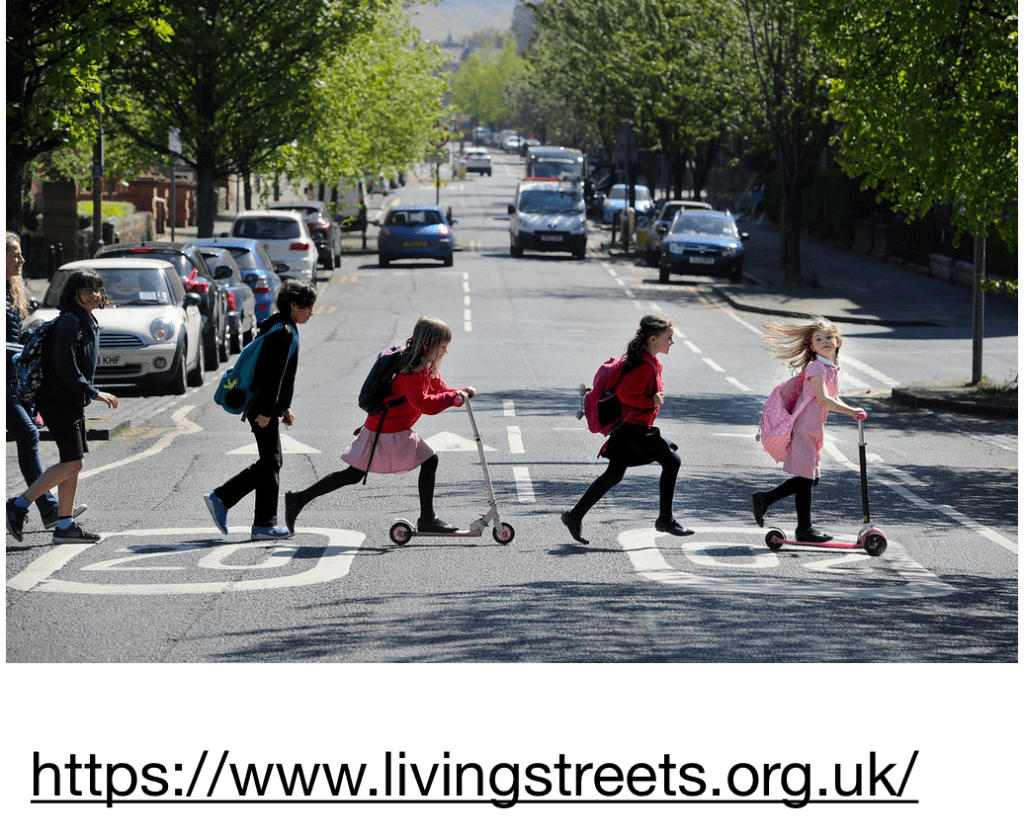
As well as walking and cycling ourselves, we can also be active in pressing our local authority and the government to do more to support cycling with the provisions of cycle lanes, cycle parking, cycling courses, subsidised cycles for those with disabilities and for those on low incomes. Living Streets is a charity that promotes and enables walking. One of its aims is to increase the number of children walking or cycling to school. A generation ago, 70% of pupils walked or cycled to school; now it is less than 50%.

There are 32,697,408 cars on the road in the UK – and most are quite literally on the road – parked that is! Only 0.5% meet the ultra low emissions standard, ie hybrid vehicles that produce less than 75 grams of CO2 per kilometre from the tail pipe and electric vehicles that produce zero emissions. In other words most cars in the UK are heavy polluters both in terms of greenhouse gas emissions and in terms of air polluting chemicals and particulates. Air pollution caused the deaths of 15,000 people in 2019.

Reducing or eliminating the use of fossil fuel cars will substantially reduce the UK’s carbon footprint. Where journeys cannot be made on foot or by cycle, public transport offers a more carbon efficient alternative, whilst at the same time reducing congestion on roads. Most of Transport for London’s bus fleet are either electric or meet the ultra low emissions standard. Ideally similar policies should be  implemented in other parts of the country. This is dependent upon Government disposition and funding. Levelling up should include levelling up access to frequent, reliable and affordable public transport. 

Public transport includes trams (electric), coaches and trains. Disappointingly only 38% of the UK rail network is currently electrified compared with 55% in France and 100% in Switzerland.  Nevertheless for UK rail passengers emissions average out at 35g per passenger km. This compares with 100g (small fossil fuel car) and 200g (large fossil fuel car) per car per km. Rail travel will

need to continue to grow to achieve net zero targets, replacing not only car journeys but air flights too. Short haul flights give rise to a particularly high level of emissions – 254g per passenger km. Travelling from London to Berlin by plane has a carbon footprint of 160kg compared with 40kg by train. Even by train, the journey can be made in a day, and increasingly there is now the option of making the journey overnight.

Long haul flights are an even greater concern vis a vis net zero targets. A return flight from London to New York emits around 3.3 tonnes of CO2 per person – ie about one third of the average carbon footprint for someone living in Britain. It is hard to see how continuing to make such journeys can be compatible with a net zero target – yet many people will have good reasons for wanting to do so – eg to visit close family. Some companies offer carbon offsetting packages where you pay to enable someone else to reduce their carbon emissions, or where you pay to plant trees etc that will at some future date absorb sufficient CO2 to equal what you have already generated. What it does not do is to eliminate or reduce carbon emissions in the  present moment.

One alternative to long haul flights might be to travel by ship where destinations involve crossing oceans (it is possible to travel London to Singapore by train!) You can travel as a passenger on board a cargo ship: Liverpool to Newark takes  11 nights and costs from £1300.  Whilst the carbon footprint of cargo ships is not great – 3 to 15 grams of CO2 per tonne cargo per km – the add on cost per passenger is minimal. 

Reducing our carbon footprint to achieve net zero is demanding and will involve both substantial changes to the way we travel and imaginative ones too!