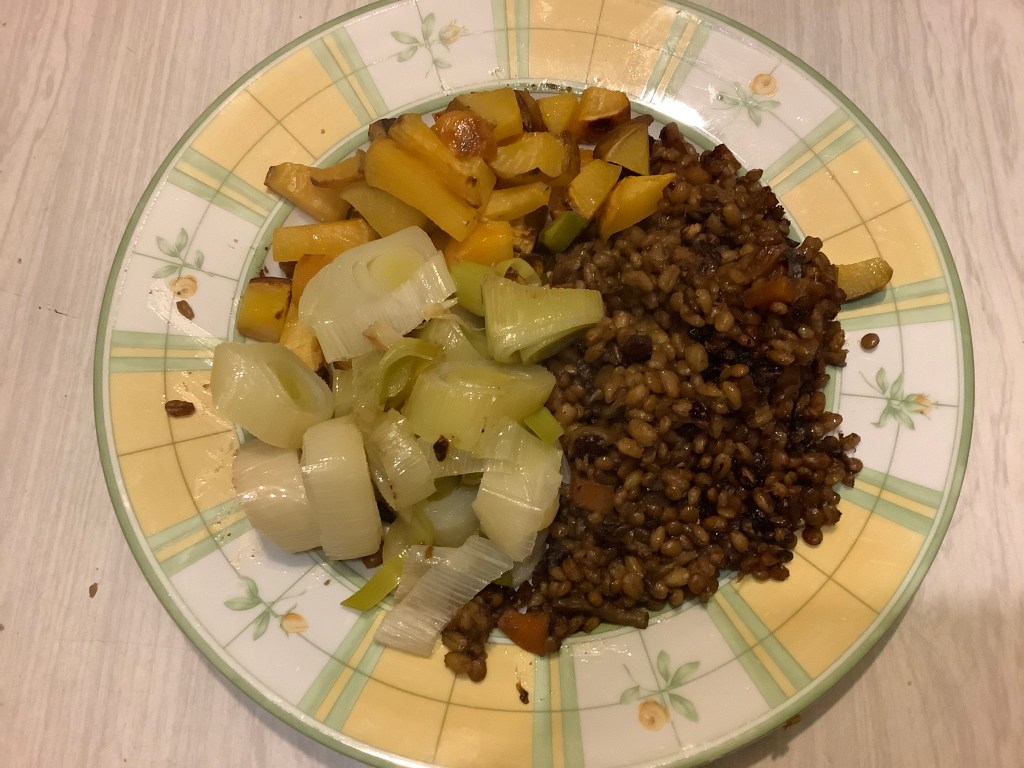
Counting on … day 67

20th January 2022

Coffee but not cake? I am surprised how often cafés have oat milk but no vegan cakes. I hope that by asking for a vegan cake I may prompt them to consider expanding their offerings. Sometimes people think that making vegan cakes is tricky or that the results will be unpalatable – but this is not so. 

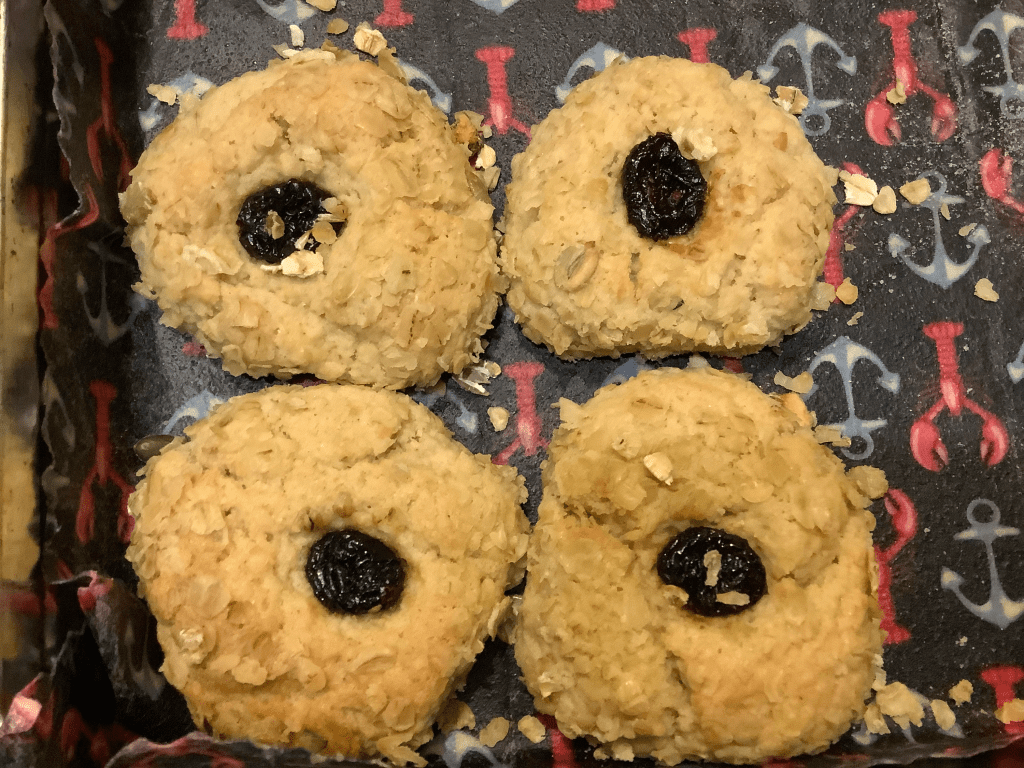
This recipe is adapted from a childhood favourite, Quaker Oats’ Melting Moments 

250g margarine 175g sugar

300g self raising flour (or plain and add baking powder)

1 tsp egg replacement powder Oat milk to bind

A bowl of porridge oats Dried cranberries/ glacé cherries 

Cream the sugar and margarine till soft. Stir in the flour and egg replacement powder. Mix to firm dough using a little milk as necessary.

Take teaspoons of the mixture and gently squeeze into a round ball and roll in the porridge oats. Place onto a greased baking tray. Flatten slightly and press a cranberry/ cherry into the middle. 

Bake at 175C until lightly golden – about 15 minutes.

 Counting on …. Day 62

16th January 2022

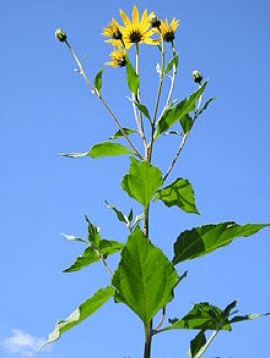
Jerusalem artichokes are in season. These are tubers that in the summer produce tall plants with sunflower like flowers. They are easy to grow. Simply take an existing tuber, even one you have bought from the vegetable shop or supermarket, and plant it in the soil at a depth of about 5cm. The plant may need staking as it grows to stop it blowing over. 

Jerusalem Artichoke Pasta Sauce

Jerusalem artichokes  about 150g per person Cashew nuts about 25g per person Oil Garlic and sage to taste 

Scrub the tubers clean and chop.

Heat the oil and sautée the garlic. 

Add the artichokes and sage. Stir well. Add the cashew nuts. 

Cover the pan and cook gently til soft and golden.

Blitz the mixture adding a little hot water as necessary to achieve a creamy sauce.

Serve with pasta. 

Counting on …. Day 56

9th January 2022

Eating beans and pulses instead of meat and dairy products is a good way of reducing our carbon footprint. The Ethical Consumer’s Climate Gap Report lists  a top ten of things we can do as individuals to reduce our carbon footprint (https://www.ethicalconsumer.org/climate-gap-report) of which the top two are reducing meat consumption by 20% and dairy by 20%.

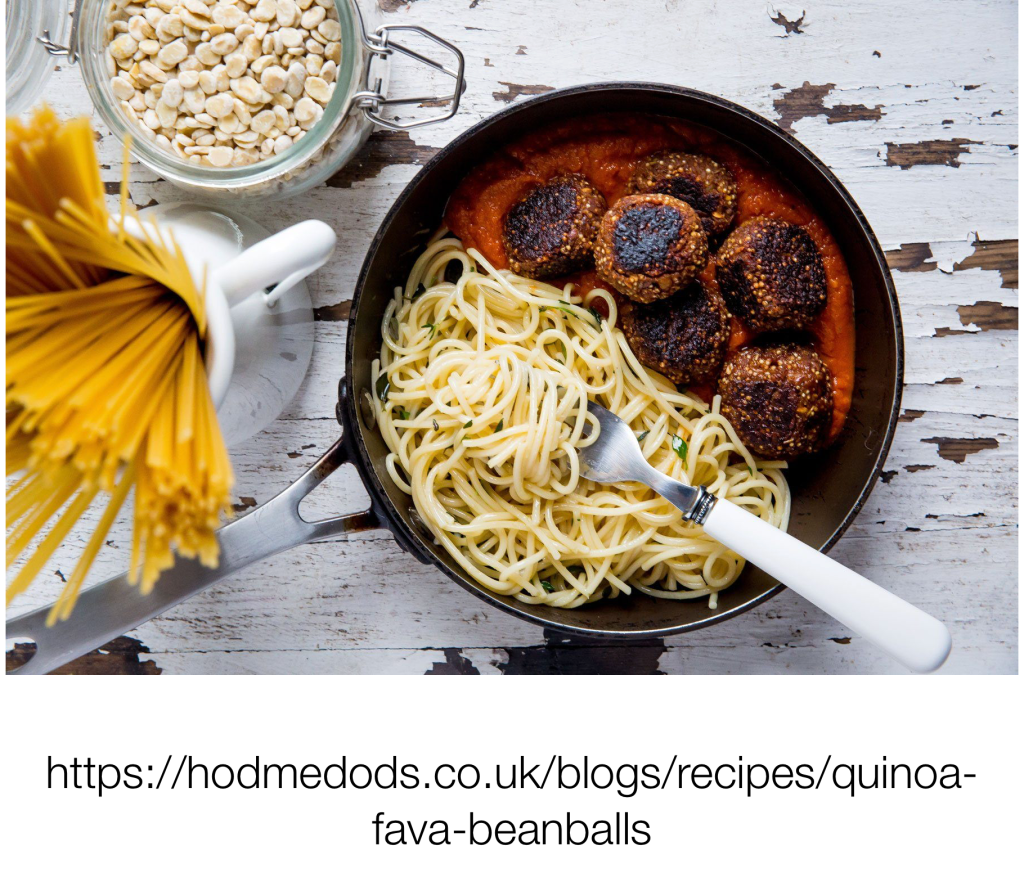
You can use beans to make soups and stews; you can blitz them to make pasta sauces or use lentils in  place of mince for lasagnes; hummus is made from chick peas and you can use other beans to make a variates of other spreads or pates. Chick peas are used in making falafel and split peas for dhal and again you can adapt these recipes for to the beans and pulses. Flour made from dried peas and beans can be used in making pastries and pasta, as well as a variation of a frittata. Soya beans and peas are being used to make alternative milks. 

Try the Hodmedod website for lots of recipes – https://hodmedods.co.uk/blogs/recipes/tagged/vegan

Counting on …. Day 53

6th January 2022

Today is the Feast of the Epiphany, the celebration of the visit by the wise men to the infant Jesus.  Given the large number of traditional foods we have on Christmas Day when the shepherds visited to  the Christ Child, we have very few for the Epiphany. The French have their Gateau des Rois which is something I copy in a simpler form – ie a cake made by sandwiching a layer of marzipan, flavoured with madeira, between two rounds of puff pastry. All the constituent parts can be made with plant-based ingredients.


We also mark the day by chalking a blessing over the lintel of our front door – https://greentau.org/2022/01/06/marking-epiphany/

Counting on … day 52

5th January 2022

The Ethical Consumer’s Climate Gap Report highlights the importance of we as individuals making changes now so that we will as a nation be able to achieve net zero by 2030. One area where  significant change is needed is our diet. We may not all  need to become vegan, but we will all need to reduce our consumption of meat and dairy products. Substituting oat milk and vegan butter in our cooking is an easy option. Use oat milk for custard and white sauces etc. use vegan butter in cakes and pastries. 

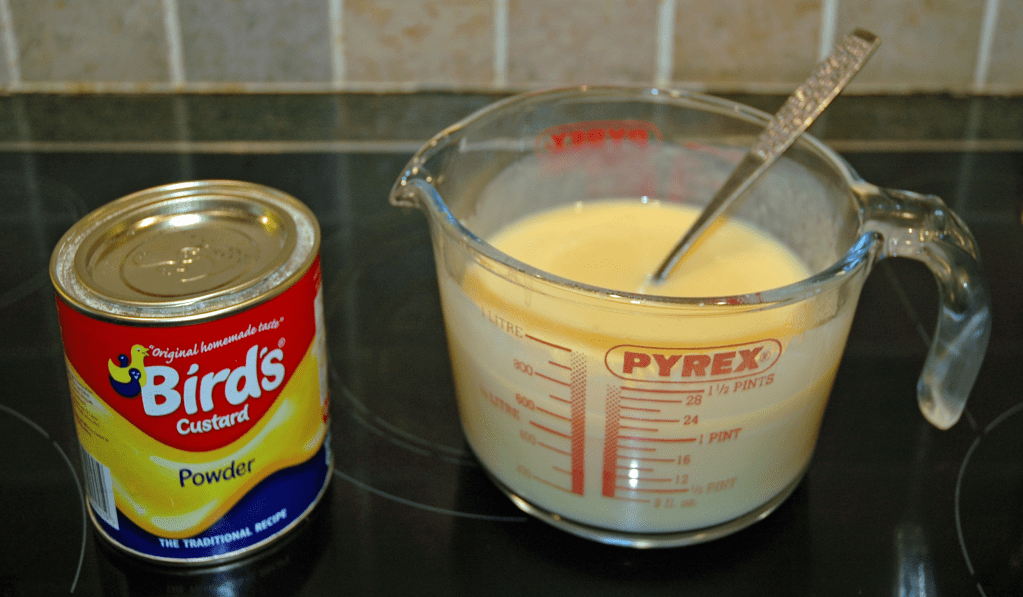
Bird’s Custard is an egg free custard that was originally developed because Alfred Bird’s wife had an allergy to eggs. Make it with oat milk and it is vegan custard.

Counting on … day 51

4th January 2022

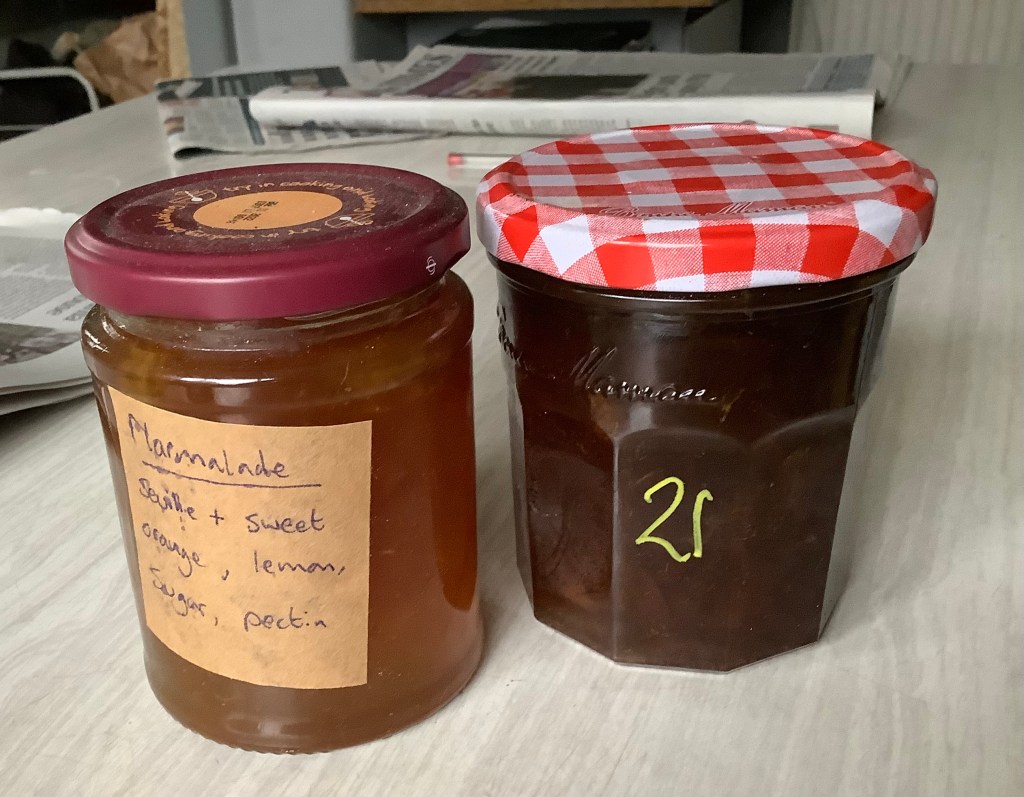
Seville oranges that are the key ingredient of marmalade are now in the shops and as they are a seasonal crop, now is the time to buy them and make marmalade. This recipe is adapted from one belonging to my great aunt.

7 Seville oranges

1 sweet orange

2 lemons

3kg sugar with pectin

Cut fruit into quarters and boil until skin is soft. If you have a slow cooker this is ideal – just put the fruit and 5 pints of water into the slow cooker, cover with its lid and leave gently simmering for 4 to 6 hours as necessary. If you are using a large saucepan, cover fruit with 7 pints of water and bring to the boil, uncovered. You will find the 2 pints of additional water will evaporate during the boiling.

Allow fruit to cool, slice the fruit thinly discarding all the pips as you find them. 

Put sliced fruit, the strained water/ juice and sugar into a large pan, bring to the boil whilst stirring (to prevent the sugar from burning). Boil, stirring frequently until setting point is reached. If possible use a jam thermometer. Otherwise test by dripping a small amount onto a cold plate. As it cools the mixture should form jelly like surface that wrinkles when pushed. 

Pour into sterilised jars and seal. 

Green Tau: issue 29

Caring for creation with every meal – Use your LOAF!

What we eat impacts the world around us – the welfare of animals, the welfare of wildlife, the fair sharing of water, the  fertility of the soil, the  well being of those who grow and produce food. It also contributes to the climate crisis. Making step by step changes, we can better care for creation.

The organisation Green Christian has produced the nemonic LOAF – Local, Organic, Animal friendly, fairly traded – to help us buy and eat sustainably with care for the world. https://greenchristian.org.uk/gc-campaigns/loaf/

L locally grown, locally produced. 

Local reduces the carbon miles attached to our food. Local keeps us in touch with those who grow, make and sell our food. Growing our own keeps us in touch with the soil itself!

O organic.

Food, whether that is crops grown or animals raised, that is produced organically removes chemical fertilisers and pesticides from the environment where they cause damage to water supplies, wild life and human health. Instead organic farming works in harmony with the environment boosting its well being and biodiversity.

A animal friendly. 

Animals including birds and fish, should always be treated with care and respect. Factory farming for example, treats animals as profit-making commodities. Arable farming also has a responsibility to be animal friendly, including the wellbeing of birds and insects.

F fairly traded. 

Throughout the supply chain from farm labourer to shelf stacker, lorry driver to barista, each person deserves to be treated fairly.

In a previous issue of the Green Tau – https://greentau.org/2021/08/14/green-tau-issue-12/

I have written about food and our carbon footprint. The Ethical Consumer’s Climate Gap Report notes that to be on track for net zero we need to reduce the carbon footprint of our food by 15% by 2030. So far (ie since 2019) reductions have not even risen above 0%.  It is imperative that we do look at and adjust what we eat, to reduce waste, to reduce our carbon footprint and to reduce the negative impact we have on the environment. Eating sustainably we can safeguard our own futures and improve that of the world in which we live.

  1. Eat less meat and dairy, replacing these with plant-based alternatives. “Veganuary” makes this a good time to try different vegan options. See the Eco Tips page on swopping to a vegan diet – https://greentau.org/2021/10/12/eco-tips-11/
  2. Use local food shops. Buy locally produced food. 
  3. In supermarkets choose UK grown rather than imported fruit and vegetables. 
  4. Eat what’s in season – strawberries in May/ June, blueberries in July/ August. 
  5. Subscribe to a veg box – eg Riverford’s or Abel and Cole – or OddBox which fills its boxes with fruit and veg that would otherwise go to waste.
  6. Use local farmers’ markets 
  7. Expand the variety of fruits and vegetables that you buy. Biodiversity is an important way forward for farming – https://greentau.org/2021/10/08/the-green-tau-issue-20-2/
  8. Opt for UK produce over imports. Hodmedod sells UK grown beans and pulses rather than those that come from Canada/ China etc.  https://hodmedods.co.uk/
  9. Opt for organic produce.
  10. Opt for fair trade products. This article relates to chocolate – https://greentau.org/2021/12/11/green-tau-issue-26/
  11. Use refill shops – also known as bulk stores. Take your own containers or use the shop’s paper bags to buy loose ingredients such as beans and pulses, grains, dried fruit etc. 
  12. When buying meat, find a butcher who knows where the meat comes from and how it has been raised.
  13. Be prepared to pay more for meat and diary products that have been reared to a higher ethical standard.
  14. Use a milk delivery service such as Milk and More for both dairy and oat milk in refillable glass bottles.
  15. When buying fish, check whether it is sustainably sourced and/or farmed. Refer to the Marine Conservation Society’s guide as to which fish are not endangered.
  16. Plan your meals and your shopping to avoid throwing food away – https://greentau.org/2021/08/09/eco-tips-4/
  17. Keep a habit of saying Grace at meals. Appreciation and gratitude go together. 

Counting on … day 35

19th December 2021

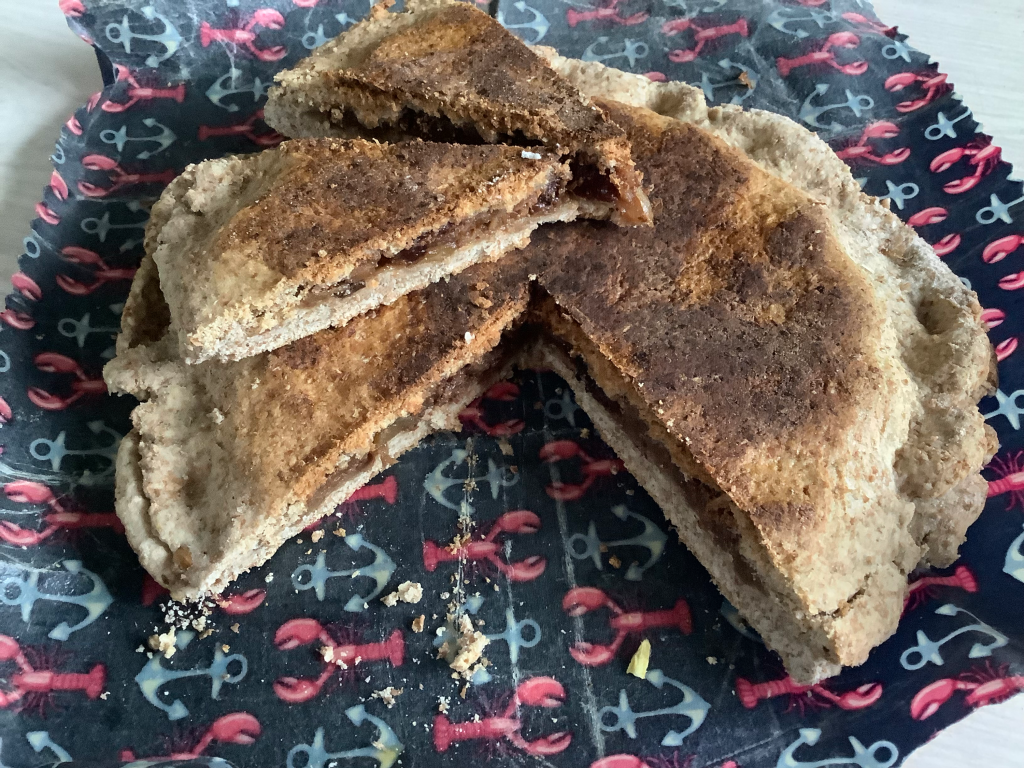
Mincemeat griddle scone: quick to make without the need to heat the oven.

230g flour (I used spelt) plus 2 tsp baking powder or use self raising flour.  60g vegan butter

Rub the butter into the flour. Mix to a soft dough using vegan milk. Divide the dough into two and roll/pat out each into a circle a little smaller than your frying pan.

Start warming up your frying pan. 

When hot add a little oil and one round of scone mix. Place mincemeat on top of the dough leaving a 2cm edge. Cover with the second round  of dough and press firmly around the edges.

Bake until cooked on the bottom (8-10 minutes). The turn over to cook the other side.

Counting On … day 17

30th November 2021

Today is the feast of St Andrew, patron saint of Scotland. Here is a recipe for vegan haggis, not entirely my own, but  having no note of the original recipe, I cannot credit its creator.

Haggis. Serves 2-3

50g  Puy lentils

50g pearl barley

oil 

1 large onion, finely chopped

1 large carrot, finely chopped

75g portobello mushrooms, finely chopped

½ tsp ground allspice

 ½ tsp ground black or white pepper

90g pinhead oatmeal

½ tbsp marmite

1½ tbsp brown sauce or treacle

Sauté the onion and carrot in a little oil till soft. Add the mushrooms and the spices. If need be add a little more oil.

Add the barley and lentils. Add about 400ml hot water and yeast extract. Feel free to add a sprig of thyme. 

Simmer until the mixture is very thick, adding more water if necessary. 

Heat the oven to 180C/350F/gas mark 4.

Stir in the oatmeal and brown sauce and tip into a greased loaf tin and cover with foil. Bake for 30 minutes, then remove the foil and bake for another 30. 

Leave for five minutes, then turn out and serve.