Weekly Green Tau

Counting on…. Day 294 

30th September 2022

Much of the plastic that ends up polluting the oceans gets there via streams and rivers. And the plastic that ends up in the streams and rivers is either litter that has been thoughtlessly discarded or plastic that has fallen or been blown out of recycling bins. We can help in three ways – firstly not thoughtlessly discarding plastic (which I am sure we wouldn’t). Secondly by picking up litter and disposing of it safely. Thirdly by ensuring that the plastic in our recycling bins is flattened as much as possible and packed (eg stacking similar sized pots or trays together) so that there are no loose pieces that can easily be dislodged. Aim for a neat and condensely  packed  bin. 

Counting on … day 293 

29th August 2022


Pollution of our water system can begin at home. Only three things should go in the toilet – pee, poo and toilet paper. (Other paper, even things like paper serviettes shouldn’t be thrown down the loo – they are not designed to break down quickly and can cause blocked drains). Wet wipes, cotton buds, sanitary products, sticking plasters, dental floss etc should not be discarded via the toilet. NB You can biodegradable dental floss which can go into the compost bin. 

In the kitchen what goes down the drain should be limited to waste water and appropriate amounts of soap and cleaning fluids. Fat and oil (wipe excess up with a paper towel or piece of news paper) and food waste, including coffee grounds, should go into the food waste bin. Food waste and fat can block drains, and chemicals such as white spirit can cause pollution. 

Proper 17

28th August 2022 – readings are below

Reflection 

Jeremiah asks an interesting question: what wrong have we found with God? In other words, where do we feel God has let us down, or where God has messed up? 

Certainly there are times when I feel God is aloof, that I am on one side of a high wall and God is on the other. There are times when I feel that prayer is a pointless exercise and that its consolation is minimal. There are times when bad things happen and I question why God didn’t intervene. Jeremiah’s follow up question is also interesting: when did we last vocalise these thoughts? When do we ask these sorts of questions with our friends, or in our family, or – indeed – in church? Have we ever asked these questions of God? Are we too frightened to ask? Are we scared that we might find that our faith is superficial? Are we afraid that others will look down at us for being so unfaithful?

It seems to me that if we can’t ask those questions, if we can’t plumb the depths and scale the heights to find answers, then our faith is pretty pointless. Because to be honest bad things do happen. We do feel abandoned by God. We do pray without seeing results. What Jeremiah is suggesting is that it may be we who have ignored God, we who have tried to do things under our own steam,  we who have not wanted the input God offers. I am not sure that this is the complete answer. Often our individual actions are rendered fruitless by more powerful systems and institutions. This perhaps is why Jeremiah is addressing his words not individuals but to both nations – Judah and Israel – and to a groups – the priests and the law makers. Would that they had all followed God’s law!

As ever we come back to those two key laws: Love God with all your being, and love your neighbour as yourself. The writer of Hebrews is spot on: let mutual love continue! But the writer goes on to demonstrate that this is not fulfilled by merely saying, ‘I love my you’. Rather you need to imagine that you are there with your neighbour in their plight or situation. Before we can genuinely say ‘we love you’ to those asylum seekers who reach our shores on barely seaworthy boats, we need to empathise with what has pushed them to take those risks, to understand what fears they feel arriving unwanted in an alien land. When we can do that, then we will better know to actually express the love they need. Before we can genuinely say ‘we love you’ to people in war zones – whether in Ukraine or Ethiopia – we need to empathise with what their fears are, what it is that is their greatest loss, what their hopes are. Before we can genuinely say ‘we love you’ to people facing poor harvests in Zimbabwe, we need to understand how it feel to loose your crops, to understand what the effects are on their lives, how they hope to come through the tragedy.  Before we say simply mouth concern for the people of small islands states like Vanuatu, we need to understand how they feel about the future, about rising sea levels and the constant warming of the ocean, and how they feel about the response of the developed nations, whether they feel empowered or patronised by the rest of the world.

The writer of the Hebrews then shows how our love for our neighbour turns out to be the means by which we show our love for God. To do good, to share our wealth,  is to offer a sacrifice that pleases God.  And the writer of Hebrews suggests that it is in this way – eschewing love of money and  being content with what we have – we will feel close to and protected by God. 

In a similar vein, Jesus tells us that if we only invite those who can repay us to our feasts, we have fallen short. Rather it is in inviting those who cannot return the complement, that we are blessed. If we only provide for people who can afford to pay – whether that is food or fuel or education or healthcare or climate adaptation – then we will simply be adding to the suffering in the world. But if we provide for those who cannot afford it, we will transform the world bringing in God’s heavenly rule here on earth. If we hear and desire the Word of God, then, as the psalmist says, we will be filled with good things.

Jeremiah 2:4-13

Hear the word of the Lord, O house of Jacob, and all the families of the house of Israel. Thus says the Lord:

What wrong did your ancestors find in me
that they went far from me,

and went after worthless things, and became worthless themselves?

They did not say, “Where is the Lord
who brought us up from the land of Egypt,

who led us in the wilderness,
in a land of deserts and pits,

in a land of drought and deep darkness,
in a land that no one passes through,
where no one lives?”

I brought you into a plentiful land
to eat its fruits and its good things.

But when you entered you defiled my land,
and made my heritage an abomination.

The priests did not say, “Where is the Lord?”
Those who handle the law did not know me;

the rulers transgressed against me;
the prophets prophesied by Baal,
and went after things that do not profit.

Therefore once more I accuse you, says the Lord,
and I accuse your children’s children.

Cross to the coasts of Cyprus and look,
send to Kedar and examine with care;
see if there has ever been such a thing.

Has a nation changed its gods,
even though they are no gods?

But my people have changed their glory
for something that does not profit.

Be appalled, O heavens, at this,
be shocked, be utterly desolate,

says the Lord,

for my people have committed two evils:
they have forsaken me,

the fountain of living water,
and dug out cisterns for themselves,

cracked cisterns
that can hold no water.

Psalm 81:1, 10-16

1 Sing with joy to God our strength *
and raise a loud shout to the God of Jacob.

10 I am the Lord your God,
who brought you out of the land of Egypt and said, *
“Open your mouth wide, and I will fill it.”

11 And yet my people did not hear my voice, *
and Israel would not obey me.

12 So I gave them over to the stubbornness of their hearts, *
to follow their own devices.

13 Oh, that my people would listen to me! *
that Israel would walk in my ways!

14 I should soon subdue their enemies *
and turn my hand against their foes.

15 Those who hate the Lord would cringe before him, *
and their punishment would last for ever.

16 But Israel would I feed with the finest wheat *
and satisfy him with honey from the rock.

Hebrews 13:1-8, 15-16

Let mutual love continue. Do not neglect to show hospitality to strangers, for by doing that some have entertained angels without knowing it. Remember those who are in prison, as though you were in prison with them; those who are being tortured, as though you yourselves were being tortured. Let marriage be held in honour by all, and let the marriage bed be kept undefiled; for God will judge fornicators and adulterers. Keep your lives free from the love of money, and be content with what you have; for he has said, “I will never leave you or forsake you.” So we can say with confidence,

“The Lord is my helper;
I will not be afraid.

What can anyone do to me?”

Remember your leaders, those who spoke the word of God to you; consider the outcome of their way of life, and imitate their faith. Jesus Christ is the same yesterday and today and forever.

Through him, then, let us continually offer a sacrifice of praise to God, that is, the fruit of lips that confess his name. Do not neglect to do good and to share what you have, for such sacrifices are pleasing to God.

Luke 14:1, 7-14

On one occasion when Jesus was going to the house of a leader of the Pharisees to eat a meal on the sabbath, they were watching him closely.

When he noticed how the guests chose the places of honour, he told them a parable. “When you are invited by someone to a wedding banquet, do not sit down at the place of honour , in case someone more distinguished than you has been invited by your host; and the host who invited both of you may come and say to you, `Give this person your place,’ and then in disgrace you would start to take the lowest place. But when you are invited, go and sit down at the lowest place, so that when your host comes, he may say to you, `Friend, move up higher’; then you will be honoured in the presence of all who sit at the table with you. For all who exalt themselves will be humbled, and those who humble themselves will be exalted.”

He said also to the one who had invited him, “When you give a luncheon or a dinner, do not invite your friends or your brothers or your relatives or rich neighbours, in case they may invite you in return, and you would be repaid. But when you give a banquet, invite the poor, the crippled, the lame, and the blind. And you will be blessed, because they cannot repay you, for you will be repaid at the resurrection of the righteous.”

Counting on … day 292 

28th August 2022

For vegans – and others – choose sustainable seaweed! 

Seaweed can be eaten as a food in its own right and as an additive in food and non-products (such as toothpaste). It can also be used in making fertilisers, plastic alternatives and in animal food. 98% of seaweed thus consumed is grown commercially – and it is an expanding sector. Japan is the largest producer of seaweed. Here in the UK most seaweed is harvested from the wild – albeit commercially. If you want to give seaweed a try, check out companies such as the Cornish Seaweed Company https://www.cornishseaweed.co.uk/ or Mara Seaweed https://maraseaweed.com/

 Counting on …day 291

27th August 2022

For fish eaters, choosing sustainable fish will help preserve fish stocks and biodiversity in the oceans. The Marine Stewardship Council has a certification scheme with a blue badge indicating which fish products come from sustainable sources. This scheme covers fresh, frozen and tinned fish. Check when eating out whether the fish on the menu is sustainable.

https://www.msc.org/what-you-can-do/10-reasons-to-choose-the-blue-fish-label

Counting on …day 290

26th August 2022 

“The ocean is the largest ecosystem on Earth, and it is the planet’s life support system” – Marine Conservation Institute. It too is under threat from overuse and misuse by human activity. Current negotiations s at the UN are trying to agree a treaty that would protect 30% of the world’s oceans by 2030 – although it looks as if financial interests in making further profits from the oceans will water down any agreement. 

According to UNESCO, plastic waste makes up 80% of all marine pollution and around 8 to 10 million metric tons of plastic end up in the ocean each year – and in the last 10 years we have produced more plastic than in the last century! Cutting back on the plastic we use, and ideally aiming for zero plastic, we can be part of the solution. 

https://greentau.org/tag/plastic-free/

Counting on … day 289

25th August 2022

Another recycled Counting Down action : Go out for a vegan picnic. Sandwiches are the basis of a picnic and most bread is vegan. Vegan options for spreads include plant based butter/ pesto/ mayonnaise/ tapenade/mustard. Add fillings such as vegan cheese (nut-based cheeses are good for protein), hummus, mushroom pate. Add slices of  vegetable such as red pepper, radishes, grilled aubergine or courgette, nasturtium leaves, cress or rocket or add chutney/relish.  Or try a banana hot dog roll? Pack sandwiches in greaseproof paper or fabric wraps. Pack fruit and pieces of vegetables that can be eaten with fingers and again see if you can avoid plastic packaging. Fill flasks with either hot or cold drinks. Pack some vegan cakes – rock buns, muffins etc – or a bar of chocolate to finish.

Counting on … day 288 

24th August 2022

A Count down action recycled from last August:-

In Britain we get through  2.5 billion single use coffee cups each year. Each cup – typically made of paper with a thin plastic layer – has a carbon footprint of 60.9g and that is before it leaves the cafe. Only 1 in 400 will be recycled with the remainder ending up in landfill, further adding to their carbon foot print. Each year single use coffee cups produce 152,000 tonnes of carbon dioxide – the equivalent to the output of 33,300 cars. 

For times when you are not being offered your coffee in a reusable cup or mug, have a keep-cup to hand. In the same vein have a refillable water bottle – especially useful when we have periods of hot weather.

Visiting a National Trust café, I noted a 5p charge for a disposable takeaway cup and a 25p discount for bringing your own keep cup – all other coffees were served in ceramic cups.

Counting on … day 287

23rd August 2022 

This summer is heat waves, drought and impending fuel crisis have highlighted our country’s  unpreparedness for the effects of climate change that we are already experiencing, let alone the ones that are to come. Much of the responsibility lies with our government and its influence over big business. To this end Greenpeace has set up a petition asking for action from the UK government: 

“You must do more to prevent climate change and protect us from the damaging impacts of extreme weather:
– Deliver a proper plan to make our buildings and infrastructure more resilient to extreme weather
– Improve national water storage to prevent future shortages
– Force water companies to reduce leaks and increase the efficiency of household and business water usage ”

If you would like to sign this go to – https://action.greenpeace.org.uk/uk-extreme-weather-climate-emergency-drought-floods?source=EM&subsource=ECCLREPEEM05MY&utm_source=newsletter&utm_medium=Email&utm_campaign=UK+Extreme+Weather+Aug+2022+PE+20220812&utm_term=Full+List

Counting on …day 286

22nd August 2022

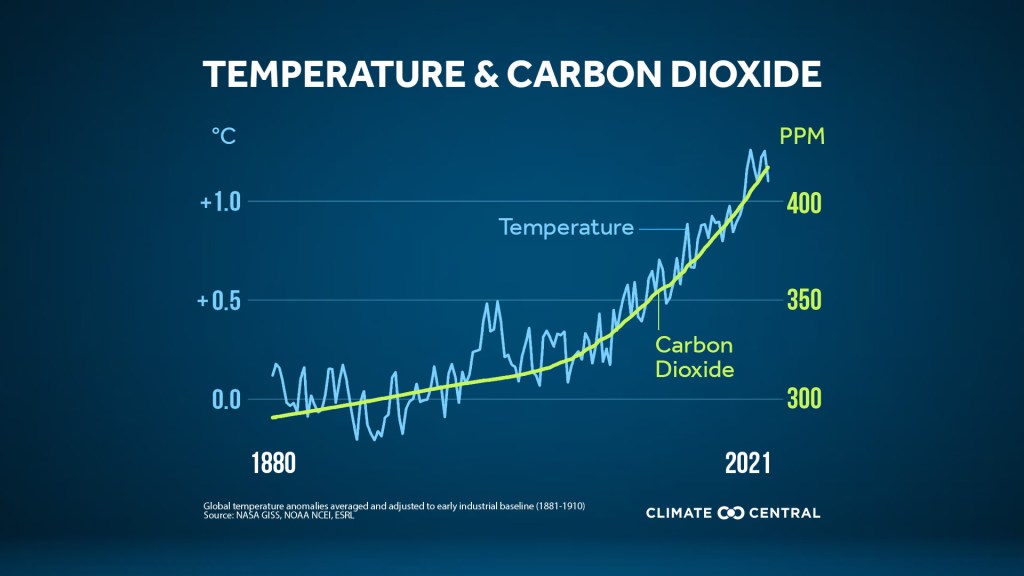
The biggest source of carbon dioxide that is accelerating the climate crisis are fossil fuels. The International Energy Agency has calculated that if we are to keep the rise in global temperatures within a safe threshold, we cannot open up or expand anymore fossil fuel sites. Instead we need to be replacing fossil fuel energy with renewable energy. It is against this background that so many people are horrified that the UK Government is allowing new gas fields to be developed in the North Sea – specifically the Jackdaw field. This week you can join the concerted campaign to stop this happening.

Sign the petition – https://actionnetwork.org/petitions/tell-the-uk-government-to-stop-the-jackdaw-gas-field/?link_id=3&can_id=e902af66de593980c250d076f315d318&source=email-uk-announces-new-oil-gas-drilling&email_referrer=&email_subject=its-time-to-stopjackdaw

And/ or email your MP.