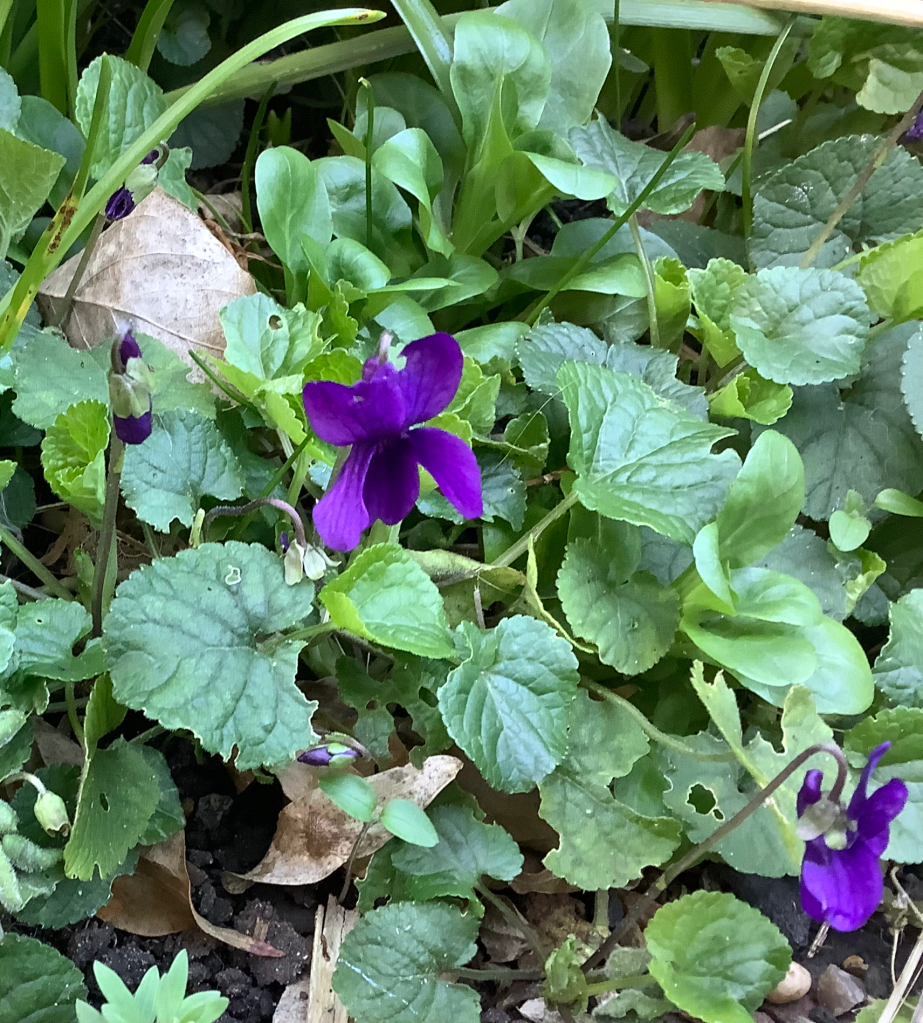
Trees as Good Samaritans 

24th August 2024

And the Lord God brought forth of the ground all manner of trees, fair to behold, and pleasant to eat. Genesis 2:9

You Lord, are the source of all good things: 

We praise you.

You call us to tend and care for your creation: 

May we strive to do your will.

You have made us as brothers and sisters with all that lives: 

May we live together in peace.

A story based on an idea by Jesus as recorded in Luke’s gospel. 

There once was a sojourner who, going about their daily business, was beset by disaster upon disaster: floods and drought, heatwaves and colds snaps, hunger and thirst. 

Politicians, as they passed, turned to look the other way. Church leaders buried their noses in their prayer books. The wealthy trusted money as a get-out clause.

Yet  in the midst of it all, were the trees. They kept on breathing in carbon dioxide and releasing oxygen; they even helped clean the air of pollutants. They collected rain with their leaves to slow its fall, and collected more between their roots, reducing the risk of flooding. Their leaves provided shade and, as they released moisture, so they cooled the air. They caught energy from the sun and turned it into useful materials, food and even medicines. They welcomed other visitors, fauna and flora. They offered green spaces that calmed the anxious and the weary. 

Who was the good neighbour to the sojourner?

Holy God, 

we have not loved our neighbours as ourselves. 

We have ignored the plight of others. 

We have not stood in solidarity with those who need help. 

Rather we have spurned those who are our neighbours.

We have cut them down in their prime.

We have cut away at their roots 

and have poisoned their lifeblood. 

Have mercy.

Have mercy,.

Heal us and have mercy. 

A reading Leviticus 23:39-41 (The Message) 

On the fifteenth day of the seventh month, after you have brought your crops in from your fields, celebrate the Feast of God for seven days. The first day is a complete rest and the eighth day is a complete rest. On the first day, pick the best fruit from the best trees; take fronds of palm trees and branches of leafy trees and from willows by the brook and celebrate in the presence of your God for seven days—yes, for seven full days celebrate it as a festival to God. Every year from now on, celebrate it in the seventh month.

God of the oak and the tamarisk, 

we praise you.

God of the palm tree and the olive, 

we praise you.

God of the fig tree and the vine, 

we praise you.

God of the cedar and the myrtle, 

we praise you.

For the wonder and beauty of trees, 

we praise you.

For leaves and shade, for seeds and fruit, 

we praise you.

For rootedness and stability, 

we praise you.

For maturity and heritage, 

we praise you.

For carbon absorbed and oxygen released, 

we praise you.

For community and interconnectedness, 

we praise you.

God of wisdom, 

teach us to understand and value 

the world you have created. 

Teach us to recognise that what you create is one family, 

that all its people, its plants and creatures, 

are our brothers and sisters.   

Teach us to love them as our neighbours, 

and give us the grace 

to receive the love they bestow on us. 

Amen.

The Lord’s Prayer

Third  Sunday of Easter

14th April 2024

Reflection – readings follow on below.

The Psalmist expresses my frequent cry: ‘Oh that we might see better times!’ I look at the damage caused by climate change, the damage caused to the environment by greed and over-consumption, the poverty that arises from injustice, the suffering of war and armed conflict – and I despair. 

To which I think Peter would reply, ‘Why do you wonder? Faith that is through Jesus, the Holy and Righteous One, the Author of Life – to whom you are a witness – is the means of healing what is broken!’ 

If we are not following the teachings of Jesus, or if we are not following the will of God in tending and caring for all life – whether consciously through Christian fellowship or intuitively through natural wisdom – then what do we expect?

Nevertheless I do see that the process of healing – of salvation – is a slow process one because  so often we reject what Jesus – God’s chosen one, the Christ – teaches us. That we should love God and in so doing honour God’s creation, and that we should love our neighbour as ourself without reservation. Which makes it all the more important that we do witness to what is going right in the world – those actions which match Jesus’s teaching, which are the Good News – and witness to what is going wrong through ignorance and sin.

Here I want to give three examples.

We can witness to the example of Jesus feeding the 5000 and to the valiant efforts being made to feed thousands in Gaza by groups such as the UN World Food Programme and World Central Kitchen. And we can witness to the actions of the State of Israel in impeding the delivery of such aid.

We can witness to the many examples of Jesus healing people in mind and body, and in restoring people to their communities – such as Legion – and to the work of groups such as the Red Cross and the Red Crescent, and Médecins Sans Frontières in bringing healing to many caught up in war zones. And we can witness to the actions of the suppliers of armaments and armed groups that instigate and perpetuate armed conflict. 

We can witness to the many examples of Jesus challenging those with wealth and skills to use them for the common good, and  to the work of organisations such as Oxfam, Practical Action and Just Money in creating situations where wealth and skills are used to raise up the poor and to bring down the mighty. And we can witness to the actions of corporations such as Barclays and Shell and Amazon in perpetuating policies that disadvantage the poor and vulnerable. 

Just as in the gospel, so today, the risen Jesus says to us ‘Peace be with you’. 

The word in Greek translated as peace is eirḗnē which draws from the verb eirō with the meanings be joined, tie together, make  whole. The peace that Jesus offers us is that which joins us together, as a community, as a team. Together we can support each other and create a whole that is greater than its parts – that which St Paul describes as the body of Christ. As we celebrate Easter and the resurrection,  let us draw on that peace that can – even if slowly –  create the better times we and the whole world wants.

Acts 3:12-19

Peter addressed the people, “You Israelites, why do you wonder at this, or why do you stare at us, as though by our own power or piety we had made him walk? The God of Abraham, the God of Isaac, and the God of Jacob, the God of our ancestors has glorified his servant Jesus, whom you handed over and rejected in the presence of Pilate, though he had decided to release him. But you rejected the Holy and Righteous One and asked to have a murderer given to you, and you killed the Author of life, whom God raised from the dead. To this we are witnesses. And by faith in his name, his name itself has made this man strong, whom you see and know; and the faith that is through Jesus has given him this perfect health in the presence of all of you.

“And now, friends, I know that you acted in ignorance, as did also your rulers. In this way God fulfilled what he had foretold through all the prophets, that his Messiah would suffer. Repent therefore, and turn to God so that your sins may be wiped out.”

Psalm 4

1 Answer me when I call, O God, defender of my cause; *
you set me free when I am hard-pressed;
have mercy on me and hear my prayer.

2 “You mortals, how long will you dishonour my glory; *
how long will you worship dumb idols
and run after false gods?”

3 Know that the Lord does wonders for the faithful; *
when I call upon the Lord, he will hear me.

4 Tremble, then, and do not sin; *
speak to your heart in silence upon your bed.

5 Offer the appointed sacrifices *
and put your trust in the Lord.

6 Many are saying, “Oh, that we might see better times!” *
Lift up the light of your countenance upon us, O Lord.

7 You have put gladness in my heart, *
more than when grain and wine and oil increase.

8 I lie down in peace; at once I fall asleep; *
for only you, Lord, make me dwell in safety.

1 John 3:1-7

See what love the Father has given us, that we should be called children of God; and that is what we are. The reason the world does not know us is that it did not know him. Beloved, we are God’s children now; what we will be has not yet been revealed. What we do know is this: when he is revealed, we will be like him, for we will see him as he is. And all who have this hope in him purify themselves, just as he is pure.

Everyone who commits sin is guilty of lawlessness; sin is lawlessness. You know that he was revealed to take away sins, and in him there is no sin. No one who abides in him sins; no one who sins has either seen him or known him. Little children, let no one deceive you. Everyone who does what is right is righteous, just as he is righteous.

Luke 24:36b-48

Jesus himself stood among the disciples and said to them, “Peace be with you.” They were startled and terrified, and thought that they were seeing a ghost. He said to them, “Why are you frightened, and why do doubts arise in your hearts? Look at my hands and my feet; see that it is I myself. Touch me and see; for a ghost does not have flesh and bones as you see that I have.” And when he had said this, he showed them his hands and his feet. While in their joy they were disbelieving and still wondering, he said to them, “Have you anything here to eat?” They gave him a piece of broiled fish, and he took it and ate in their presence.

Then he said to them, “These are my words that I spoke to you while I was still with you—that everything written about me in the law of Moses, the prophets, and the psalms must be fulfilled.” Then he opened their minds to understand the scriptures, and he said to them, “Thus it is written, that the Messiah is to suffer and to rise from the dead on the third day, and that repentance and forgiveness of sins is to be proclaimed in his name to all nations, beginning from Jerusalem. You are witnesses of these things.”

Fifth Sunday of Lent

17th March 2024

Reflection- readings are below

Throughout Lent the psalms seem to have been chosen for their focus on sin and the grief that causes us. In today’s the psalmist acknowledges his sinfulness – a sinfulness which has been a burden from birth. What the psalmist realises is that the effect of sin is to break down the relationship between him (or her) and God, and that it is only God who cleanse the psalmist of sin and restore in her the gifts of truth and wisdom, to renew his heart and reinvigorate him with God’s Holy Spirit, so bring her back again into that right relationship with God that he desires. 

Sin separates us from God. It separates us from those gifts that enable us to live in harmony with one another and with all creation. As not-God’s-people we are greedy, hurtful, hateful, mean and jealous. We destroy the natural environment. We persecute others. We perpetuate wars and inflict suffering on the innocent. And this is not what God wants. Jeremiah describes God desire to remake the relationship between God and  by writing the law on their hearts, by internalising the law within them –   So that “they shall all know me, from the least of them to the greatest, says the Lord; for I will forgive their iniquity, and remember their sin no more.”

Jeremiah writes in the plural, for sin doesn’t just affect the individual, but the community. Sometimes my sin has a worse affect on my neighbour either as an unintended consequence or as a deliberate act on my part. And that happens repeatedly through communities from the family units to international groups.  We know on one hand what God wants, and we see on the other hand fighting and cruelty, suffering and aggression. And we feel helpless. 

Do we ignore what’s going on and find peace in ignorance? Do we work really hard so that we have no time to worry about anything else? Do we dissolve into a pool of tears? Do we recognise the sin and suffering for what they are, and seek to find a positive way forwards – healing – through God’s faithfulness?

Whilst the psalms during Lent focus on sin, many of the readings have focused more on suffering and how to cope with it. Last week we had the story of Moses’s childhood – a time fraught with risk but which the protagonists reacted to positively – from the persecuted Hebrew mother to the royal princess. Their efforts were rewarded in the short term but I doubt any of them foresaw the long term salvation that will come from their actions. Likewise last week we were reminded that the process of salvation can also be the way cause great pain. We take the best action, accepting pain if necessary, and be confident that in God’s time there will be  salvation – knowing that we are being restored or healed in our relationship with God.

The week before we heard Jesus’s words “Take up your cross and  follow me”.  A reminder that we should not expect life to be easy but be ready to face challenges and undertake hard graft. Where would Moses have been if the princess had said, “I can’t be bothered”? Where would the food banks be if people said, What’s the point? And gave neither food or time.    Where  would the UN aid organisations be if rich nations said, We’re not that rich. And gave neither  money and support? 

Clinging on to your own life, your own desires, sustaining your own selfishness, Jesus told his disciples, is self-destructive. We think we are protecting ourselves but we are cutting ourselves off from real growth, from true fullness of life. Letting go so that we are part of a bigger story, allows us to experience life to the full.

In today’s  gospel Jesus gives us the image of a seed. The seed is the residue of a living plant. It falls to the ground – as if unwanted – but then in the darkness of the soil is transformed. Its inner heart has the potential for life and, breaking out into new growth, becomes more than it ever was! Jesus sees in all of us that same potential. The potential to change the world around us. This vision is there in so many of his parables – the yeast that swells the bread dough, the salt that flavours the whole meal, the candle flame that lights a room, the seed that grows in the good soil etc. 

Sowing and growing. Being willing to let go of self, of self interest, of self importance. Being willing to undergo transformation. The seed grows best in the good soil. Jeremiah tells us  that transformation is about not just the individual but the community. Jesus very directly addresses his words in the plural – “Those who love their life lose it, and those who hate their life in this world will keep it for eternal life” – as he talks to both his disciples and those – here some Greeks – who are drawn to meet Jesus. It is the community and the support of others that enables our seeds to flourish as they grow.

It is we as part of  a community who must relinquish self interest in the interests of the common good. Indeed it is we as a whole community who must relinquish self interest in the interests of the global good. We cannot go on burning fossil fuels and consuming raw materials without pause. We must be ready to forego some consumer goods in order not to deplete the world to the detriment of the whole world. We must let go our desire to be the most important nation, the strongest nation, in order that all nations be treated with equal value. That will be the resurrection light for the whole world.

So let us be brave. Let us be active. Let us let go of wealth and standing and self importance to allow our lives to enrich the whole world. 

How? By standing up and being vocal about the rights of others. In standing up against greed and excess consumption. In standing up and showing love to our neighbour. By drawing strength from Jesus, seeing in him the example to follow, and finding in him the source of the Holy Spirit that will fill us with strength and joy. By being a community of believers that is fed by and empowered by the fellowship of the Holy Spirit.

Jeremiah 31:31-34

The days are surely coming, says the Lord, when I will make a new covenant with the house of Israel and the house of Judah. It will not be like the covenant that I made with their ancestors when I took them by the hand to bring them out of the land of Egypt—a covenant that they broke, though I was their husband, says the Lord. But this is the covenant that I will make with the house of Israel after those days, says the Lord: I will put my law within them, and I will write it on their hearts; and I will be their God, and they shall be my people. No longer shall they teach one another, or say to each other, “Know the Lord,” for they shall all know me, from the least of them to the greatest, says the Lord; for I will forgive their iniquity, and remember their sin no more.

Psalm 51:1-13

1 Have mercy on me, O God, according to your loving-kindness; *
in your great compassion blot out my offences.

2 Wash me through and through from my wickedness *
and cleanse me from my sin.

3 For I know my transgressions, *
and my sin is ever before me.

4 Against you only have I sinned *
and done what is evil in your sight.

5 And so you are justified when you speak *
and upright in your judgment.

6 Indeed, I have been wicked from my birth, *
a sinner from my mother’s womb.

7 For behold, you look for truth deep within me, *
and will make me understand wisdom secretly.

8 Purge me from my sin, and I shall be pure; *
wash me, and I shall be clean indeed.

9 Make me hear of joy and gladness, *
that the body you have broken may rejoice.

10 Hide your face from my sins *
and blot out all my iniquities.

11 Create in me a clean heart, O God, *
and renew a right spirit within me.

12 Cast me not away from your presence *
and take not your holy Spirit from me.

13 Give me the joy of your saving help again *
and sustain me with your bountiful Spirit.

Hebrews 5:5-10

Christ did not glorify himself in becoming a high priest, but was appointed by the one who said to him,

“You are my Son,
today I have begotten you”;

as he says also in another place,

“You are a priest forever,
according to the order of Melchizedek.”

In the days of his flesh, Jesus offered up prayers and supplications, with loud cries and tears, to the one who was able to save him from death, and he was heard because of his reverent submission. Although he was a Son, he learned obedience through what he suffered; and having been made perfect, he became the source of eternal salvation for all who obey him, having been designated by God a high priest according to the order of Melchizedek.

The Gospel

John 12:20-33

Now among those who went up to worship at the festival were some Greeks. They came to Philip, who was from Bethsaida in Galilee, and said to him, “Sir, we wish to see Jesus.” Philip went and told Andrew; then Andrew and Philip went and told Jesus. Jesus answered them, “The hour has come for the Son of Man to be glorified. Very truly, I tell you, unless a grain of wheat falls into the earth and dies, it remains just a single grain; but if it dies, it bears much fruit. Those who love their life lose it, and those who hate their life in this world will keep it for eternal life. Whoever serves me must follow me, and where I am, there will my servant be also. Whoever serves me, the Father will honour.

“Now my soul is troubled. And what should I say—‘Father, save me from this hour’? No, it is for this reason that I have come to this hour. Father, glorify your name.” Then a voice came from heaven, “I have glorified it, and I will glorify it again.” The crowd standing there heard it and said that it was thunder. Others said, “An angel has spoken to him.” Jesus answered, “This voice has come for your sake, not for mine. Now is the judgment of this world; now the ruler of this world will be driven out. And I, when I am lifted up from the earth, will draw all people to myself.” He said this to indicate the kind of death he was to die.

Mothering Sunday 

10th March 2024

Reflection- readings follow on below

It is surprising how often you can hear the same story and then suddenly hear something new in it. 

The story of Moses in the bulrushes has so many themes – persecution, fear, ingenuity, circumstance, rescue, joy, even resurrection. Although it is a reading that appears as an option each year for Mothering Sunday, it is a story that has a particular resonance this year, as we think of the babies that mothers are trying to protect in Gaza. 

At Christmas the Lutheran pastor for Bethlehem created a crib scene in which the Christ Child lay surrounded by rubble. That could so easily become the setting for retelling the story of baby Moses. We can, perhaps – but probably with difficulty – imagine how the families of new born babies in Gaza are feeling, the desperation as they try to find amongst the shattered neighbourhoods the wherewithal a baby needs, but above all their fear of not being able to protect their child, to keep their child safe from harm. 

What stands out this year in reading the story again, is the idea of teamwork. Looking after, protecting, safeguarding the baby Moses, is an act of teamwork. There is his birth mother, his sister, and the pharaoh’s daughter. Each has a different role to play, and each is essential in the overall success of the story. They all three bring the gifts of compassion, determination and care. 

There is an African proverb that says it takes a village to raise a child. Within that village there are different people with different skills, all of which are essential in caring for and nurturing and protecting that community’s children. Within the village will be people who grow food, and those who prepare meals. There will be those who teach with words, and those who teach by example. There will be those who make clothes, craft toys, construct furniture. There will be those skilled in healing. There will those who encourage confidence and creativity. There will be those who console and teach forgiveness and resilience. And they will all give without ceasing the gifts of love and belonging.

Mothering Sunday is not really about little children giving mums a box of chocolates. It is a rather a celebration of communities that mother us. It is a celebration of the teamwork and the heartache, the compassion and the determination, that goes into raising not just one child but a generation of children. 

I  remember as a child one vicar each year explaining that Mothering Sunday was a celebration of Mother Church. I don’t recall being impressed but on reflection churches – ie those communities drawn together by their faith – should be communities of mothering. Communities characterised by teamwork and heartache, compassion and determination, generosity and love. 

The words written to the congregation at Colossae are apt, describing how those chosen by God should live together in harmony as one body shaped by Christ – as both the peace that rules in our hearts and as the word that enriches us. Their newly formed community is mothered by Christ to become a family worthy of God the Father. 

Increasingly as we look around and see the failings of our world – people reliant on food banks, the high incidence of mental ill health amongst young people, inadequate housing, long waiting lists for medical treatment, the threat of climate change to our ability to grow food, the loss of biodiversity,  our failure to make our lifestyles sustainable – we need to revisit what it is to be a community, what it is to be a team that truly mothers all its children. To reflect again on the command that we should love our neighbour as ourself.  To rethink what we mean when we speak of the fellowship of the Holy Spirit – is it just a handy phrase with which to end a service or does it have far more important purpose that describes how we live and work  – and mother – together? 

Can Christians, can churches, offer a better – maternal – way of being communities in the 21st century? 

Exodus 2:1-10

Now a man from the house of Levi went and married a Levite woman. The woman conceived and bore a son; and when she saw that he was a fine baby, she hid him for three months. When she could hide him no longer she got a papyrus basket for him, and plastered it with bitumen and pitch; she put the child in it and placed it among the reeds on the bank of the river. His sister stood at a distance, to see what would happen to him.

The daughter of Pharaoh came down to bathe at the river, while her attendants walked beside the river. She saw the basket among the reeds and sent her maid to bring it. When she opened it, she saw the child. He was crying, and she took pity on him. ‘This must be one of the Hebrews’ children,’ she said. Then his sister said to Pharaoh’s daughter, ‘Shall I go and get you a nurse from the Hebrew women to nurse the child for you?’ Pharaoh’s daughter said to her, ‘Yes.’ So the girl went and called the child’s mother. Pharaoh’s daughter said to her, ‘Take this child and nurse it for me, and I will give you your wages.’ So the woman took the child and nursed it. When the child grew up, she brought him to Pharaoh’s daughter, and she took him as her son. She named him Moses, ‘because’, she said, ‘I drew him out of the water.’

Colossians 3:12-17

As God’s chosen ones, holy and beloved, clothe yourselves with compassion, kindness, humility, meekness, and patience. Bear with one another and, if anyone has a complaint against another, forgive each other; just as the Lord has forgiven you, so you also must forgive.  Above all, clothe yourselves with love, which binds everything together in perfect harmony.  And let the peace of Christ rule in your hearts, to which indeed you were called in the one body. And be thankful. Let the word of Christ dwell in you richly; teach and admonish one another in all wisdom; and with gratitude in your hearts sing psalms, hymns, and spiritual songs to God. And whatever you do, in word or deed, do everything in the name of the Lord Jesus, giving thanks to God the Father through him.

Luke 2:33-35

And the child’s father and mother were amazed at what was being said about him. Then Simeon blessed them and said to his mother Mary, ‘This child is destined for the falling and the rising of many in Israel, and to be a sign that will be opposed so that the inner thoughts of many will be revealed—and a sword will pierce your own soul too.’

Counting on … day 20

20th January 2024

Support local businesses

Supporting local businesses, like shopping locally, is good for the local community. It improves the sense of belonging, the integratedness of the community. It – hopefully – employs local people (although this may be a problem if housing coast locally are out of the reach of many people). It keeps more money in the locally economy. All in all, it helps create a more friendly, resilient community where people want to live – and where people are happy. 

Resilient communities will become more and more important as we feel the impacts of climate change.

Further reading – https://www.localgov.co.uk/How-to-support-your-local-businesses-more-effectively-to-safeguard-their-future/56450

This article emphasises the importance of supporting locally owned businesses –  https://www.beemoneysavvy.com/support-local-businesses/

Counting on …. Day 1.059

1st March 2023 

Shop local. When we walk and  cycle more and drive less, it is local shops and businesses that benefit!

The Living Streets report, The Pedestrian Pound (updated 2018), noted that If more space is given for walking and cycling and less to cars, the absence of customers arriving by car is more than compensated by people arriving on foot or by bike. For example, in San Francisco, the first trial ‘parklet’ increased pedestrian traffic in the area by 37% on weeknights and increased people walking with bikes at the weekend by 350%. A similar scheme in Shoreditch, London, increased takings in an adjacent shop by 20%.

A different world is possible!

 Counting on …day 208

9th June 2022

Sustainability is also about maintaining communities. Communities are good because they provide support for those who are vulnerable as we saw when neighbours helped with shopping. Communities are good because they can rally together, sharing skills and resources, whether that is to celebrate jubilees or to cope with disasters such as floods. According to the  World Bank,  ‘Sustainable communities are resilient to social, economic, and natural shocks. They are well prepared for natural disasters, which are increasing in intensity and frequency due to climate change’.
Being good neighbours, being committed to our local communities, means we can count on each other to share the hard times and celebrate the good times.

Epiphany 3

23rd January 2022

Nehemiah 8:1-3, 5-6, 8-10

All the people of Israel gathered together into the square before the Water Gate. They told the scribe Ezra to bring the book of the law of Moses, which the Lord had given to Israel. Accordingly, the priest Ezra brought the law before the assembly, both men and women and all who could hear with understanding. This was on the first day of the seventh month. He read from it facing the square before the Water Gate from early morning until midday, in the presence of the men and the women and those who could understand; and the ears of all the people were attentive to the book of the law. And Ezra opened the book in the sight of all the people, for he was standing above all the people; and when he opened it, all the people stood up. Then Ezra blessed the Lord, the great God, and all the people answered, “Amen, Amen,” lifting up their hands. Then they bowed their heads and worshiped the Lord with their faces to the ground. So they read from the book, from the law of God, with interpretation. They gave the sense, so that the people understood the reading.

And Nehemiah, who was the governor, and Ezra the priest and scribe, and the Levites who taught the people said to all the people, “This day is holy to the Lord your God; do not mourn or weep.” For all the people wept when they heard the words of the law. Then he said to them, “Go your way, eat the fat and drink sweet wine and send portions of them to those for whom nothing is prepared, for this day is holy to our Lord; and do not be grieved, for the joy of the Lord is your strength.”

Psalm 19

1 The heavens declare the glory of God, *
and the firmament shows his handiwork.

2 One day tells its tale to another, *
and one night imparts knowledge to another.

3 Although they have no words or language, *
and their voices are not heard,

4 Their sound has gone out into all lands, *
and their message to the ends of the world.

5 In the deep has he set a pavilion for the sun; *
it comes forth like a bridegroom out of his chamber;
it rejoices like a champion to run its course.

6 It goes forth from the uttermost edge of the heavens
and runs about to the end of it again; *
nothing is hidden from its burning heat.

7 The law of the Lord is perfect
and revives the soul; *
the testimony of the Lord is sure
and gives wisdom to the innocent.

8 The statutes of the Lord are just
and rejoice the heart; *
the commandment of the Lord is clear
and gives light to the eyes.

9 The fear of the Lord is clean
and endures for ever; *
the judgments of the Lord are true
and righteous altogether.

10 More to be desired are they than gold,
more than much fine gold, *
sweeter far than honey,
than honey in the comb.

11 By them also is your servant enlightened, *
and in keeping them there is great reward.

12 Who can tell how often he offends? *
cleanse me from my secret faults.

13 Above all, keep your servant from presumptuous sins;
let them not get dominion over me; *
then shall I be whole and sound,
and innocent of a great offence.

14 Let the words of my mouth and the meditation of my
heart be acceptable in your sight, *
O Lord, my strength and my redeemer.

1 Corinthians 12:12-31a

Just as the body is one and has many members, and all the members of the body, though many, are one body, so it is with Christ. For in the one Spirit we were all baptised into one body–Jews or Greeks, slaves or free–and we were all made to drink of one Spirit.

Indeed, the body does not consist of one member but of many. If the foot would say, “Because I am not a hand, I do not belong to the body,” that would not make it any less a part of the body. And if the ear would say, “Because I am not an eye, I do not belong to the body,” that would not make it any less a part of the body. If the whole body were an eye, where would the hearing be? If the whole body were hearing, where would the sense of smell be? But as it is, God arranged the members in the body, each one of them, as he chose. If all were a single member, where would the body be? As it is, there are many members, yet one body. The eye cannot say to the hand, “I have no need of you,” nor again the head to the feet, “I have no need of you.” On the contrary, the members of the body that seem to be weaker are indispensable, and those members of the body that we think less honourable we clothe with greater honour, and our less respectable members are treated with greater respect; whereas our more respectable members do not need this. But God has so arranged the body, giving the greater honour to the inferior member, that there may be no dissension within the body, but the members may have the same care for one another. If one member suffers, all suffer together with it; if one member is honoured, all rejoice together with it.

Now you are the body of Christ and individually members of it. And God has appointed in the church first apostles, second prophets, third teachers; then deeds of power, then gifts of healing, forms of assistance, forms of leadership, various kinds of tongues. Are all apostles? Are all prophets? Are all teachers? Do all work miracles? Do all possess gifts of healing? Do all speak in tongues? Do all interpret? But strive for the greater gifts.

Luke 4:14-21

Jesus, filled with the power of the Spirit, returned to Galilee, and a report about him spread through all the surrounding country. He began to teach in their synagogues and was praised by everyone.

When he came to Nazareth, where he had been brought up, he went to the synagogue on the sabbath day, as was his custom. He stood up to read, and the scroll of the prophet Isaiah was given to him. He unrolled the scroll and found the place where it was written:

“The Spirit of the Lord is upon me,

because he has anointed me
to bring good news to the poor.

He has sent me to proclaim release to the captives
and recovery of sight to the blind,
to let the oppressed go free,

to proclaim the year of the Lord’s favour.”

And he rolled up the scroll, gave it back to the attendant, and sat down. The eyes of all in the synagogue were fixed on him. Then he began to say to them, “Today this scripture has been fulfilled in your hearing.”

Reflection

Nehemiah, an important official (Cup Bearer to king Artaxerxes I of Persia) had been tasked with re-establishing the city of Jerusalem. He did this physically: rebuilding its walls and thereby asserting its role as a city on the same level as cities of other peoples in the region, such as the Samaritans and the Ammonites. And socially: rebuilding the people there as one community shaped by and bound together by the mosaic law. These residents of Jerusalem were a mixed bunch. There were those who were decedents of those who had not been exiled to Babylon but had remained in Judea. There were those who had over recent years returned from Babylon. And there were others who lived there but had no connection to the God of Moses. There had been tension between the groups and examples of some bullying and prejudice. And there had been examples of people marrying outside the faith and loosing their allegiance to God. 

In today’s passage, the priest Ezra is reading the Law of Moses to the assembled people. It is as if they are hearing it for the first time. They weep as if suddenly aware of their failings, their sinfulness, and are now penitent. They understand now that there is one law that defines the one way in which they are to live if they are to be one people.  They leave blessed and restored, united as the people of God. 

We in the United Kingdom are a divided, mix bunch of people. We know that great inequality exists between the different regions of the country, between different ethnic groups, between rural and urban communities, and between those whose incomes and wealth are growing and those who incomes and wealth are dwindling. We know that divisions exist between those who can afford food, heating, cars, private health care, and those who cannot. We sense that these divisions diminish life for all of us, that they are unsustainable, and will ultimately be destructive of the lives we lead. 

In 2020 as the first wave of covid struck, we suddenly realised how important were the people who stacked the supermarket shelves, who drove trains and buses, who emptied the bins  and cleaned the streets. We realised how much we relied on child care and teachers, and how very important were the medics in our hospitals and the research scientists in the labs. We clapped and praised them. 

We realised how very important our local communities were, how we could help one another, how good it was to know the people in our streets. We discovered what we could achieve when we all became good neighbours. We realised how important it was to have access to green spaces, to have places where we could walk, or run or cycle or just sit. And we rediscovered the pleasure of breathing fresh air, of hearing birds singing, and seeing the landscape clearly without the fog of pollution.

That was two years ago. Do we still remember how it felt? Do we still think that those people, those relationships, those places are important? Or has it all been caught up and lost in the mists of time as more pressing matters have come along? 

What might we learn from today’s reading that could be useful? The passage from Nehemiah tells us of the importance of rules held in common, of a shared sense of what is right and wrong, a shared sense that there is such a thing as the common good. In a multi cultural, multi faith  society it might be hard to find a set of commonly held religious rules, yet can we not all find agreement in the idea of loving our neighbour as ourself, in the importance of justice and fairness and equality? Can we not do all we can to encourage community groups, community focused neighbourhoods, community gardens, community centres and community shops? Can we not all agree that we should level things up so that everyone is on a level playing field and that everyone has equal opportunities? And can we not agree that laws and economic policies and taxation should be designed for the wellbeing of all and not just a few, and that in working for wellbeing this should include the environment?

The exert from Paul’s letter to the Corinthians gives us an apt image for respecting each other as equals. The CEO cannot say to the shelf stacker, I don’t need you, and the banker cannot say to lorry driver, I don’t need you. If we were all pension fund managers, who would clean the streets? If we were all politicians, who would nurse the sick? In all our difference we are equally important, and need to be valued and respected as such. In a world which often equates value with pay, we need to bring a much greater equality in pay – ie to reduce the Gini coefficient. And overhaul our tax system so that it is both fair and so that it rebalances wealth.

The reading from Luke’s gospel gives us the words of Isaiah as Jesus’s manifesto. Empowered by the Spirit, he declares his ambitions for:- 

bringing good news to the poor – good news that must surely include relief from food poverty and fuel poverty;  

release for the captives which must surely include release from impossible debts both here and across the world, both for households and for essential organisations such as the NHS and the educational system, for the BBC and the Environment Agency; 

sight for the blind which must include vision and clarity for administrators and politicians, business leaders and investors;

freedom for the oppressed which must include freedom from individual and institutional racial prejudice, religious prejudice, sexual and gender-based, and prejudice against those with physical and mental disabilities;

a year of the Lord’s favour which must surely include enshrining kingdom values at the heart of society. 

Today’s readings can inspire our vision for a far better world, and being inspired, we should remember that we have been given the gift of the Holy Spirit in various forms so that we can achieve this vision. 

Sunday Reflection

7th November 2021, Third Sunday before Advent

Jonah 3:1-5, 10 (https://bible.oremus.org/?ql=503219101)

Hebrews 9:24-28 https://bible.oremus.org/?ql=503219165

Mark 1:14-20 https://bible.oremus.org/?ql=503219236

Reflection 

The next few weeks leading up to Advent Sunday and the start of a new church year, are called the Kingdom Season. In Greek (the language of the Gospels and Letters) the word typically translated as kingdom is βασιλεία/ basileia. Whilst the word can be translated as kingdom, it can equally be translated as sovereignty, rule, authority or reign. I prefer these alternatives partly because they are not gender specific, but also because they are not familiar and therefore make us think about what is being meant.

We only have part of the story of Jonah, but enough to understand its message. This reading has been specifically chosen for the season when we are reflecting on the theme of rule or sovereignty, but who is the ruler of Nineveh? What is the nature of the authority that holds sway in this city? Is there a human ruler? One is not mentioned. Rather it is God’s rule that ultimately prevails – even if here it does so by dint of threat. 

It is interesting that in this story  God expects a prophet to preach not only to those people who saw themselves as God’s people, but also to those who might have other ‘gods’. In God’s eyes they are all God’s people, worthy of God’s concern and love. That to me says two things that are important about God’s ‘kingdom’, God’s reign. First where God reigns, where God’s rule prevails, there is always scope for repentance and a fresh start. Second, God’s rule is there to benefit those who acknowledge God as their God and those who do not: God’s love and concern is for everyone – and that includes I believe, our flora and fauna brethren too. Indeed why would that love and concern not extend to all that God has created?

As this Sunday occurs in the middle of the COP26 global climate conference we might pause and reflect whether this passage from Jonah might be a direct message to us today. If we are familiar with the whole story, we will know that God had judged the behaviour of the people of Nineveh as having fallen short of the mark, such that they were in imminent threat of total destruction. Does that not echo our situation today? Will we respond with similar alacrity, repenting of the wrong of our past ways of life and eager to live a reformed life that will protect us from annihilation?

As noted previously, the writer of Hebrews focuses on the tabernacle, and its customs and custodians, (rather than the later temple) as the earthly and imperfect model of what is God’s intention for the world. The tabernacle in Exodus was certainly the earthly place where God resided – and in Ancient Greek, basileia means a royal palace. The tabernacle is an earthly token representing God’s kingdom/ rule/ reign. And so it is that the sanctuary/ the palace that Jesus enters is not earthly but heavenly. Jesus has opened the way to a heavenly rule, an era – or rather an eternity – in which God reigns. The assurance of sins forgiven, has already been given by Jesus; now we await that time when Jesus will save us by establishing God’s reign as a universal given. 

So to Mark’s gospel with its clarion call.

 ‘The time is completed and the reign of God is approaching. Revise your thinking and trust in the good news.’ 

How do we respond to that message? Are we ready to rethink the way we live in terms of God’s ways, God’s rule? Are we willing to trust in the good news that Jesus brings rather than the news told by our politicians, by financiers and economists, by business leaders and advertisers, by trend setters and Instagram? Could we with alacrity leave behind our previous way of living, our previous mode of employment and simply follow the example, the teaching of Jesus?

That I think is the challenge of the ‘kingdom season’ rather than it being a season when we imagine that in the future there may be a wonderful kingdom of peace and light. What might the fulfilment of this season look like?