Counting on … day 289

25th August 2022

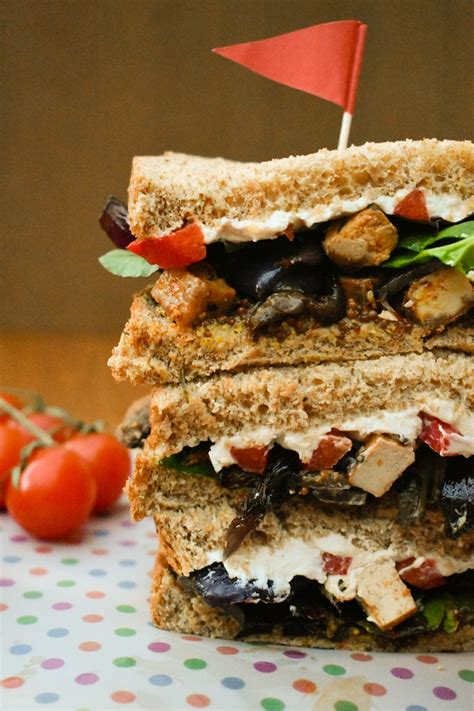
Another recycled Counting Down action : Go out for a vegan picnic. Sandwiches are the basis of a picnic and most bread is vegan. Vegan options for spreads include plant based butter/ pesto/ mayonnaise/ tapenade/mustard. Add fillings such as vegan cheese (nut-based cheeses are good for protein), hummus, mushroom pate. Add slices of  vegetable such as red pepper, radishes, grilled aubergine or courgette, nasturtium leaves, cress or rocket or add chutney/relish.  Or try a banana hot dog roll? Pack sandwiches in greaseproof paper or fabric wraps. Pack fruit and pieces of vegetables that can be eaten with fingers and again see if you can avoid plastic packaging. Fill flasks with either hot or cold drinks. Pack some vegan cakes – rock buns, muffins etc – or a bar of chocolate to finish.

The Green Tau: issue 49

19th August 2022

Conserving water effectively.

This year we are feeling the effects of climate change more acutely, with a series of heat waves, a lack of rainfall and now a drought.  As hot and dry summers will be an ongoing feature of climate change, so too will water shortages and droughts. 

Part of the equation lies with how much water we consume and when, and how much water we can store. Part of the dilemma is that the time when we consume most water is in the summer months when  the chances of restocking depleted water supplies is most limited. When  it is hot and there is no rain, we quickly use water we have previously stored to water gardens, to irrigate crops, to provide drinking water for animals and people, to fill swimming pools and paddling pools etc. And as many of us have experienced, the water we had stored (domestically in water butts) has not been enough to keep our gardens green. There has been much discussion in the press about water companies not investing enough in new reservoirs. 

Is collecting and storing more water the only solution? Building reservoirs is expensive and happens at the loss of someone else’s ‘backyard’. Cleaning and distributing water (and subsequently treating what is discarded) incurs its own energy cost and the greater the volume, the greater the cost. Should we instead be looking to reduce the demand side of the equation?  

According to CCW, the Consumer Council for Water, the average person in the UK uses 152 litres of water a day. A washing machine uses about 50l per load, a five minute shower 40l (more for a power shower), 10-14l for the dishwasher and each flush of the loo can use 10l.  Very quickly you can see how that 152l of water disappears!  And this is without including a sprinkler for the lawn, a hose to wash the car or a power jet to clean the drive. 

Yes, we can reduce the amount of water we use. We can change to taps that use less water by produce a spray. Ditto for shower heads. We can adjust toilet cisterns to use less water per flush. We can opt for washing appliances that use less water. We can turn off the tap when washing hands and teeth. We can bathe less often and wash clothes less often – saving energy as well as water. We can plant our gardens with drought tolerant plants and cut the lawns less often. We can install more water butts, and even install systems to collect and recycle grey water. 

Leaks from water pipes – whether that is within a property, or out in the street – account for 113 litres per property per day according to CCW. Thames Water puts its leakage rate at a staggering 24% of the water it supplies. Sometimes leak go unnoticed because the water is leaking into the subsoil. Keeping an eye on our water meter should alert us to any leaks that occur on the consumer side of the pipes.

Yet households only account for a small fraction of the water we consume in the UK. The data below ⬇️ comes from the  WWF Water Footprint report https://waterfootprint.org/media/downloads/Orr_and_Chapagain_2008_UK_waterfootprint-vol1.pdf 

73.6% of the UK’s water is used in farming. 

17.9% is used by industry, and 

8.5% is used by households. 

Many of us are probably not aware how much water is used in farming. About a third of agricultural water is used for livestock, primarily as drinking water. A lactating cow needs 100+ litres a day, a farrowing sow, 30l and a beef animal 20l. Further water is used for washing/ cleaning dairy parlours, stock sheds and yards; for processing and cooling milk; and for disease control such as sheep dips and foot baths. (https://warwick.ac.uk/fac/sci/lifesci/wcc/research/resources/wateruse/technology/livestock.pdf)

Water for arable farming is primarily used for irrigation of outdoors in-field crops and undercover or protected, crops. Field crops requiring irrigation are primarily vegetables including sugar beet,  peas, beans etc (potatoes account for 54% of water consumption), sugar beet, orchards and other fruits such as strawberries. Grains and grasses only occasionally need irrigation. Protected crops include  (edibles such as salads, tomatoes, cucumbers, lettuces, peppers, herbs, celery, and aubergines; and ornamentals such as pot plants, bedding plants and indoor cut flowers. (https://www.nfuonline.com/archive?treeid=141830)  Water is also needed for spraycrops with pesticides and herbicides.

Just as domestic users of water can make savings by using more efficient equipment and appliances, so too can agricultural users. Just as gardeners can reduce their demand for water by swopping to drought tolerant plants, so too farmers can look to grow less water-greedy crops or drought tolerant varieties. But when it comes to providing drinking water for livestock, the only way to achieve reductions in water consumption would be by reducing stock numbers.  

A pressing issue both in the UK and globally,  is food waste. In the UK WRAP estimates that 3.6 million tonnes or  7.2%, of all food harvested is lost each year. 4% is classified as surplus which is food that would go to waste were it not diverted for use as animal food or other bio-based products. 3.2%  is pure waste, of which horticultural crops make up 54% of the total, cereals 30%, livestock 8% and milk 8%. (https://wrap.org.uk/resources/report/food-waste-primary-production-uk)  Such food waste may arise became the crop is damaged whilst growing in the field (pests and/ or weather), because supply exceeds the market demand, or because the product is the wrong shape/ too large/ too small, or because there is a lack of available labour to harvest the crop. 

On top of this primary level of waste, there are issues with food waste during processing, on the shop floor and in the home. WRAP estimates that a further 9.5 million tonnes of food is wasted of which 70% is wasted in the home. The most frequently thrown away foods are potatoes, bread and milk, whilst in total fresh vegetables and salad makes up 24% of the total.

So far  I have focused on the consumption of water in the UK, but as the WWF Water Footprint report goes on to demonstrate, when we import food and other items we are in essence importing the output of  someone else’s water. There are some products that we cannot – climatically – grow in this country such as cocoa and coffee. There are others, such as strawberries and tomatoes which have a longer growing season when grown elsewhere – say in Spain – than if grown here. However if these products come from areas where there are water shortages, our consumption of the same may be exacerbating that problem. As consumers we need to be conscientious in understanding the environmental costs of what we buy. When we buy Spanish strawberries are we endangering ecosystems in Spain? There has been a number of reports this year about the extraction of water by some strawberry growers that is adversely affecting the wetlands in the Doñana national park. (https://www.theguardian.com/world/2022/feb/08/bitter-fruit-strawberry-boom-water-plan-raises-fears-for-spanish-wetlands?CMP=Share_iOSApp_Other and https://www.theguardian.com/world/2022/mar/22/uk-supermarkets-urge-andalucia-against-huge-strawberry-farm-expansion?CMP=Share_iOSApp_Other)

On balance, whilst we should certainly save water in the home, we can do far more to safeguard water supplies and thus avoid water shortages, by rethinking what and how we eat. Eating less meat and dairy produce. Eating what’s in season, including the small/ large or wonky. Buying and cooking only what we need. 

Counting on …day 266 

4th August 2022

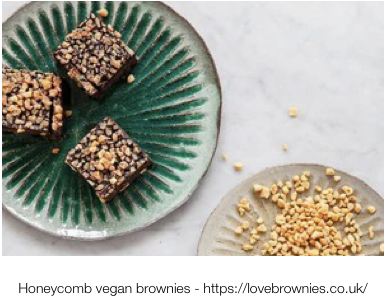
It is surprising that more cafes don’t serve vegan food. Many cakes and biscuits can as easily be made with margerine as with butter and would instantly become vegan – flapjack and Anzac biscuits for example.  And egg is an easily replaces ingredient in brownies and tray bakes. It maybe the perception that people might avoid foods labelled vegan but research shows that the more vegan options available, the more people will choose vegan items! So make a point of asking for vegan food when in cafés and restaurants and ease the change: we will all benefit!

Counting on …day 265

3rd August 2022

Rather than expecting farmers both here and globally to produce an ever growing amount of animal based food – which is adding to the crises of both the climate and biodiversity – we would all benefit far more from adopting a largely plant-based diet. 

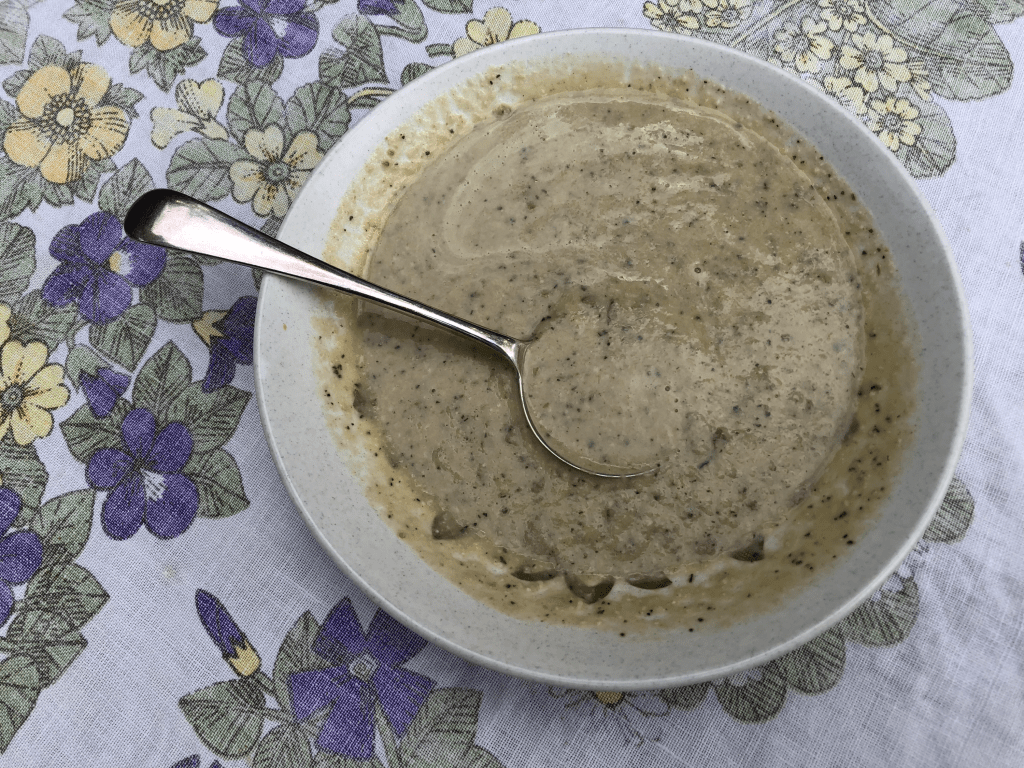
Courgette, Dill and Almond Soup (serves 4)

Chop and gently fry 1 onion and a clove of garlic in some oil. Cover pan so it doesn’t burn.

Chop into chunks 500g (thereabouts) of courgette and add to the pan. Stir well. Add more oil if  necessary.

Add a teaspoon of dried dill or a handful of fresh dill, and a little black pepper.

Add 100g almonds. Stir well.

Cook for a few minutes so that everything is beginning to soften and cover with water. 

Cook for 10-15 minutes.

Blitz with a hand blender till smooth.

Stir in half a carton of vegan cream (about 100ml)

Either serve hot, or cool before chilling, to serve cold..

Counting on day 230 

1st July 2022

According to the UN’s Global Climate Action newsletter, declining biodiversity is an increasingly acute problem. “The faster we degrade and lose biodiversity, the worst climate change, and the food crisis, will grow. The sooner we act to protect, conserve, sustainably use and regenerate nature within the 2020s, the stronger our chances of reaching net zero emissions before 2050 and becoming resilient to impacts we can’t hold back.” 

Reducing our consumption of meat will alleviate declining biodiversity by reducing the pressure on the amount of farm land needed to produce the food we eat and freeing up land that can be re-wilded.

Counting on … day 229 

30th June 2022

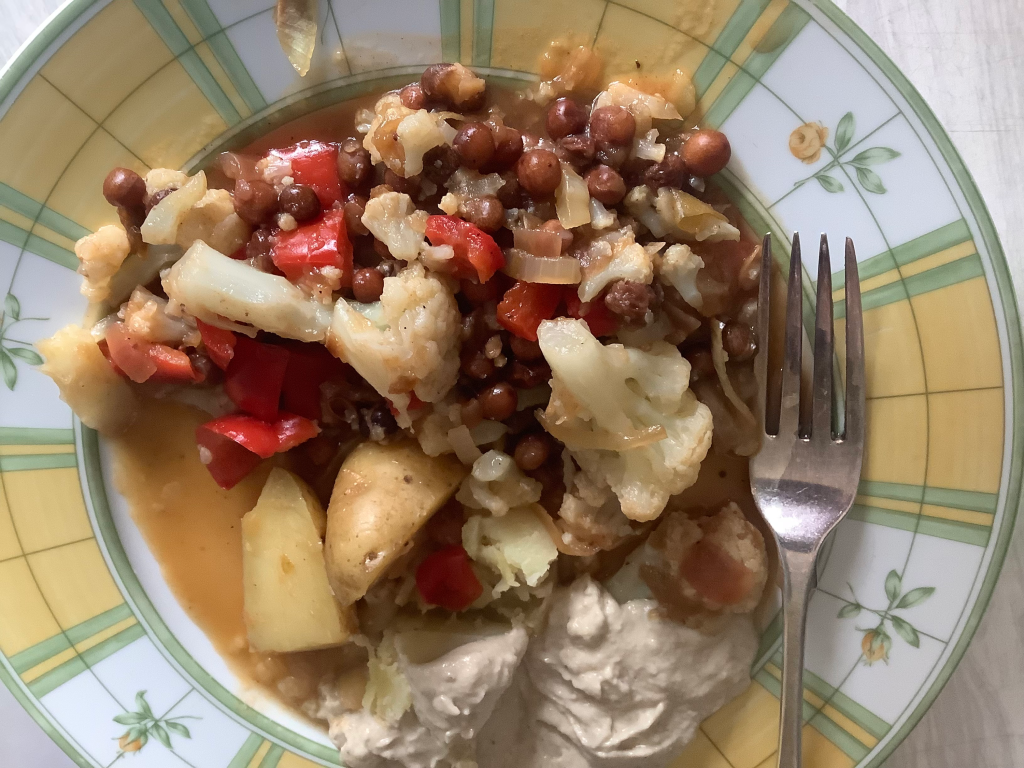
And last from the batch, red carlin peas. Using the last of the week’s OddBox, I  fried onion, garlic and red pepper together and then added cooked potatoes and cauliflower, stirred a while before finally adding the drained peas and a couple of spoons of chutney. Here it is being served with baba ganoush. 

Counting on … day 228 

29th June 2022

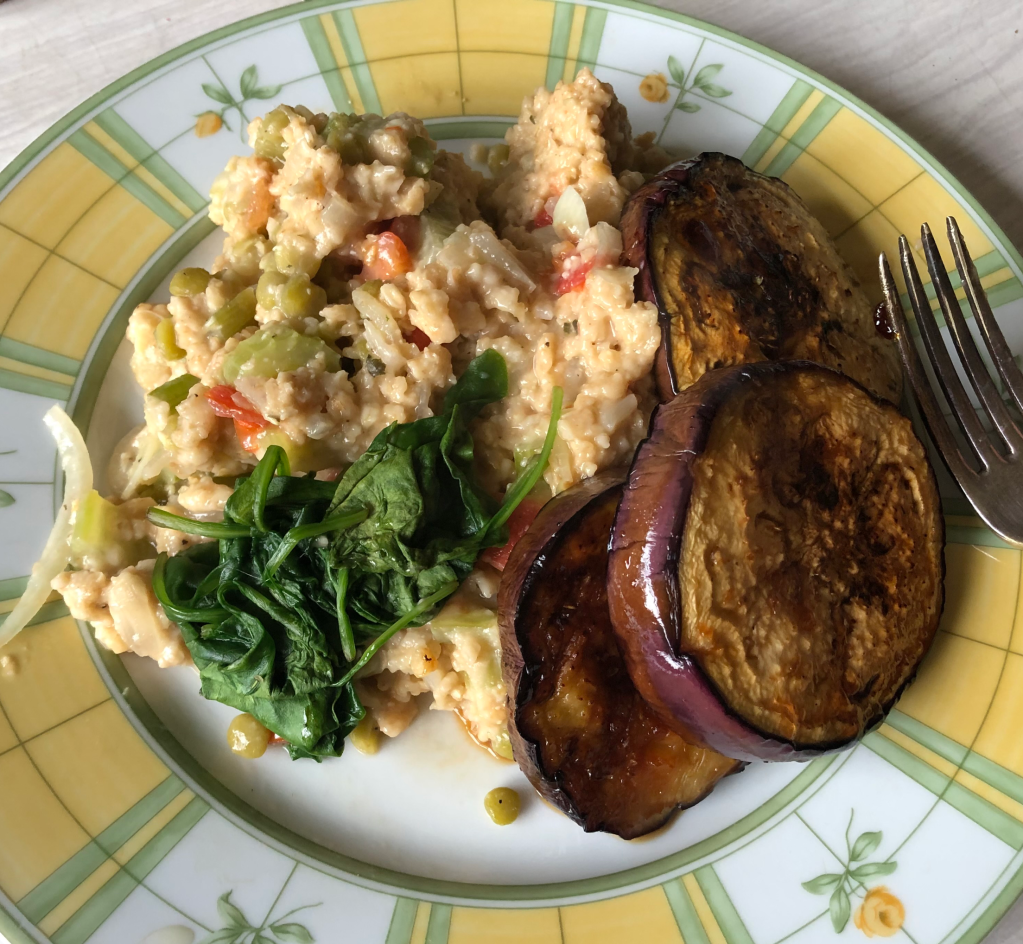
The wrinkled peas have become a version of risi bisi but rather than rice I have used porridge oats. Beginning with a chopped onion and come garlic cooked in oil, I added the oat flakes as if I were making a risotto. Next I added the  peas and their cooking liquid and a chopped tomato, and  stirring from time to time allowed the oats to swell and absorb the liquid. For extra flavour I added some pepper and nutmeg. Once the desired texture was achieved, I added some nutritional yeast flakes (ones fortified with vitamin  B12). Another  time I might add lemon juice and zest, or parsley, or salted lemon for different flavours. 

Living sustainably with what eat 

What does sustainability look like in daily life? I thought I would share our (that’s me and my husband) experiences. What we cook and eat and where we shop, has been shaped by three principles. 

  1. First there is the LOAF principle, a useful nemonic devised by Green Christians. It is a guide for choosing what food to buy and eat.  https://greenchristian.org.uk/loaf-church-resources/

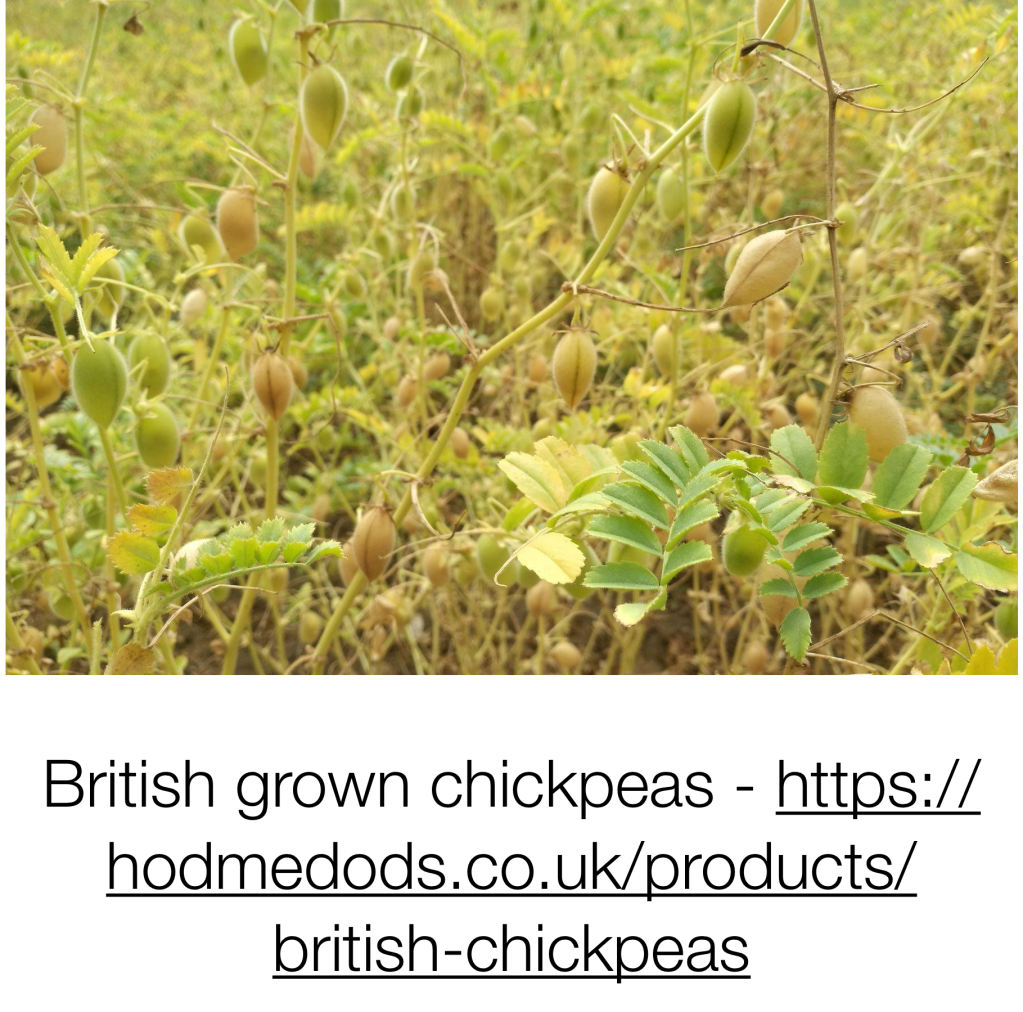
L is for local: locally produced food, which can include things grown or produced in one’s immediate locality and things where local can mean the UK rather than abroad. For example in East Sheen we can buy honey that comes from Richmond Park. We can buy coffee beans roasted across the river in Chiswick. We can have breakfast in Putney enjoying porridge or eggs Benedict made on the premises. We can choose to buy strawberries from Kent as opposed to imported from Spain. Equally we can eat strawberries grown in our back garden. We buy beans and pulses, seeds and grains such as quinoa, from Hodmedod whose produce is all UK grown. 

O is for organic: organic food has a less damaging impact on the planet than non organic food. Indeed it’s effect can be positive, with soils improved with vegetable matter rather than being stripped of its micro-organisms by fertilisers, with pollinators encouraged rather than being killed by pesticides, with livestock well cared for rather than being routinely treated with antibiotic prophylactics. We buy organically grown oats, and flour that comes from farms in Cambridgeshire and which is milled in a windmill!

A is for animal friendly: animals that live as near a natural life as possible (often organically raised). If we buy eggs for my husband we opt for free range, organic ones (although at the moment no eggs are free range owing to restrictions around bird flu). At Christmas the festive bird for my husband is a cockerel that has enjoyed a whole year of life unlike most of chicken meat which comes from birds that live may be 6 – 8 weeks (up to 12 for organically raised birds).

F is for fairly traded: the Fair Trade mark is well known as measure where production has guaranteed a  price above the market minimum, where the work force receive fair wages and where provision is made for services such as schooling and health care. We buy fair trade bananas, chocolate and tea which are now widely available. We buy coffee beans that have been ethically sourced from small scale producers who grow top quality beans, appreciating that the higher cost reflects their value.  

2. Secondly we avoid excess and plastic packaging, a habit we learnt through a zero waste experiment. We buy dried fruit and nuts, and dry goods such as rice, baking powder and bicarbonate of soda, spices, sugar, cocoa, millet and polenta from local refill stores where goods are dispensed into paper bags – often ones we have brought to reuse. We also buy refills of olive oil, soy sauce, maple syrup, tahini and peanut butter, taking our own jars and bottles to refill. Milk – both oat and dairy – comes in reused glass bottles on the milk round. Since we cook meals from scratch we avoid lots of single use plastic boxes. Likewise making our own cakes and biscuits reduces the amount of waste we generate. Jam jars are reused when we make jam, marmalade and chutneys and when we bottle summer fruits. Deliveries from Hodmedod come in paper or compostable bags, flour and oats come in bulk in paper sacks. 

3. Thirdly we seek to reduce the carbon footprint of what we eat. Most meals are vegan – Paul enjoys cheese in his sandwiches and dairy milk on his cereal. A vegan diet can save in the region 400 and 900 kgCO2 a year. Even with a vegan diet there are ways of being more or less carbon efficient. By  choosing locally produced food, food that is in season and cutting back on food waste (other vegetable leaves, tea bags and coffee grounds all go into the compost bin whilst apple cores go to make cider vinegar) we aim to minimise our carbon footprint. We have a weekly fruit and vegetable delivery from OddBox which collects fruit and vegetables from farmers and suppliers that would otherwise go to waste – because supermarket demand has dropped, crops have been larger (or sometimes smaller) than expected), crops have ripened too quickly/ slowly, or items are too small/ big/ misshapen for general sale. OddBox by preventing food from going to waste, saves some 11,000 tonnes of CO2 a year.